
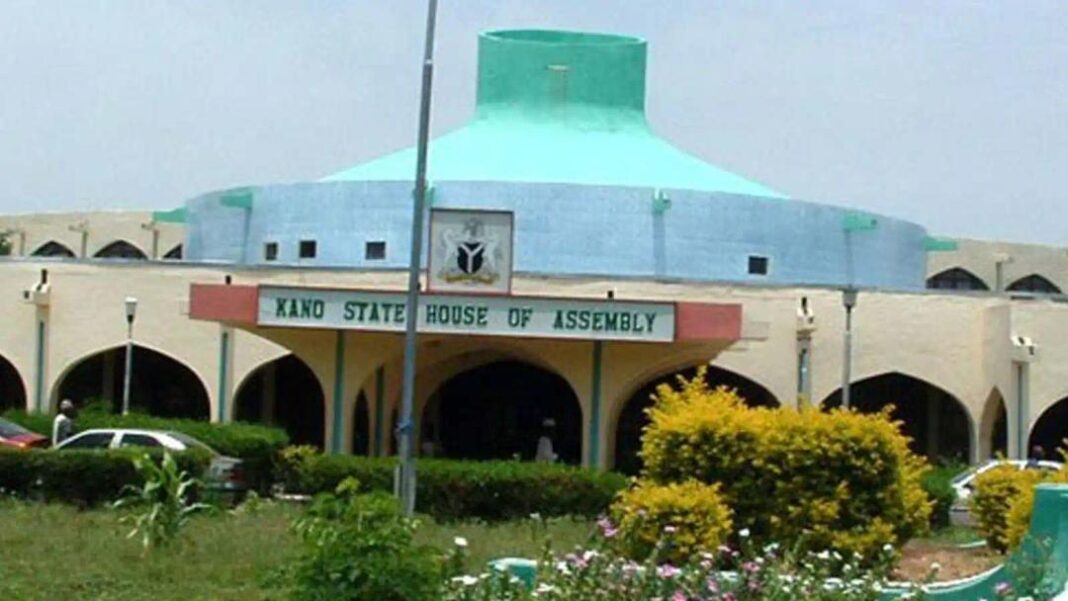
The decision of the Kano State House of Assembly to suspend the chairmen of Bebeji, Rogo and Bagwai local government areas for three months has elicited debate among legal experts over whether the state legislature possesses the constitutional authority to directly remove, suspend, or recommend for removal democratically elected local government officials.
The Assembly adopted the recommendation of its Committee on Local Government and Chieftaincy Affairs after investigating petitions alleging financial mismanagement, abuse of office, procurement violations and diversion of public funds against the three council chairmen.
Chairman of the committee, Hon. Ali Muhammad Bebeji, told lawmakers that the investigation involved scrutiny of official records and interactive sessions with councillors from the affected local governments.
According to the committee, the Bagwai chairman allegedly misappropriated funds earmarked for development projects, while the Bebeji chairman was accused of abuse of office, unlawful disposal of council land, procurement breaches and directing contractors to pay contract funds into accounts allegedly nominated by him.
The committee further alleged that the Rogo chairman misappropriated funds meant for feeder road and electrification projects in Ngor Dawa, Hausawa and Fulatan communities, in addition to undermining government policies and violating administrative procedures.
Relying on Sections 128 and 129 of the 1999 Constitution, which empower state Houses of Assembly to conduct investigations in aid of lawmaking and oversight, the committee recommended the immediate suspension of the three chairmen for three months pending further investigation.
The House adopted the recommendation and directed its Clerk to communicate the resolution to the Kano State Ministry of Local Government and Chieftaincy Affairs for implementation.
Constitutional powers under scrutiny
The Assembly’s action has, however, renewed questions about the limits of legislative oversight over elected local government officials.
Sections 128 and 129 of the Constitution empower state legislatures to investigate the conduct of persons or authorities responsible for administering state laws or disbursing public funds. Constitutional lawyers note that the provisions primarily confer investigative and oversight powers, including summoning witnesses and compelling the production of documents, rather than expressly granting powers to suspend elected officials.
Others say any attempt to remove or suspend elected local government chairmen must also comply with the Constitution, the Kano State Local Government Law and principles of fair hearing.
Previous precedent in Kano
The latest development is not the first time the Kano Assembly has taken such action.
In August 2025, the Assembly suspended the Chairman of Rano Local Government, Muhammad Naziru Ya’u, for three months over allegations including financial recklessness and diversion of fertiliser. In that instance, lawmakers relied not only on Sections 128 and 129 of the Constitution but also on Section 55 of the Kano State Local Government Law 2006, while directing the vice chairman to assume office in acting capacity pending investigation
The recurrence of similar suspensions suggests the Assembly considers such actions part of its oversight responsibilities, although the scope of that authority remains open to legal interpretation.
Supreme Court backdrop
The controversy also comes amid renewed national attention on local government autonomy following the Supreme Court’s landmark judgment affirming the constitutional status and financial independence of local governments. The judgment has intensified scrutiny of actions by state governments and legislatures affecting elected local government administrations.
Unless challenged in court, the Assembly’s resolution is expected to be implemented by the Kano State Ministry of Local Government and Chieftaincy Affairs.
Observers say any court action arising from the suspensions could provide further judicial clarification on whether a state House of Assembly’s investigative powers extend to ordering the suspension of elected local government chairmen or whether such sanctions must follow procedures specifically provided under state local government laws and the Constitution.