
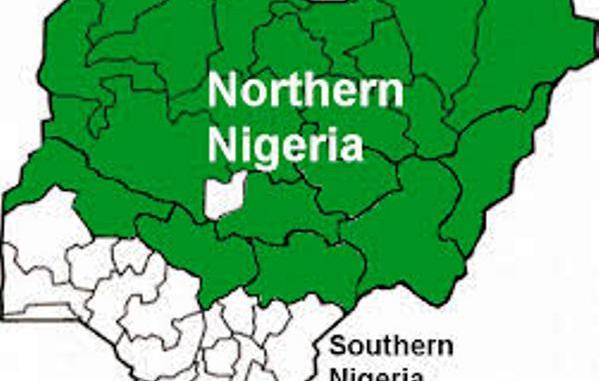
Northern Nigeria’s political and intellectual establishment has delivered one of its bluntest public indictments of the region’s condition in years, with senior figures acknowledging that decades of diagnosis, political rhetoric and fragmented interventions have failed to halt a deterioration marked by insecurity, poverty, educational exclusion and the erosion of public trust.
The unusually candid assessment emerged from the 3rd Late General Hassan Usman Katsina Memorial Conference, held on July 25 at Arewa House in Kaduna under the theme “From Sacrifice to Strategy: Rekindling General Hassan Usman Katsina’s Vision for a Prosperous Northern Nigeria.”
The conference brought together political figures, traditional leaders, academics, security officials and civil-society actors. Former Vice-Chancellor of Ahmadu Bello University and Northern Elders Forum chairman Prof. Ango Abdullahi, political economist Dr. Usman Bugaje, former military officer Maj. Hamza Al-Mustapha, and representatives of President Bola Tinubu all contributed to an unusually bleak assessment of the region.
The message was strikingly different from the conventional language of development conferences.
The North, several speakers effectively said, already knows what is wrong. The problem is that it has repeatedly failed to act.
Peter Obi Ready for Presidency by Performance, Not Patronage – Media Office
‘The North has lost its values’
Ango Abdullahi supplied perhaps the conference’s most fundamental diagnosis: the crisis is not simply infrastructural or economic but moral and political.
“The North has lost its values,” Abdullahi said, according to reports from the event. “You may not want to hear this, but that is the case today.”
He argued that the region had abandoned the principles associated with earlier generations of Northern leaders – discipline, honesty, sacrifice, accountability and service.
“If we had not lost the values we inherited from our parents and our pioneer leaders, the North would not be where it is today,” he said.
His argument was that the visible expansion of Northern cities should not be confused with genuine development.
“The North is in a pathetic situation,” Abdullahi said. “For me, that is the only reason why the North has stagnated. Don’t worry about the buildings you see. The basic issue concerning where the North finds itself today is the loss of our values.”
That distinction—between physical development and human development—was one of the conference’s central themes.
The speakers were essentially asking whether roads, buildings and expanding cities mean much if insecurity prevents farmers from cultivating their land, children cannot safely attend school and public institutions are distrusted.
Bugaje: the elite cannot keep lamenting
Usman Bugaje was even more direct about the responsibility of the Northern establishment.
He rejected the idea that the region’s predicament could be explained simply as something that had happened to the North.
“Some even scream that the North is finished,” Bugaje said. “These comments only betray the complacency or even the complicity of the Northern elite.”
In another formulation reported after the conference, he said: “It has become the pastime of the elite to sit comfortably at home and say that the North is in trouble.”
The implication was unmistakable: repeatedly describing the crisis without accepting responsibility for solving it has itself become part of the problem.
Bugaje invoked Hassan Usman Katsina as an example of a leadership culture in which political authority did not necessarily mean suppressing criticism.
He recalled an incident involving an article he had written criticising Western imperialism. The then-American ambassador had complained about it.
“The American ambassador came all the way to Kaduna to complain about the article. General Hassan read it himself and called me. Instead of asking me to stop, he told me to write more,” Bugaje recalled.
“That was the kind of leader they were,” he added.
Mob Killing After Sokoto Cleric’s Stabbing Exposes Dangerous Spiral of Religious Tension
For Bugaje, the significance of the Katsina generation was therefore not nostalgia. It was the demonstration that authority and intellectual independence could coexist.
He described that generation as characterised by: “contentment, commitment to their communities, respect for rules and procedures, modesty and decorum” and a vision of a prosperous North in which “every Northerner became his brother’s keeper.”
Al-Mustapha’s extraordinary verdict: ‘totally hopeless’
The harshest language at the conference came from Maj. Hamza Al-Mustapha, the former chief security officer to late military ruler Gen. Sani Abacha.
Al-Mustapha did not merely describe the North as being in crisis.
He called its condition “totally hopeless.”
“From the situation of the North, and indeed in Nigeria, every child in the streets to the elites, if they are truly there, know that the state of Nigeria is in a sorry state,” he said.
“The state of the North is totally hopeless. Speaking the truth to the situation is meant for patriots.”
He then attacked what he described as sycophancy around political power: “People who praise-sing leaders in power; they are deceits, they are threats.”
Al-Mustapha went further, saying he could potentially be arrested for speaking so bluntly about Nigeria’s condition.
His intervention added a distinctly political dimension to the conference’s critique: the problem is not simply bad policy, but a political culture in which leaders may hear praise more readily than criticism.
The numbers behind the rhetoric
The leaders’ rhetoric might sound apocalyptic if considered in isolation. Recent humanitarian evidence, however, shows why such language is gaining traction.
UNICEF says 8.4 million people—including 5 million children—in North-East, North-West and North-Central Nigeria require humanitarian assistance in 2026. More than 3.7 million people are displaced, while more than 10 million children remain out of school nationally.
The World Food Programme has painted an equally disturbing food-security picture.
According to reporting on its latest assessment, more than 17 million people across nine conflict-affected Northern states are facing severe hunger, representing the worst level in almost a decade. Violence, displacement and the inability of farmers to reach their fields are among the principal drivers.
In other words, the conference’s description of a region simultaneously facing insecurity, displacement, poverty and educational exclusion is not simply political rhetoric.
There is a substantial humanitarian dataset behind it.
Insecurity is no longer a single problem
One of the important points emerging from the wider research is that “Northern insecurity” is not one conflict.
It is a collection of overlapping conflicts.
The European Union Agency for Asylum’s January 2026 security assessment describes Northern Nigeria as facing the long-running Islamist insurgency alongside increasingly widespread and lethal banditry. Banditry has spread across parts of the North-West and North-Central zones and involves kidnapping, murder, armed raids, cattle rustling and other forms of organised criminal violence.
A separate 2026 assessment identified three particularly important conflict systems:
• Boko Haram/ISWAP insurgency in the North-East;
• farmer-herder conflict in the North-Central region; and
• banditry and kidnapping in the North-West.
That fragmentation matters because there is no single security solution.
The conference’s call for a review of strategies adopted since 2009 therefore goes beyond asking for more soldiers or weapons. It raises the question of whether a predominantly military response can resolve problems whose roots also lie in poverty, land pressure, weak institutions, youth unemployment, climate stress and educational failure.
The education emergency
Perhaps nowhere is the connection between today’s crisis and tomorrow’s crisis clearer than in education.
UNICEF currently estimates that about 10.5 million Nigerian children aged 5–14 are out of school. The situation is substantially worse in the North, where the net attendance rate is about 53 percent. Female attendance is particularly poor in the North-East and North-West.
UNICEF also points to an important complication in the statistics: large numbers of children receive Qur’anic education without acquiring basic literacy and numeracy. In North-Eastern states, 29 percent of Muslim children receive Qur’anic education, while the figure is 35 percent in the North-West; such children are nevertheless officially regarded as out of school if they do not receive the required basic education.
This is where the conference’s focus on the Almajiri system becomes particularly important.
The issue is not simply that children are physically present on streets.
It is that a large population of young people can pass through childhood without acquiring the educational, vocational and social skills necessary to participate productively in a modern economy.
UNICEF has documented the problem directly. In a 2025 account of its work with Almajiri children and out-of-school girls, the organisation described Nigeria as carrying the world’s largest burden of out-of-school children, with more than 11 million children out of school. It also documented Almajiri children living on the streets and begging for survival.
One 16-year-old boy in Sokoto told UNICEF:
“I woke up every day thinking only of what to eat.”
He said he had never entered a classroom and had never thought about what he wanted to become.
But the same UNICEF intervention demonstrates that the situation is not necessarily irreversible.
More than 80,000 marginalised children and adolescents in Jigawa, Kaduna, Kano, Katsina and Sokoto had passed through its Digital Villages programme by 2025, receiving digital literacy, vocational training, entrepreneurship support and life-skills coaching.
That experience offers an important clue to what the Kaduna conference was demanding: not merely moving children from streets into buildings labelled “schools”, but connecting education to employable skills and livelihoods.
The Almajiri proposal: from conferences to a Northern-wide programme
According to the supplied communiqué, the New Vision Development Initiative proposed developing a Northern-wide Almajiri model.
The concept reportedly involves mobilising influential philanthropists across Northern states, developing a common implementation framework and establishing trustees to oversee the programme.
But the communiqué made an important distinction.
The objective, it said, should not be satisfied merely by getting children into classrooms.
The real test should be whether every child – regardless of gender, location, disability or background – receives learning and skills capable of leading to productive citizenship.
That is a significantly more ambitious proposition than traditional Almajiri interventions.
And the communiqué’s warning is particularly revealing: “This crisis can no longer be addressed through conferences, TV and radio discussions, fragmented interventions or short-term projects.”
That sentence captures the entire mood of the Kaduna gathering.
The conference was, in effect, an admission that the conference culture itself has become inadequate.
The girl-child question
The discussion also challenged one of Northern Nigeria’s most persistent development deficits: the exclusion of girls.
UNICEF reports that female primary net attendance is only about 47.7 percent in the North-East and 47.3 percent in the North-West.
The United Nations has likewise reported that roughly half of Nigeria’s estimated 7.6 million out-of-school girls are in the North. It also notes that child marriage remains particularly prevalent in Northern regions, with the median age at first marriage rising sharply as girls obtain more education.
Consequently, the conference’s demand for girl-child education should not be regarded as a peripheral social-policy issue.
It is fundamentally an economic one.
A region cannot build human capital while excluding a large proportion of its potential workforce from meaningful education.
‘No data, no development’
Another unusually important issue raised in the supplied communiqué was demographic planning.
The conference reportedly lamented that the North does not sufficiently track fundamental population movements – births, deaths, marriages and migration.
The argument is straightforward: governments cannot plan schools, hospitals, housing, employment, food systems or security interventions effectively if they do not know how many people they are planning for and where those people are going.
This may sound bureaucratic beside the immediate drama of kidnapping and terrorism, but it is potentially one of the conference’s most consequential observations.
A rapidly growing population combined with weak demographic information creates a planning deficit.
And a planning deficit eventually becomes a service-delivery crisis.
The hidden crisis: agriculture and hunger
The security crisis is also becoming an agricultural crisis.
The WFP assessment reported in July found that more than 17 million people in nine conflict-affected Northern states were facing severe hunger. Violence has displaced farming communities, restricted movement and reduced access to agricultural land.
That creates a dangerous feedback loop: insecurity → displacement → abandoned farms → reduced food production → higher food insecurity → greater vulnerability → further displacement.
The conference’s concern over farmers being driven from their land therefore sits at the intersection of security, poverty and food policy.
The issue is not simply protecting people from armed attacks.
It is restoring their ability to earn a living.
Climate is becoming part of the security equation
Northern Nigeria’s crisis is also increasingly environmental.
The International Organization for Migration’s 2026–2028 Nigeria Crisis Response Plan describes an overlapping crisis involving conflict, displacement, farmer-herder tensions, criminality, floods and droughts. It specifically notes that climate-related shocks and competition over land and water intensify tensions between mobile pastoralists and settled communities.
UNFPA’s May 2026 assessment similarly described persistent insecurity in the North-East and North-West alongside environmental disasters and humanitarian pressures.
This helps explain why the old distinction between “security policy” and “development policy” is becoming increasingly difficult to sustain.
A failed harvest can become a livelihood crisis.
A livelihood crisis can produce migration.
Migration can intensify competition for land and water.
That competition can feed communal conflict.
And conflict can close schools and destroy livelihoods.
Tinubu’s response: ‘we will soon overcome’
Against the devastating assessments from the Northern elders, the Federal Government offered a considerably more optimistic message.
President Bola Tinubu, represented at the conference by Ibrahim Masari, reaffirmed the administration’s commitment to security.
“While we continue to work day and night to secure our nation,” Tinubu said, “by the grace of Allah, the challenges of insecurity confronting us, particularly in Northern Nigeria, will soon be behind us.”
The President also presented Hassan Usman Katsina as a model of humility, discipline, patriotism and selfless service, arguing that his commitment to national unity helped strengthen Nigeria during critical periods of its history.
The contrast could hardly have been sharper.
The elders were saying the North had lost its direction.
The Federal Government was saying the security challenge would soon be overcome.
The real test is whether that optimism can be converted into measurable improvements in the lives of ordinary Northerners.
Hassan Katsina’s unfinished argument
There is a historical irony in all of this.
The late General Hassan Usman Katsina is being invoked precisely because many of the problems discussed in Kaduna are not new.
The Almajiri question, for example, has been discussed by Northern leaders for decades. Earlier accounts recall Katsina warning about the dangers of the system long before today’s enormous out-of-school population became a national emergency.
The second Hassan Katsina memorial conference in 2025 produced similar calls for leadership reform. Former military president Ibrahim Babangida urged Northern leaders to emulate Katsina’s humility, patriotism and commitment to development, while speakers warned that insecurity and poverty were threatening Northern stability.
The recurrence of the same themes is perhaps the most damning part.
The North has not lacked warnings. It has lacked sustained implementation.
From diagnosis to execution
That is why the language of the 2026 communiqué is more significant than its individual recommendations.
“After years of discussing the problems confronting the North,” it reportedly stated, “the region could no longer remain at the level of diagnosis without taking decisive action.”
That sentence could serve as the conference’s epitaph.
For decades, Northern Nigeria’s problems have been repeatedly documented:
• insecurity;
• poverty;
• weak education;
• out-of-school children;
• Almajiri vulnerability;
• unemployment;
• farmer displacement;
• poor girl-child participation;
• corruption;
• weak institutions;
• demographic pressure;
• environmental degradation;
• political fragmentation.
The problem is no longer identifying them.
The problem is converting knowledge into institutions that work.
The political problem: unity without uniformity
The conference also called for greater unity among political, traditional and religious leaders.
But “unity” need not mean political uniformity.
Indeed, Bugaje’s recollection of Hassan Katsina encouraging criticism points in the opposite direction.
A functional Northern political coalition would arguably need more disagreement about methods but greater agreement about measurable objectives.
Those objectives could include:
• reducing violent deaths and kidnappings;
• restoring farming communities;
• getting children into quality education;
• integrating Qur’anic and formal learning where appropriate;
• dramatically expanding girls’ education;
• creating vocational pathways for young people;
• improving population and migration data;
• strengthening local government;
• rebuilding rural infrastructure;
• publishing measurable development targets.
That would turn “Northern unity” from a political slogan into a development mechanism.
The bigger question: who pays?
Perhaps the most difficult question raised by the proposed Almajiri initiative is financing.
The communiqué’s appeal to philanthropists is understandable, but the scale of the crisis makes clear that philanthropy cannot substitute for public policy.
UNICEF’s 2026 appeal says that 8.4 million people in Northern Nigeria require humanitarian assistance, while resources are declining. It also estimates that more than 3.7 million people are displaced and more than 3 million children nationally require treatment for severe wasting during 2026.
A Northern-wide education transformation therefore cannot realistically depend on goodwill alone.
Philanthropy can seed programmes.
Civil society can innovate.
Development partners can finance pilots.
But governments ultimately have to build systems capable of operating at population scale.
The real meaning of ‘action’
The conference’s strongest challenge may therefore be directed not at Abuja alone but at Northern governments themselves.
The question is not whether the Federal Government has a security strategy.
It is whether governors, local governments, traditional institutions, religious authorities, businesses, philanthropists and communities can produce a single, measurable human-capital strategy for the region.
UNICEF’s experience offers one example of what this could look like: education combined with digital skills, vocational training and entrepreneurship rather than classroom enrolment alone.
The security evidence points in the same direction. Northern communities need protection, but they also need functioning schools, farms, markets, roads, health systems and livelihoods.
A region at a crossroads
The phrase “the North is bleeding” has circulated in Nigerian public discourse for years. It is not new; the same language was used prominently during the insecurity crisis of 2021, when Northern campaigners and former Vice-President Atiku Abubakar warned of an “existential threat” and demanded collective action.
What has changed is the breadth of the crisis.
It is no longer possible to discuss Northern Nigeria’s problems solely as terrorism.
Nor solely as banditry.
Nor solely as poverty.
Nor solely as education.
Nor solely as corruption.
The crises are feeding one another.
And that is ultimately what made the July 2026 Kaduna conference important.
Its central admission was not that Northern Nigeria has problems.
Everyone already knows that.
It was that the region’s established leadership culture has repeatedly failed to convert knowledge into results.
Abdullahi called the North “pathetic.”
Bugaje warned of “complacency or even the complicity” of the elite.
Al-Mustapha called the region “totally hopeless.”
The communiqué demanded an end to “diagnosis” without action.
And President Tinubu promised that insecurity would “soon be behind us.”
Those statements now sit side by side.
The credibility of every leader who spoke at Arewa House will ultimately be judged by what happens next—not by another conference, another communiqué or another speech, but by whether fewer children are on the streets, whether farmers can return safely to their fields, whether girls can remain in school, whether communities can sleep without fear, and whether the next generation of Northern Nigerians inherits opportunity rather than another catalogue of unresolved warnings.
The North has been diagnosed. The question left by Kaduna is whether its leaders will finally prescribe – and administer – the cure.