

Former intelligence chief Ahmed Rufai Abubakar says informants, financial facilitators, bandit militias and terrorist organisations are working within an expanding kidnapping network, as new research reveals that Nigerians paid N7.78 billion in ransom in one year.
Nigeria’s kidnapping crisis is increasingly operating as an organised criminal economy, sustained by networks of informants, logistics providers, financial intermediaries and terrorist organisations that use abductions to generate revenue, recruit fighters and exert pressure on government authorities.
Former Director-General of the National Intelligence Agency (NIA), Ahmed Rufai Abubakar, has offered a rare insight into the operations of the networks, revealing how criminal collaborators identify potential victims, monitor security personnel, coordinate mass kidnappings and facilitate the movement of ransom proceeds.
Speaking during a panel discussion at the eighth Global Security Forum in Doha, Qatar, Abubakar said kidnapping in Nigeria had developed beyond the activities of armed men who storm communities and seize residents.
He described an interconnected criminal ecosystem involving terrorist organisations, bandit militias, informants, gunrunners and financial facilitators.
According to him, the different actors provide specialised support that enables kidnappers to identify targets, avoid security operations, negotiate ransom payments and sustain their activities.
The revelations come against the backdrop of worsening kidnapping statistics.
A 2026 report by security consultancy SBM Intelligence found that at least 7,825 people were abducted across Nigeria between July 2025 and June 2026, while at least 1,142 people were killed in kidnapping and related incidents.
The consultancy also documented N7.78 billion in ransom payments during the period, representing a significant increase from the N2.56 billion recorded in the preceding reporting cycle.
Informants, logistics providers sustain kidnapping networks
Abubakar explained that the kidnapping business depends heavily on individuals who operate behind the scenes, supplying intelligence and logistical assistance to armed groups.
He said informants were particularly important because they provide information about potential victims, their movements and their vulnerability to attacks.
According to the former intelligence chief, other collaborators monitor the movements of law enforcement personnel, giving kidnappers information that can help them avoid security operations.
He described the arrangement as a sophisticated support structure that makes kidnapping and mass hostage-taking possible on a large scale.

The revelation highlights the difficulty of addressing Nigeria’s kidnapping crisis through military operations alone.
While security forces frequently target armed groups in forests and other hideouts, the networks supplying intelligence, transportation, weapons and financial assistance can continue operating beyond the immediate reach of such operations.
Disrupting these support structures is therefore an important part of any sustainable counter-kidnapping strategy.
Cryptocurrency and financial intermediaries used to move ransom
Abubakar also identified the movement and concealment of ransom proceeds as a major component of the kidnapping economy.
He explained that kidnappers who collect substantial sums must find ways to move and disguise the money without attracting attention.
He specifically mentioned cryptocurrency and small financial outfits as channels allegedly used by criminal networks to launder ransom proceeds.
The former intelligence chief placed these financial facilitators within the network sustaining terrorist organisations and criminal gangs.
His account underscores the importance of investigating the financial infrastructure behind kidnapping, rather than concentrating exclusively on the armed perpetrators.
However, his remarks did not identify particular financial institutions or provide independently verifiable transaction records establishing the alleged laundering channels.
The issue is particularly significant because ransom proceeds can provide criminal organisations with resources to acquire weapons, recruit personnel, finance operations and maintain their networks.
Abuja-Kaduna train attack: Millions of dollars allegedly channelled to Ansaru
To illustrate the financial scale of terrorist kidnapping, Abubakar cited the March 28, 2022, attack on the Abuja-Kaduna passenger train.
He estimated that between $1 million and $2 million was collected in ransom payments during the hostage crisis, alleging that the money was channelled to Ansaru, a Nigeria-based terrorist organisation associated with al-Qaeda.
The attack occurred after explosives were detonated on the railway track, forcing the train to stop before gunmen opened fire on passengers and abducted dozens of people.
The incident killed several passengers, injured others and triggered months of negotiations and security operations.
The remaining 23 hostages were released on October 5, 2022.
Ansaru’s links to international extremist networks are documented.
The United Nations listed the organisation on June 26, 2014, for its association with al-Qaeda in the Islamic Maghreb (AQIM).
A subsequent UN monitoring report, published in 2022, stated that Ansaru pledged allegiance to Jama’at Nusrat al-Islam wal-Muslimin (JNIM) on December 31, 2021.
These connections have heightened concerns about the potential overlap between Nigeria’s domestic kidnapping networks and extremist organisations operating across the Sahel.
Terrorists and bandits increasingly collaborate
Abubakar identified three broad categories of perpetrators involved in Nigeria’s kidnapping crisis: terrorist organisations, bandit militias and other criminal gangs.
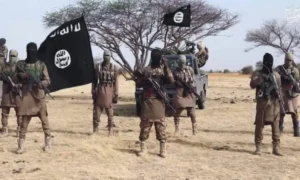
He explained that although the groups have different motivations, their operations increasingly overlap.
According to him, Boko Haram and other extremist organisations have historically abducted people for several reasons, including raising funds, recruiting fighters and forcing women and girls into marriages with combatants.
Bandit militias, on the other hand, are primarily motivated by financial gain.
Their criminal activities include kidnapping for ransom, cattle rustling and other forms of organised criminality, often supported by gunrunners and local collaborators.
Abubakar said the distinction between ideological terrorism and financially motivated banditry had become less clear as the groups increasingly cooperate.
He disclosed that terrorist organisations and militia groups sometimes work together to carry out mass abductions.
Such operations, he explained, serve multiple purposes: generating revenue, demonstrating operational strength and attracting attention from government authorities.
The cooperation also creates additional difficulties for security agencies because the perpetrators may operate through networks that cut across ideological and criminal boundaries.
JNIM, Ansaru and the expanding Sahel connection
Abubakar identified Ansaru and JNIM among the extremist organisations whose activities are relevant to the changing security situation in Nigeria.
JNIM, whose name translates as the Group for the Support of Islam and Muslims, is an al-Qaeda-affiliated terrorist organisation operating principally across Mali, Burkina Faso and Niger, with activities extending into other parts of West Africa.
The group was formed in March 2017 through the merger of several extremist organisations, including Ansar al-Din, al-Murabitun, the Macina Liberation Front and AQIM’s Sahara branch.
Its financing activities have attracted international attention.
In April 2024, the United States announced sanctions against individuals linked to JNIM’s hostage-taking operations in West Africa.
The US Department of State identified kidnapping for ransom, extortion and proceeds from smugglers and traffickers as sources of funding for the organisation.
The United Nations has also documented Ansaru’s allegiance to JNIM, raising concerns about the possibility of cooperation between extremist networks and criminal groups operating in north-western Nigeria.
These developments suggest that Nigeria’s security challenges cannot be viewed entirely in isolation from the wider instability across the Sahel.
N7.78 billion paid in ransom as kidnapping industry expands
The financial dimensions of the crisis are further illustrated by SBM Intelligence’s report, The Economics of Nigeria’s Kidnap Industry, 2026.
The report documented 7,825 abducted persons between July 2025 and June 2026, compared with 4,722 in the preceding reporting period.
At least 1,142 people were killed in kidnapping and related incidents.
The consultancy also recorded N7.78 billion in ransom payments, compared with N2.56 billion in the previous year.
Interestingly, although the total ransom demanded by kidnappers declined from approximately N48 billion to N22.9 billion, the amount actually collected increased more than threefold.
SBM attributed the development largely to the ability of certain extremist organisations to secure substantial payments following mass abductions.
The report identified the Jama’atu Ahlis Sunna Lidda’awati wal-Jihad (JAS) faction of Boko Haram as accounting for approximately 90 per cent of recorded ransom payments.
Two major abductions were particularly significant.
The first involved 416 people abducted from Ngoshe in Borno State, for whom approximately N5 billion was reportedly paid.
The second involved 315 pupils and staff abducted from St Mary’s Catholic School in Papiri, Niger State, for whom approximately N2 billion was reportedly paid.
Together, the two incidents accounted for approximately N7 billion of the N7.78 billion documented by the consultancy.
The figures demonstrate how a relatively small number of mass abductions can account for a substantial proportion of the money flowing into the country’s kidnapping economy.
SBM also warned that its figures were based on documented incidents and publicly available information, meaning the actual amount paid could be higher.
Mass abductions now serve political and financial purposes
Abubakar said the objectives of kidnapping had evolved beyond collecting ransom.
He identified the abduction of schoolchildren and worshippers as examples of operations increasingly connected to political pressure and demands for prisoner exchanges.
According to him, some armed groups abduct people to secure the release of detained members or associates.
Such demands complicate negotiations, particularly when the abductors insist on the release of individuals who may have already been killed during military operations.
He explained that the objectives of kidnappers must be understood before authorities decide how to respond.
Some groups, he said, are primarily interested in financial payments, while others seek political recognition, prisoner releases or publicity.
This makes hostage negotiations particularly complicated because a strategy that works in one situation may fail in another.
Why hostage negotiations often happen through back channels
On the question of how governments should respond to hostage-taking, Abubakar advocated approaches tailored to the identity and objectives of the abductors.
He said discreet negotiations through trusted intermediaries could sometimes be necessary, particularly where captors had established communication channels with individuals they trusted.
He described the process as hostage diplomacy conducted through back channels.
Such negotiations, he explained, are often kept confidential because public disclosure could complicate discussions or endanger the hostages.
The former intelligence chief acknowledged that different kidnapping situations require different responses, depending on whether the objective is financial, political or connected to prisoner exchanges.
His remarks also point to the difficult balance governments must maintain between securing the release of hostages and avoiding actions that could encourage further abductions.
Former NIA chief recounts Chibok survivor’s experience
One of the most striking aspects of Abubakar’s presentation concerned the recovery of a Chibok schoolgirl who had spent years in terrorist captivity.
The Chibok abduction occurred in April 2014, when Boko Haram fighters stormed the Government Girls Secondary School in Chibok, Borno State, and abducted more than 200 schoolgirls.
The incident attracted international condemnation and generated the global #BringBackOurGirls campaign.
Abubakar said intelligence and security officials continued tracking the abducted girls over the years, with some eventually recovered through security operations and other liaison efforts.
He recounted one particular case involving a survivor who was brought to Abuja for approximately two weeks for medical examinations and debriefing.
According to him, the woman had been married to three different fighters during her captivity.
Her first two husbands were reportedly killed during combat operations, while she was subsequently married to another fighter.
Abubakar said a senior commander within the terrorist organisation had taken an interest in her welfare and arranged the successive marriages.
He recalled that the survivor spoke positively about the commander, describing him as a kind person.
The former intelligence chief said the woman wanted to see her parents but also expressed a desire to return to the environment where she had spent years in captivity.
He cited the experience to demonstrate the psychological and social complexities associated with recovering people who have spent prolonged periods under the control of extremist organisations.
Her experience also highlights the need for specialised medical, psychological and social support for survivors of prolonged captivity, forced marriage and other forms of abuse.
A survivor’s expressed attachment to captors or familiarity with a place of captivity should not be mistaken for consent to the violence or exploitation experienced there.
Nigeria faces a growing security and economic challenge
Abubakar’s disclosures, combined with the latest kidnapping statistics, point to a security challenge that extends beyond the immediate threat posed by armed groups.
The kidnapping economy has become increasingly interconnected with terrorism, organised crime, illicit financial flows and regional extremist networks.
The consequences extend beyond the victims and their families.
Mass abductions disrupt education, undermine commercial activities, discourage investment, displace communities and weaken public confidence in the ability of authorities to protect citizens.
The concentration of ransom payments among a relatively small number of mass abduction incidents also suggests that large-scale hostage-taking has become an especially profitable strategy for certain armed organisations.
Addressing the crisis will therefore require more than increased military deployments.
Security experts and policymakers face the challenge of dismantling the networks that provide intelligence, weapons, transportation and financial support to kidnappers.
Financial investigations, stronger monitoring of suspicious transactions, improved intelligence-sharing across state and national borders, protection of vulnerable communities and effective prosecution of collaborators will be essential components of a comprehensive response.
The central warning emerging from Abubakar’s presentation is that Nigeria’s kidnapping crisis is no longer simply about gunmen seizing victims and disappearing into forests.
It is about an expanding network in which information, weapons, money, criminal alliances and extremist ambitions combine to sustain a highly destructive enterprise.
● Additional report by The Sun.