
● Defence Minister Christopher Musa says intelligence sharing, surveillance technology and fresh military equipment are strengthening operations against insurgents and armed bandits across the country.
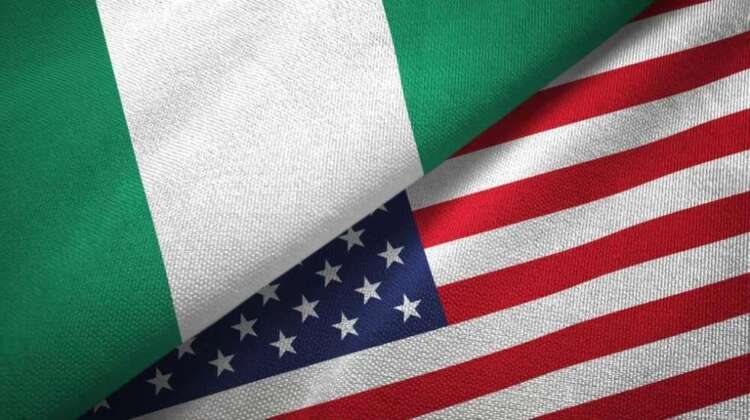
Nigeria has stepped up its military campaign against terrorists, armed bandits and kidnapping networks with increased intelligence, satellite surveillance and training support from the United States, as security agencies intensify efforts to prevent violence ahead of the 2027 general elections.
Minister of Defence, General Christopher Musa (rtd), disclosed on Monday that Nigerian forces were receiving real-time intelligence and satellite imagery from Washington, enabling troops to track militant movements, identify high-value targets and carry out near-daily operations across the country’s troubled regions.
Musa said troops had killed several terrorist and bandit leaders during overnight operations in the North-West and North-East, describing the improved intelligence cooperation as a major boost to Nigeria’s counterterrorism campaign.
“We took out a lot of the bandit leaders and the terrorists themselves,” he told journalists during a briefing.
According to the minister, the partnership with the United States goes beyond intelligence sharing to include satellite surveillance, military training and operational support aimed at dismantling insurgent networks and disrupting their activities.
The disclosure comes amid growing security concerns over renewed attacks by Boko Haram and its splinter faction, the Islamic State West Africa Province (ISWAP), particularly against military formations in the North-East.
US-Nigeria partnership delivers major counterterrorism breakthrough
One of the most significant demonstrations of the expanding security partnership came in May 2026, when Nigerian and US forces carried out a coordinated operation that killed Abu-Bilal al-Minuki, a senior Islamic State commander.
The operation, conducted on May 16 in north-eastern Nigeria, was described by US Africa Command (AFRICOM) as a major counterterrorism success. The US military said its initial assessment indicated that several senior ISIS figures, including al-Minuki, the group’s director of global operations, were killed.
The Defence Headquarters (of Nigeria) subsequently confirmed the operation, describing it as the product of intelligence sharing, surveillance and coordinated military planning.
US President Donald Trump had described al-Minuki as the second-most senior figure in the global ISIS hierarchy.
The operation demonstrated how intelligence gathering and precision military coordination could help forces strike influential figures within transnational extremist networks.
The cooperation has continued despite a subsequent reduction in the number of US military personnel deployed in Nigeria. In July, AFRICOM confirmed that the United States would maintain its intelligence partnership with Nigeria following the drawdown of much of its military presence.
This suggests that Washington’s support is increasingly centred on intelligence, surveillance and capacity-building rather than a sustained American ground combat deployment.
Fresh helicopters expected as military strengthens air power
Musa also disclosed that the country was expecting additional military helicopters from the United States and Italy to strengthen its operational capabilities.
The expected aircraft will complement recently commissioned air assets and provide additional support for operations against insurgents, armed bandits and kidnapping gangs.
The development comes as the military seeks to improve its ability to operate across difficult terrain, particularly in the North-East and North-West, where armed groups frequently exploit forests, remote settlements and poorly monitored border areas.
Improved aerial surveillance and mobility are expected to complement ground operations, although the effectiveness of the campaign will ultimately depend on sustained intelligence gathering, troop readiness and the protection of vulnerable communities.
2027 elections raise fresh security concerns
With President Bola Tinubu seeking another four-year term in the 2027 general elections, the government is increasingly concerned about the potential for armed groups to exploit political activities and security vulnerabilities.
Musa said security agencies were intensifying intelligence-led operations to prevent attacks before, during and after the elections.
Authorities are also monitoring the growing use of technology by criminal and extremist networks, including Starlink satellite internet services, cryptocurrencies and commercially available drones.
According to the minister, the country is working with American authorities to identify and disrupt financial channels used by armed groups to fund their operations.
The concern is that these technologies could help criminal networks communicate, move money, coordinate attacks and evade conventional security monitoring.
Disrupting their financial and logistical infrastructure is therefore becoming an increasingly important part of Nigeria’s counterterrorism strategy.
ISWAP attacks expose continuing security challenges
Despite military operations and international assistance, Nigeria’s security crisis remains far from over.
Attacks by Boko Haram and ISWAP against military positions in the North-East have intensified in recent weeks, highlighting the ability of insurgent groups to remain operational despite sustained pressure from government forces.
On November 5, military spokesperson Major-General Samaila Uba ruled out a ceasefire with the Islamist groups, insisting that the armed forces would continue their offensive.
He said recent operations had resulted in the killing of insurgents, arrests of suspects and the rescue of hostages.
More recently, an ISWAP attack on a military position in Kukawa, Borno State, illustrated the continuing threat posed by insurgents to military formations in the Lake Chad region. The Associated Press reported that the military said more than 25 militants were killed during the subsequent counteroffensive, although a senior military officer separately reported that 10 soldiers had died in the attack.
The developments underline the difficult security environment confronting troops, who must defend military installations while also protecting civilians and disrupting insurgent supply networks.
Nigeria agrees cross-border pursuit arrangement with neighbours
In another significant development, Musa disclosed that Nigeria had reached an agreement with Cameroon, Niger and Chad allowing security forces to pursue militants and bandits up to five kilometres across shared border areas.
The arrangement is intended to prevent armed groups from exploiting international boundaries as escape routes after attacks.
Nigeria’s security agencies have long faced difficulties tracking armed groups that operate across the Lake Chad Basin and the Sahel region.
Musa said militants frequently exploit dense forests and porous borders, particularly along Nigeria’s frontiers with Niger and Benin, to evade security forces and reorganise after attacks.
He also raised concerns that Islamic State Sahel was attempting to recruit criminal gangs operating in north-western Nigeria.
The warning is particularly significant because many bandit groups in the North-West have historically been driven primarily by financial motives, including ransom kidnapping, cattle rustling and extortion.
The possibility that some of these networks could become increasingly aligned with transnational extremist organisations raises the risk of a more complex security threat.
Such a development could create links between profit-driven criminal gangs and ideologically motivated insurgent groups, potentially expanding the reach and operational capacity of extremist organisations.
“We don’t want them to develop that capacity,” Musa said.
“We’re blocking the logistics and taking them out from within Nigeria.”
Intelligence gains must translate into lasting security
The expanding security cooperation with the United States and neighbouring countries represents an important development in its long-running fight against terrorism.
However, the country’s security challenges extend beyond the battlefield.
The persistence of attacks on military bases, kidnappings, armed banditry and displacement of communities demonstrates that eliminating individual commanders alone will not dismantle the networks sustaining insecurity.
The military will also need to strengthen intelligence-led policing, border management, community engagement and the disruption of ransom payments and other sources of criminal financing.
For millions of Nigerians living in vulnerable communities across the North-East and North-West, the ultimate measure of success will not simply be the number of militants killed or military operations conducted, but whether they can return to their farms, schools, businesses and normal daily activities without fear.
As the 2027 elections approach, the effectiveness of the renewed Nigeria-US security partnership will face an important test: whether improved intelligence and military capabilities can translate into sustained security, prevent attacks and restore public confidence in the government’s ability to protect lives and property.