
Olukoyede urges pastors, imams to scrutinise sources of huge donations, separate tithes and offerings from personal funds
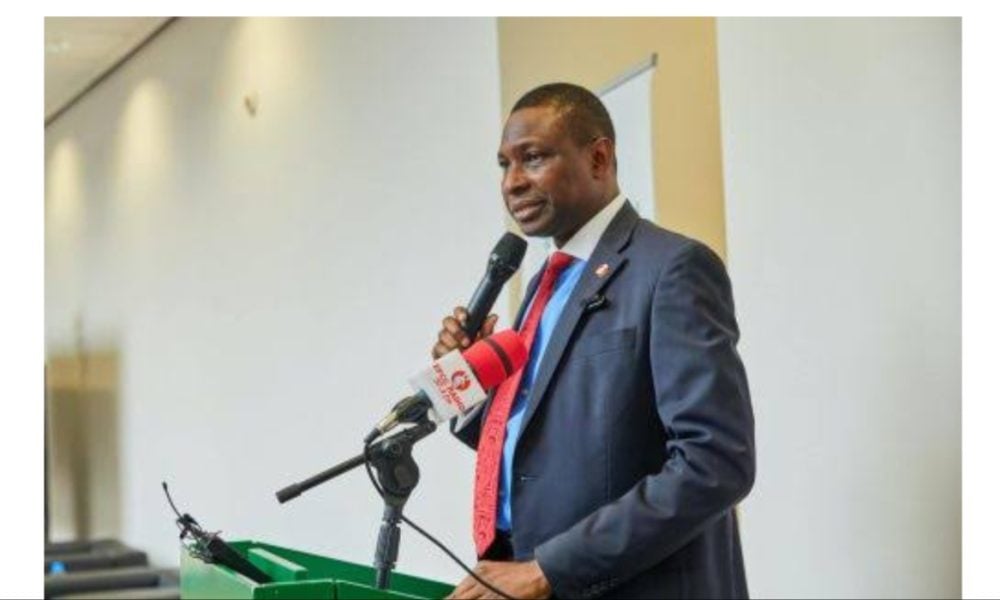
The Executive Chairman of the Economic and Financial Crimes Commission (EFCC), Ola Olukoyede, has urged Christian and Muslim leaders to intensify their campaign against corruption, warning religious institutions against providing social or religious legitimacy to unexplained or illicit wealth.
Olukoyede spoke in Abuja on Wednesday, September 23, 2026, at the second 2026 Council Meeting of the Nigeria Inter-Religious Council (NIREC), where the second edition of the Anti-Corruption Preaching and Teaching Manual for Christians and Muslims was launched.
The meeting, themed “Shared Sacred Flourishing in Nigeria,” brought together senior Christian and Muslim leaders, government officials and traditional rulers to examine the role of faith communities in promoting integrity, peaceful coexistence and the fight against corruption.
Olukoyede said corruption undermines the common good by allowing individuals to convert public or collectively owned resources into private advantage.
He said religious leaders had a unique role in preventing corruption because, unlike law-enforcement agencies that intervene after suspected offences occur, religious institutions can influence the values and behaviour of their followers before corruption takes place.
“The EFCC can investigate a person’s conduct. Faith communities can influence that person’s character. We can prosecute fraud. Religious teaching can cultivate honesty,” he said.
‘Don’t mix church, mosque funds with personal money’
One of the strongest aspects of the EFCC chairman’s message concerned the handling of money received by religious organisations.
Olukoyede warned religious leaders against mixing institutional funds – including tithes, offerings, zakat and other contributions – with their personal finances or private businesses.
He said religious leaders could legitimately engage in businesses and other occupations, but should maintain a clear distinction between money belonging to their religious organisations and their personal resources.
“Don’t mix the money from the purse of your organisation with that of your own personal money,” he warned.
The issue is significant because religious contributions are made for religious, charitable and institutional purposes. Proper accounting and separation of funds therefore become important safeguards against diversion and abuse.
Olukoyede’s warning also raises a broader question about financial governance within churches and mosques: whether institutions receiving substantial contributions have adequate systems for recording income, authorising expenditure, maintaining accounts and preventing institutional funds from being diverted for private purposes.
‘Ask where the money came from’
The EFCC chairman also challenged religious leaders to question the source of extraordinarily large donations rather than automatically celebrating the donors.
He cited the example of a public servant who builds a religious facility worth far more than his legitimate earnings could reasonably support.
“A public servant says he has built a mosque that is worth more than his earnings in the next 500 years. And you go there to dedicate it. You are dedicating the proceeds of crime,” Olukoyede said.
He also warned against accepting huge donations without appropriate scrutiny of their sources.
The concern is not that every wealthy donor or every person accused of corruption should automatically be rejected by a religious organisation. An allegation is not proof of guilt, and legitimate wealth can have many sources.
The issue is whether an institution knowingly accepts or facilitates the use of criminal proceeds, or ignores circumstances that should reasonably trigger questions about the source of funds.
Can a donation make illicit money legitimate?
The EFCC’s warning brings into focus a question facing religious institutions across the country: whether money acquired through corruption can become acceptable simply because it is subsequently donated to a church, mosque or charitable project.
Under Nigeria’s anti-money-laundering and proceeds-of-crime framework, donating money to a religious organisation does not, by itself, change the character or origin of funds derived from criminal activity.
The Proceeds of Crime (Recovery and Management) Act 2022 and the Money Laundering (Prevention and Prohibition) Act 2022 provide important parts of the legal framework for dealing with proceeds of crime and money laundering.
This means religious organisations should be cautious about becoming vehicles through which questionable funds are transferred, concealed or given an appearance of legitimacy.
The ethical issue is equally significant. Publicly honouring a donor, dedicating a building funded with unexplained wealth or presenting a wealthy individual as a model of success can confer social legitimacy on wealth whose origins have not been adequately established.
Due diligence on major donations
The EFCC’s position points towards the need for stronger financial controls within religious institutions.
For major donations, religious organisations could consider documenting the identity of the donor, the amount involved, the intended purpose of the contribution and, where circumstances warrant, the source of the funds.
Particular care may be appropriate where a donation is extraordinarily large, inconsistent with the donor’s known legitimate income, connected to a person facing credible financial-crime allegations, or accompanied by requests that could indicate an attempt to conceal the beneficial owner or purpose of the funds.
Nigeria’s Special Control Unit Against Money Laundering (SCUML) and the Nigerian Financial Intelligence Unit (NFIU) have issued guidance relevant to non-profit organisations and anti-money-laundering compliance.
The objective, however, should not be to discourage legitimate philanthropy. Rather, appropriate controls can help protect religious institutions, donors and beneficiaries from the misuse of charitable and religious structures.
‘Financial crime has no religion’
Olukoyede stressed that corruption and financial crimes do not discriminate according to religion or ethnicity.
“Financial crime has no religion. Corruption has no tribe. Fraud does not become Christian or Muslim because of the identity of the person accused of committing it,” he said.
He noted that when public resources are stolen, both Christians and Muslims suffer.
“A badly equipped hospital does not first ask a dying patient where he worships. A collapsed road does not distinguish between a Christian traveller and a Muslim traveller. Unemployment does not respect denomination. Inflation does not spare one faith community,” he said.
He urged pastors and imams to use the anti-corruption manual to help their followers understand why corruption is morally wrong and harmful to society.
Faith can prevent corruption before it begins
The EFCC chairman said religious institutions could make a major contribution to the fight against corruption by challenging the social culture that equates wealth with success without asking how the wealth was acquired.
“We can confiscate illicit wealth. Churches and mosques can challenge the values that make society worship wealth without questioning its source. We can punish corruption after the event. Faith can help prevent it before it begins,” he said.
The challenge is particularly relevant in a society where prominent donors can receive public recognition through religious ceremonies, building dedications and other forms of honour.
For religious leaders, the issue is therefore not simply whether a contribution can be received, but whether accepting and celebrating the contribution is consistent with the moral standards the institution teaches.
NIREC launches anti-corruption manual
The Executive Secretary of NIREC, Professor Cornelius Afebu Omonokhua, said the newly launched manual was developed to assist Christian and Muslim leaders in teaching their followers authentic religious principles against corruption.
He said the second edition was produced through the Interfaith Anti-Corruption Advisory Committee (IAAC) of the EFCC and includes facilitators’ guides to assist preachers in communicating anti-corruption messages.
Omonokhua said no nation could flourish in the presence of corruption and stressed the responsibility of religious leaders to ensure that their conduct reflects the values they preach.
He expressed optimism that the manual would help address religious corruption and forms of exploitation associated with false or misleading preaching.
Religious leaders at the meeting
Among those who attended the meeting were the President of the Christian Association of Nigeria (CAN), Reverend Daniel Okoh; the Sultan of Sokoto, Alhaji Muhammad Sa’ad Abubakar; Professor Ishaq Oloyede; the Emir of Zazzau, Alhaji Ahmed Nuhu Bamalli; and the Shehu of Borno, Abubakar Umar El-Kanemi, among other dignitaries.
The meeting ultimately placed two related responsibilities before religious institutions: to preach against corruption and to ensure that their own financial practices do not undermine that message.
For churches and mosques, this means that tithes, offerings, zakat and other contributions should be properly accounted for; institutional funds should be separated from the personal finances of religious leaders; and extraordinary donations should prompt appropriate questions about their source.
The larger principle is straightforward: religious institutions can condemn corruption from the pulpit, but their credibility in doing so is strengthened when they also demonstrate transparency and accountability in the way they receive, manage and recognise money.