
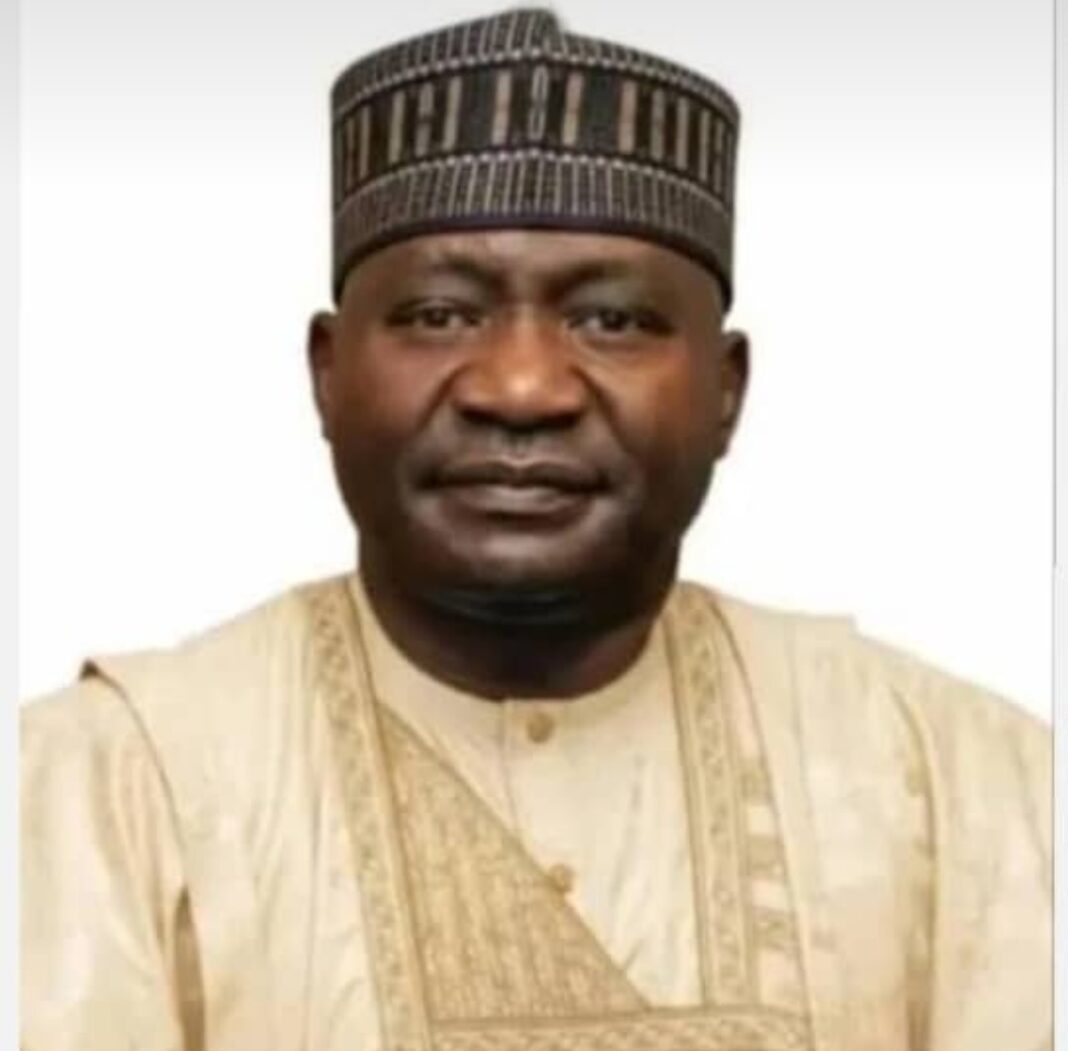
Minister of Defence, General Christopher Musa (retd.), has proposed that every Nigerian should undergo military training to gain a better understanding of the demands, discipline and sacrifices involved in protecting the country.
Musa made the proposal while speaking on the African Leadership Podcast hosted by Ken Giami. The episode, released earlier this week, has since drawn attention to the minister’s comments on military service, national security and the conditions faced by Nigerian troops.
According to Musa, military training would expose citizens to some of the physical hardships experienced by service personnel, including hunger, exhaustion, sleep deprivation and prolonged physical exertion.
“Every Nigerian should be able to go through military training. It will give you a different perspective about life. You will now understand what it means to stay hungry and what it means to work in days without sleep.
“It will show you what endurance means when you walk kilometres and you are tired but you still need to keep on going. You have not eaten; you have not taken one because of the nature of the thing and because you are doing it to protect.”
The minister said such experiences could help Nigerians better appreciate the responsibilities associated with national defence and the conditions under which soldiers operate.
‘Soldiers are fathers, brothers and sisters’
Musa also used the discussion to appeal to Nigerians to recognise the personal sacrifices made by members of the Armed Forces.
He likened the sacrifices of soldiers to the biblical principle of giving one’s life for another, saying military personnel routinely put their lives at risk in the course of protecting the country.
“And that’s exactly what the military men are doing, putting their lives at stake for their country to move around,” he said.
The former Chief of Defence Staff said soldiers are also members of families who leave their loved ones behind while carrying out operations.
“And so that’s why sometimes it’s very painful when you see people insulting the military and telling them they don’t need it or we don’t want this to end. Nobody’s dying now, and they don’t want it to end,” he said.
“Everybody wants peace, and that is important, so we want them to understand soldiers are fathers, brothers and sisters of people. They’ve families they’ve left behind, staying in the weather, rain, dust, night or day, staying there to ensure the country is secured.”
Proposal comes amid changes to national service
Musa’s proposal comes against the backdrop of ongoing changes to the country’s national service framework.
In June 2026, the Federal Executive Council approved comprehensive reforms to the National Youth Service Corps (NYSC), including a redesigned six-week orientation programme, skills-based training and risk-sensitive deployment. The reforms also provide for civilian operational leadership of the NYSC, while the military is expected to continue providing security support for corps members.
The existing NYSC scheme already includes compulsory orientation for graduates mobilised for national service. The official NYSC structure, however, is designed around national unity, community development and youth service rather than universal military training.
Musa’s latest comments therefore constitute a proposal for expanded military exposure for Nigerians; the reports of his remarks do not indicate that the Federal Government has announced a policy requiring every Nigerian to undergo military training.
Sahel withdrawals and border security
The Defence Minister also linked security challenges along Nigeria’s borders to developments in the Sahel, particularly the withdrawal of Burkina Faso, Mali and Niger from the Economic Community of West African States (ECOWAS).
The three countries’ withdrawal from ECOWAS formally took effect on January 29, 2025. ECOWAS said at the time that it would continue to maintain certain arrangements with the countries, including recognition of their passports and identity documents and continued visa-free movement, while modalities for future relations were being worked out.
Musa said the changing regional security environment had contributed to increased infiltration across Nigeria’s borders. He also pointed to stronger bilateral cooperation with neighbouring countries as part of Nigeria’s response.
One such arrangement was concluded in June 2026, when Nigeria and Cameroon signed a Memorandum of Understanding to deepen defence cooperation and strengthen security along their shared southern border. The agreement provides a framework for cooperation in areas including intelligence sharing, joint military training, operational coordination and security of terrestrial and maritime areas.
The agreement is particularly significant because Nigeria and Cameroon share a long border extending from the Gulf of Guinea towards the Lake Chad Basin, an area affected by cross-border security challenges and transnational crime.
In August, Musa also held talks with authorities in neighbouring Benin on regional security cooperation, with discussions focusing on cross-border threats, land-border security and security in the Gulf of Guinea.
Musa’s call for military training appears to be centred primarily on public understanding of the realities of military service. His argument is that direct exposure to physical hardship and discipline could help civilians better appreciate the conditions faced by troops deployed on security operations.
The proposal comes as Nigeria continues to rely on its armed forces to address multiple security challenges while simultaneously pursuing greater regional cooperation on border security.
For now, however, Musa’s comments remain a proposal. No details have been announced on who would be required to undergo such training, how long it would last, who would administer it or whether legislation would be required to establish a nationwide programme.