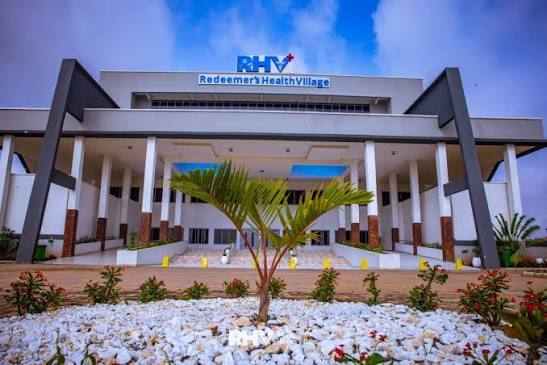
Nigeria recorded a major milestone in advanced healthcare technology after surgeons at Redeemer’s Health Village (RHV) in Mowe, Ogun State, remotely performed a complex kidney operation on a patient at Nisa Premier Hospital in Abuja — about 500 kilometres away.
The procedure, performed on Saturday, September 19, 2026, has been described by the participating institutions as West Africa’s first tele-robotic surgery. The operation brought together Redeemer’s Health Village, RoboMed Global and Nisa Premier Hospital in a demonstration of how robotic surgery and telecommunications could allow specialist surgical expertise to cross geographical boundaries.
The operation was a telesurgery-assisted, robot-assisted right radical nephrectomy, a procedure in which the affected kidney is removed, in this case because of a cancerous tumour. The surgeon controlling the operation was physically at RHV in Ogun State, while the patient remained in Abuja.
The operation was led by Professor Obi Davies-Ekwenna, a professor of urology and transplantation and co-founder of RoboMed Global.
Using a Toumai robotic surgical console at RHV, Davies-Ekwenna controlled the robotic system positioned at Nisa Premier Hospital. The arrangement allowed the surgeon’s commands to be transmitted electronically to the robotic instruments operating on the patient in Abuja.
According to News Agency of Nigeria (NAN), the procedure lasted approximately three hours, with brief pauses during the operation to verify that the equipment, communication link and supporting systems were functioning properly. Davies-Ekwenna said the patient was in good condition after the procedure and was expected to be discharged within 24 hours.
Davies-Ekwenna described the patient as being approximately 500 kilometres from the surgical team and said the operation demonstrated the potential for specialists to provide complex surgical care across geographical distances.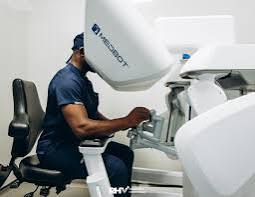
What actually happened inside the operating theatre?
Tele-robotic surgery differs from conventional robotic-assisted surgery principally in the location of the surgeon.
In ordinary robotic surgery, the surgeon sits at a console in or immediately beside the operating theatre and controls instruments attached to a robotic patient-side system. In telesurgery, the surgeon’s console and the patient-side robotic system are separated by a communications network.
This was central to the Nigerian procedure.
At Nisa Premier Hospital, the patient and the local operating-room team were physically present with the robotic equipment. At RHV, the remote surgeon operated the console. The two sites were connected through telecommunications infrastructure capable of transmitting surgical commands and high-definition visual information in real time.
RHV Chief Executive Officer Dr Adedamola Dada said reliable connectivity had been built into the system because interruptions could pose a major challenge to remote surgery. He noted that weather, equipment quality and the availability of appropriately trained personnel can all affect telesurgical operations.
The safety architecture is particularly important because remote surgery cannot depend solely on an internet connection. Technical literature on telesurgery emphasises the importance of low latency, network redundancy, a trained bedside team and predefined procedures for responding to connectivity or equipment failure.
The operation was performed using the Toumai robotic surgical system, developed by Shanghai-based MicroPort MedBot.
The platform is designed as a master-slave robotic system consisting of a surgeon console, patient-side robotic equipment and a vision system. Published research describes its high-definition three-dimensional imaging, articulated instruments and ability to support remote operation over different communication networks.
MicroPort MedBot announced in May 2025 that its Toumai Tele-Robotic Surgical System had received regulatory approval for commercial clinical use in China, describing it as the first tele-operated surgical robotic system approved for commercial clinical use globally.
The system’s remote capability is significant because telesurgery places unusually demanding requirements on communications.
A surgeon must receive a sufficiently clear visual representation of the operative field while movements at the console must reach the robotic instruments with minimal delay.
Research published in 2026 has demonstrated remote Toumai procedures at distances ranging from tens of kilometres to thousands of kilometres in controlled clinical settings. One study involving 21 patients reported successful remote procedures over approximately 3,700 kilometres using redundant 5G connectivity, although such results come primarily from Chinese clinical programmes and cannot automatically be assumed to predict outcomes in Nigeria.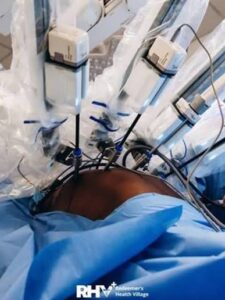
A second robotic milestone at RHV
The September 19 tele-robotic operation was not the only significant procedure performed at RHV that day.
The hospital reportedly also carried out a robotic-assisted pyeloplasty on a 28-year-old patient. Pyeloplasty is a reconstructive procedure used to correct an obstruction affecting the drainage of urine from the kidney. The reported objective was to remove the obstruction and restore normal urine flow.
The two procedures illustrate two different applications of the technology: robotic surgery performed with the surgical team physically present at the hospital, and the more technically demanding model in which the principal surgeon operates remotely.
The development follows the formal introduction of robotic surgery at Redeemer’s Health Village earlier in 2026.
RHV is a 300-bed faith-based multispecialty hospital established by the Redeemed Christian Church of God (RCCG). The hospital has been developing robotic surgery as part of efforts to expand access to advanced surgical services in Nigeria.
At the launch of its robotic surgery programme in August, RHV said the initiative was being developed in partnership with RoboMed Global and would combine clinical services with professional training.
Dada said that RHV had invested about $4 million in robotic surgical services and training infrastructure. The hospital also announced plans for a robotic academy designed to train Nigerian surgeons and other healthcare professionals, including nurses and biomedical engineers.
NAN reported after the tele-robotic procedure that the planned academy aims to train at least 150 surgeons within two years, while the programme is intended to train doctors, nurses, biomedical engineers and other personnel required to operate and maintain robotic systems.
The emphasis on training could prove as important as the robotic hardware itself. Dada said that manpower, rather than simply purchasing robotic equipment, had become one of the central challenges facing Nigeria’s emerging robotic-surgery sector.
Nigeria’s robotic-surgery journey began before the tele-operation
The September breakthrough did not occur in isolation.
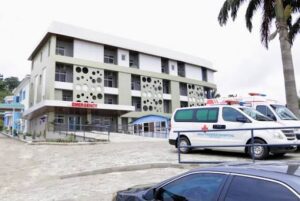
Nisa Premier Hospital in Abuja began developing its robotic-surgery programme in 2025. In November that year, the hospital commissioned what was reported as Nigeria’s first Toumai Pro robotic surgery platform.
In December 2025, Nigeria’s National Agency for Food and Drug Administration and Control (NAFDAC) approved the Toumai robotic surgical system for clinical use. The approval was reported as the first regulatory clearance of a robotic surgical platform in West Africa. The regulatory decision followed robotic procedures performed at Nisa Premier Hospital in November 2025.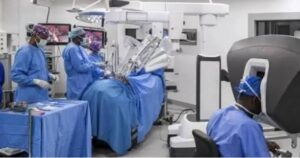
Since then, the Nigerian programme has expanded rapidly.
In August 2026, Nisa Premier Hospital and RoboMed Global reported performing what they described as Africa’s first robotic Whipple procedure, a highly complex operation used in the treatment of diseases including pancreatic cancer. The procedure was performed using the Toumai platform.
The sequence – regulatory approval, conventional robotic procedures, expansion to more complex operations and now remote telesurgery – shows how quickly robotic surgery has moved from demonstration to clinical deployment in Nigeria.
The importance of the September operation lies less in the distance itself than in what the distance represents.
Nigeria’s specialist medical expertise is unevenly distributed, and patients sometimes travel considerable distances to obtain highly specialised treatment. Remote surgery potentially offers another model: instead of moving the patient to the specialist, the specialist could, under appropriate clinical and regulatory conditions, operate remotely on the patient.
Dada described RHV as a potential gateway through which specialist skills could be transferred to patients in different parts of Nigeria. He said the goal was to reduce the need for Nigerians to travel abroad for sophisticated surgical procedures.
Davies-Ekwenna similarly said telesurgery could eventually allow specialists within Nigeria and the Nigerian diaspora to provide expertise remotely.
This could have implications beyond surgery. Remote robotic platforms could potentially support specialist consultations, surgical mentoring, training and collaboration between tertiary hospitals and facilities with fewer specialist resources.
But tele-robotic surgery is not simply “surgery over the internet”
The technology comes with substantial technical and clinical requirements.
A remote surgical system must maintain extremely reliable communications because delays or interruptions can affect the relationship between a surgeon’s hand movements and the robotic instruments. Published technical guidelines emphasise low latency, network reliability, cybersecurity, redundancy and the presence of appropriately trained personnel at the patient’s location.
The bedside team remains essential. Even when a specialist is operating from hundreds or thousands of kilometres away, medical personnel at the patient’s hospital must be capable of managing anaesthesia, monitoring vital signs, assisting with the robotic system and responding if a technical problem requires the procedure to be modified or converted to another surgical approach.
There are also questions surrounding credentialing, professional liability, patient consent, cybersecurity, data protection and responsibility for complications when the surgeon and patient are in different locations. These issues become even more complex when telesurgery crosses international borders.
For Nigeria, therefore, the long-term test will not simply be whether one 500-kilometre procedure can be completed successfully. It will be whether the technology can be incorporated safely, consistently and affordably into routine clinical practice.
A technology with a long history
Although the Nigerian procedure is new to West Africa, remote robotic surgery itself is not new.
The landmark Lindbergh Operation in September 2001 demonstrated the possibility of transcontinental telesurgery when French surgeon Professor Jacques Marescaux operated from New York on a patient in Strasbourg, France. The operation was a laparoscopic gallbladder removal and was successfully completed using a robotic system and high-speed telecommunications connection.
More than two decades later, advances in broadband networks, fibre, 5G, satellite communications, robotic instruments and image processing have made remote surgery increasingly practical in selected circumstances.
Recent research has reported successful remote robotic procedures over distances of hundreds and thousands of kilometres, although researchers continue to emphasise the need for controlled infrastructure, backup systems and careful patient selection.
Nigeria’s September procedure therefore represents a regional milestone within a much longer global evolution of telesurgery.
The participating institutions have indicated that the next phase will involve expanding clinical capacity rather than treating the operation as a one-off demonstration.
RHV and RoboMed Global are planning structured training for surgeons, nurses and biomedical engineers, while Nisa Premier Hospital continues to expand its robotic programme. NAN reported that the proposed RHV academy aims to train at least 150 surgeons over two years.
The success of that strategy will depend on several factors: reliable telecommunications, electricity and hospital infrastructure; access to trained surgical and technical personnel; regulatory oversight; equipment maintenance; financing; patient safety systems; and the ability to collect and publish clinical outcomes.
There is also the question of affordability. RHV has presented robotic surgery as part of an effort to make advanced treatment available within Nigeria and reduce medical tourism, while government officials have called for a stronger healthcare ecosystem to support the technology.
For patients, the potential attraction is straightforward: access to specialist expertise without necessarily having to travel hundreds or thousands of kilometres.
For surgeons, the technology could create new opportunities for collaboration, training and remote specialist support.
For Nigeria’s healthcare system, the larger challenge is converting individual technological breakthroughs into a sustainable national capability.
The new chapter in Nigerian healthcare is not does not eliminate the need for specialist hospitals, operating-room teams or conventional medical infrastructure. Instead, it points toward a healthcare model in which physical distance may become less restrictive for certain forms of specialist care.
For Nigeria, the significance of the procedure extends beyond the robot itself. It represents the convergence of surgery, telecommunications, engineering, specialist training and hospital infrastructure — and an attempt to use those technologies to address one of the country’s persistent healthcare challenges: connecting patients with highly specialised expertise.
The surgeon was in Ogun State. The patient was in Abuja. The operating system connected them in real time.
For West Africa, that may prove to be the most important part of the story.