
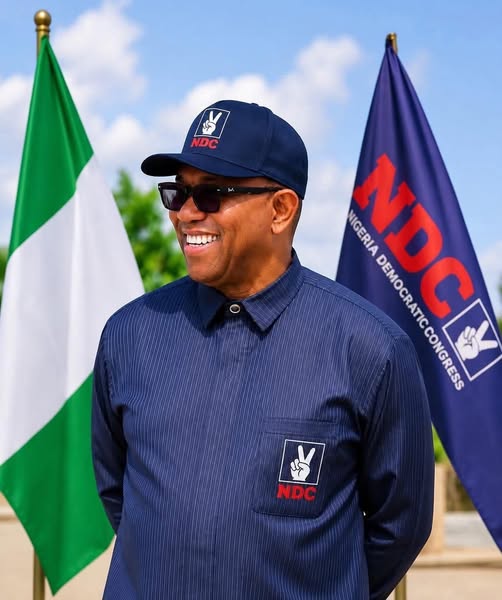

The political atmosphere ahead of Nigeria’s 2027 general elections came under renewed scrutiny on Tuesday after the convoy of the presidential candidate of the Nigeria Democratic Congress (NDC), Peter Obi, was blocked by youths along the Gboko-Makurdi road in Benue State.
Obi, a former governor of Anambra State, said he had travelled to Benue primarily to visit Yelwata in Guma Local Government Area, where scores of residents were killed in a June 2025 attack, and to sympathise with bereaved families.
The incident, which occurred around the Gyado Villa area near the Nigerian Air Force Base, forced Obi’s entourage to abandon the planned journey. Videos circulated by Obi’s campaign photographer, Esther Umoh, appeared to show a group of men carrying sticks and other objects on the road, with security personnel positioned between the crowd and the convoy. Other footage showed the convoy turning back.
The Benue State Police Command subsequently confirmed that Obi’s movement was known to the police and that officers provided security for the journey. However, the command said it had not established why the youths blocked the convoy and had commenced an investigation.
According to Police Public Relations Officer, DSP Peter Orchia Aondongu, the command was “aware of the incident involving Peter Obi’s movement to Yelwata” and had deployed personnel to provide security. He said the reason for the blockade remained unknown.
Obi: “I Am in Benue, Not for Campaign”
Speaking to journalists after the incident, Obi rejected the suggestion that his presence in Benue was connected to electioneering.
He said he had gone to the state because people had been killed and he wanted to express sympathy and solidarity with their families.
“Today, I’m in Benue, not for campaign. I only wanted to go to a place where people lost their lives, and condole them, show solidarity with them,” Obi said.
He described the development as evidence of the deterioration of political engagement in Nigeria and warned against allowing political competition to descend into violence and intimidation.
Obi also appealed to the police and other security agencies to intervene, describing the obstruction as unacceptable.
The NDC candidate’s account was corroborated in part by the police confirmation that the convoy was indeed blocked. The police, however, have not attributed the action to any political party, government official or particular group.
Obi Accuses Governor’s Aide; Alia Government Denies Allegation
The incident quickly became politically charged after Obi alleged that youths involved in the blockade were being led by an aide to Benue State Governor, Hyacinth Alia.
Obi said he was informed that youths allegedly acting under the direction of a government aide had blocked the road to prevent him from reaching Yelwata.
Datti Baba-Ahmed’s Jihadist Ancestry: The Story Behind the Claim
The allegation was promptly rejected by the Benue State Government.
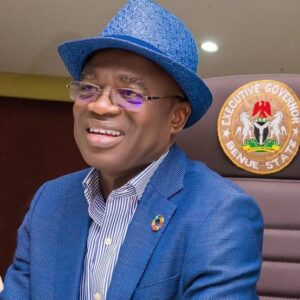
Governor Alia’s Chief Press Secretary, Tersoo Kula, said the government was not aware of Obi’s visit and emphatically denied that the administration had sponsored or deployed youths to obstruct the NDC candidate.
Kula said the government had no reason to regard Obi as a threat and questioned why the former Anambra governor would arrive in the state without the state authorities being informed. He also argued that, given Obi’s status as a presidential candidate and former governor, appropriate security coordination should have taken place ahead of his movement.
The Benue Government subsequently described Obi’s allegation as unfounded and suggested that the former governor’s claim could be connected to internal political disputes within the NDC. The administration maintained that it neither authorised nor participated in the blockade.
There is therefore a significant discrepancy between the accounts of Obi’s camp and the state government: while Obi alleged political interference involving a government aide, the government denied knowledge of his visit and rejected any connection with those who blocked the convoy.
Police Account Complicates the Dispute
The police position has added another dimension to the controversy.
While the Benue Government says it was not informed of Obi’s visit, the state police command says it knew about his movement to Yelwata and provided security.
The NDC governorship candidate in Benue State, Professor Terhemba Shija, also said the relevant security agencies had been notified and that police and Department of State Services personnel accompanied Obi’s team.
The police have not, however, said that the state government was formally notified. Neither have investigators publicly established who organised the youths or why the road was blocked.
The distinction is important. The available evidence establishes that the convoy was obstructed and that police were present, but it does not yet establish who ordered the obstruction or whether the incident was politically sponsored.
The police investigation is therefore likely to be central to determining whether the incident was an organised political action, a spontaneous protest or another form of confrontation.
Yelwata: The Humanitarian Background
Obi’s proposed destination, Yelwata, remains one of the symbols of Benue’s prolonged security crisis.
On June 14, 2025, gunmen attacked Yelwata, with Amnesty International reporting that more than 100 people were killed and thousands displaced. The rights organisation said the attack was part of a pattern of violence that had already displaced hundreds of thousands of people across Benue State.
The Associated Press, citing Amnesty International Nigeria, similarly reported that at least 100 people were killed in the attack, with many victims reportedly burned in their homes and others still missing in the aftermath.
The scale of the Yelwata tragedy explains the political sensitivity surrounding visits to the affected community. It also provides the humanitarian context for Obi’s claim that his latest trip was intended as a condolence visit rather than a conventional campaign engagement.
Reports on Tuesday said he was eventually unable to reach the community and subsequently returned to Abuja.
A Second Benue Controversy in 17 Months
Tuesday’s incident is not the first disagreement between Obi and the Benue State Government over his visits to the state.
In April 2025, Obi announced that he had cancelled a planned visit to internally displaced persons and health facilities in Benue after the state government raised security and protocol concerns over what it described as an unscheduled visit.
Obi at the time maintained that the trip was humanitarian and not political. He criticised what he regarded as the politicisation of charitable and humanitarian activities.
The recurrence of such disputes has now added a political dimension to Tuesday’s confrontation. What might ordinarily have been a security incident has evolved into a debate over political access, government protocol, the rights of presidential candidates to travel and the increasingly competitive environment ahead of 2027.
Incident Follows Opposition Unity Overture
Tuesday’s confrontation also came less than 24 hours after Obi appeared alongside another major opposition presidential contender, Oyo State Governor Seyi Makinde, at the commissioning of Makinde’s presidential campaign office in Abuja.
At Monday’s event, Obi praised Makinde as qualified to become president and urged Nigerians to support whoever emerged victorious in a free, fair and credible election.
He also called for opposition politicians to put aside personal and political differences in the national interest.
The timing is politically significant.
Obi and Makinde are currently presidential candidates on different platforms, yet their public appearance together demonstrated an effort to maintain channels of engagement among opposition forces as the 2027 contest gathers momentum.
Obi’s message at the Abuja event centred on unity, inclusion and the need to “rescue Nigeria” from poverty, insecurity and other national problems.
It was against that backdrop that Obi arrived in Benue on Tuesday and subsequently used the convoy incident to renew his call for a less confrontational political culture.
APC Also Denies Involvement
The allegations have not been limited to the state government.
The Benue incident reinforces a narrative he has repeatedly advanced: that Nigerian politics should move away from hostility and towards competition based on ideas, governance and public welfare.
The Benue State chapter of the NDC accused the All Progressives Congress (APC) of mobilising youths to prevent Obi from reaching Yelwata.
The APC, however, denied involvement.
The party’s Benue publicity secretary, Benedict Yaweh, said the APC was not aware of the alleged attack and insisted that the party did not engage in political thuggery.
Thus, as of Tuesday evening, neither the APC nor the Benue State Government had accepted responsibility for the obstruction, while the police had yet to identify those behind it.
Beyond the immediate confrontation, the incident raises questions about the conduct of political competition in Nigeria.
With the 2027 presidential election approaching, the political environment is already witnessing increased movement by opposition figures, competing presidential ambitions and discussions about possible alliances.
The ability of politicians to travel freely across states, meet citizens and visit communities affected by insecurity will increasingly become an issue of national importance.
For Obi, the Benue incident reinforces a narrative he has repeatedly advanced: that Nigerian politics should move away from hostility and towards competition based on ideas, governance and public welfare.
For the Benue Government, however, the episode raises an equally important question about security coordination. Its officials insist that the administration was unaware of the visit and therefore could not have arranged adequate state-level protection.
The police position appears to confirm that security personnel were present, but the command has yet to explain how a group of youths was able to obstruct a presidential candidate’s convoy despite that security presence.
The unanswered question could become one of the most consequential aspects of the incident.
What remains unresolved is who organised the blockade, what motivated it and whether any political actor directed or sponsored it.
Those questions are now before the police investigation.
Until investigators provide further findings, allegations linking the incident to Governor Alia, the APC or any other political organisation remain allegations rather than established facts.
The confrontation nevertheless offers an early warning about the political climate Nigeria could face as the 2027 election approaches: in a country already grappling with insecurity and deep political divisions, even a purported humanitarian visit can quickly become entangled in partisan suspicion.
Obi’s closing message after the incident was therefore as much a political statement as it was a reaction to what had happened.
“We have no other country except this one,” he said, urging Nigerians to build the country around “unity,” “love” and a shared commitment to doing what is right.
Whether that appeal gains traction may depend, in part, on whether political actors and security institutions can ensure that disagreements over the 2027 contest do not translate into intimidation, violence or restrictions on legitimate political activity.