
1. Background: The Kano Governorship Election Petition
The 2023 Kano governorship election between the All Progressives Congress (APC) and the New Nigeria Peoples Party (NNPP) was one of the most keenly contested and most litigated elections in Nigeria’s history.
Governor Abba Kabir Yusuf of the NNPP was first declared winner by INEC. The APC candidate, Nasiru Yusuf Gawuna, challenged the result at the Election Petition Tribunal. The Tribunal sacked Governor Yusuf. The Court of Appeal in Abuja affirmed the sack. The case then went to the Supreme Court, the final court of the land.
In a shocking reversal, the Supreme Court in January 2024 restored Governor Yusuf as the duly elected Governor of Kano State, on the ground that the lower courts had erred in law.
At that time, Nigerians celebrated it as a victory for justice and for the independence of the judiciary. Today, that celebration has been destroyed by the Governor himself.
2. What The Governor Said On BBC Hausa
In his recent interview with BBC Hausa, Governor Abba Kabir Yusuf made a confession that has shaken the foundation of Nigerian democracy.
He alleged, in his own words, that: His mentor, Dr. Rabiu Musa Kwankwaso, instructed him to go and negotiate with President Bola Ahmed Tinubu.
In that negotiation, he swore with the Holy Qur’an that if President Tinubu would allow the Supreme Court to give judgment in his favour as Governor, they would move to the APC.
And because of that agreement, the judgment was given, and that is why he now has to leave the NNPP and go back to the APC.
This is not an allegation by an opposition politician. This is not a rumour on social media. This is a confession by the direct beneficiary of the judgment, the sitting Governor of Kano State, on the most trusted international Hausa medium, the BBC.

3. Implication For President Bola Ahmed Tinubu
This interview places the President in a very dangerous position, nationally and internationally.
First, it creates the impression that the President of the Federal Republic of Nigeria interfered in a judicial process and used the Supreme Court as a bargaining tool for political defection.
Second, it portrays the Presidency as engaging in a quid pro quo: judgment in exchange for political loyalty. In any democratic country, that is an impeachable abuse of power and a criminal obstruction of justice.
Third, it destroys the President’s claim that he is a democrat who does not interfere with the judiciary. How will the President now convince Nigerians, or the world, that other judgments of the Supreme Court under his tenure were not also negotiated?
Even if the President denies it, the damage is done. The world has heard it from the Governor himself.

4. Implication For The Judges: Tribunal, Court Of Appeal And Supreme Court
This is the most dangerous part.
Nigeria’s judiciary has for years been accused of being compromised, of delivering judgments for sale, of being the playground of politicians. The judiciary has always denied it and insisted on its independence.
Now, the Governor has confirmed the worst fears of Nigerians:
That the Tribunal and the Court of Appeal, who sacked him, were overruled not because of law, but because of a political deal at the top.
That the Supreme Court, the highest court in the land, whose judgment is final and cannot be appealed, gave judgment not on the merit of the case, but because of an agreement sealed with the Holy Qur’an.
What does this mean for the Justices who sat on that panel?
It means their integrity, their oath of office, and their legal reasoning are now called into question before the whole world. It means their judgment, which was supposed to be based on law and evidence, is now being presented as a product of political negotiation.
If a Governor can boldly say this, what will stop every loser in every election petition from now on from saying: “I lost because I did not negotiate well”? The judiciary will lose all public confidence.
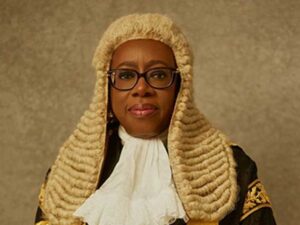
A judiciary without public confidence is dead. No investor will trust it. No citizen will trust it.
5. Implication For Nigeria Before The International Community, Human Rights Community And America
This is where the danger becomes international and existential for Nigeria.
Nigeria is already under severe international scrutiny. The United States, the European Union, the United Kingdom, Amnesty International, Human Rights Watch, and other bodies have repeatedly accused Nigeria of:
– Election manipulation
– Weak rule of law
– Judicial corruption
– Human rights abuses
– Shrinking democratic space
America in particular, under its current foreign policy on democracy and religious freedom, is watching Nigeria very closely. The United States Congress, the State Department, and international human rights organisations have in recent times openly questioned whether Nigeria is still a democracy.
Now, a Governor of Kano State – Kano, one of the largest and most important states in Africa, with a population larger than many countries – has come out on BBC, a global medium, to say that Supreme Court judgment was traded for political defection.
To the international community, this is no longer an allegation. This is an admission. This is evidence.
The consequences will be severe:
a) Loss of Democratic Credibility: Nigeria will be classified internationally as a country where courts do not decide cases on law, but on political deals. This will be used to justify sanctions, visa restrictions, and downgrading of Nigeria in democracy indices.
b) Human Rights And Rule Of Law Reports: International human rights bodies will cite this interview in their annual reports as proof that Nigerians cannot get justice in their own courts. The case will be quoted in the US State Department Human Rights Report on Nigeria.
c) Economic Consequences: No serious foreign investor will bring billions of dollars to a country where even a Supreme Court judgment can be negotiated in a political meeting. Investors need courts they can trust. This interview tells them Nigerian courts cannot be trusted.
d) Danger To National Security And Diplomacy: America and other Western powers are already accusing Nigeria of using state institutions to persecute opponents and protect allies. This interview gives them ammunition to pressure Nigeria, to impose conditions on military aid, security cooperation, and trade.
Implication For Democracy In Nigeria
The greatest danger is internal.
If Supreme Court judgments can be negotiated, then elections in Nigeria are meaningless. Why should Nigerians vote, why should they go to court, why should they believe in INEC, if the final result is decided by who swears best and negotiates best with the President?
This interview teaches Nigerian politicians a dangerous lesson: You do not need a good case. You do not need to win election. You just need to negotiate with power.
That is the death of democracy.
It also creates a dangerous precedent for Kano itself. The people of Kano voted for NNPP and Kwankwasiyya, not for APC. If their Governor now says he was forced to move to APC because of a deal for judgment, then the mandate of the people has been sold. The people will feel betrayed. That betrayal can lead to political violence, protests, and loss of faith in the system.
The Religious Dimension: Swearing With The Holy Qur’an
The Governor said he swore with the Holy Qur’an.
In Northern Nigeria, and in Islam, swearing with the Qur’an is the highest form of oath. It is sacred. It is not to be joked with.
To use the Holy Qur’an to seal a political deal to influence a court judgment is a desecration of religion for politics. It tells the world that even sacred things are used in Nigeria to manipulate justice.
To the Muslim Ummah and to the international religious freedom community, this is deeply troubling. It reduces a holy oath to a tool of political bargaining.
8. Conclusion: A Self-Inflicted Wound On Nigeria
Governor Abba Kabir Yusuf may have thought he was just explaining why he left NNPP for APC. He may have thought he was just being honest and loyal to his mentor.
But what he has done is far bigger than himself.
He has indicted the President.
He has indicted the Supreme Court.
He has indicted the Nigerian judiciary.
He has indicted Nigeria before the whole world.
For a Governor of a great state like Kano to come out boldly on BBC Hausa and say this is dangerous, reckless, and unpatriotic. It is a confession that will be used against Nigeria for years to come by international communities, human rights organisations, and America.
Nigeria cannot afford this. The judiciary cannot afford this. Democracy cannot afford this.
What the Governor said cannot be unsaid. The BBC has recorded it. The world has heard it. History will judge it.
● A social media post – Author Unknown