
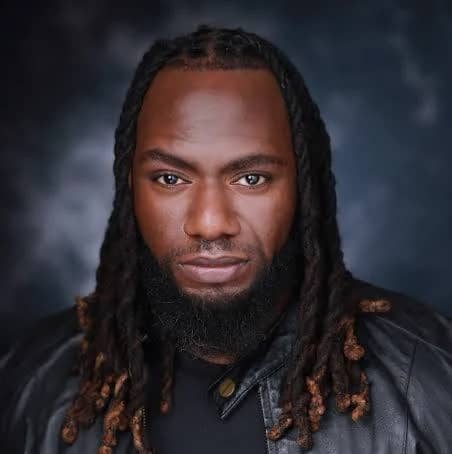
By Crispin Oduobuk
There is an aspect of the unfolding drama at The Fountain of Life Church that I find particularly troubling. And it has little to do with whether Pastor Jimmy Odukoya wears dreadlocks, has tattoos, or whether his new wife wears a nose ring.
To be honest, I have reservations about some of these things. I have never warmed to tattoos and nose rings. I see them as expressions of unresolved rebellion, although I recognise that this is a personal disposition rather than a universal social or theological position. But that is beside the point.
What I find unbearable is the hypocrisy surrounding the demand that Jimmy Odukoya should relinquish the church his late father founded.
Let us be honest with ourselves. How many Nigerian men would willingly surrender a successful business established by their fathers because some people within the organisation suddenly decided that somebody else would make a better successor?
How many would hand over their father’s thriving company, estate, school or other enterprise simply because a board of trustees, relatives or influential stakeholders had reservations about their leadership style?
I suspect the answer is fairly obvious.
Nigerian men understand inheritance. We understand family legacies and the emotional, material and historical significance of what our fathers built. Indeed, in many Nigerian families, the struggle to inherit a father’s estate can become a full-blown family war. Brothers who have not spoken to one another in years suddenly discover an uncommon interest in family history when property is involved.
Yet, when the inheritance happens to be a church, suddenly, we discover a different standard of morality.
A son must surrender his father’s legacy. He must somehow demonstrate that he has no particular attachment to the institution his father spent years building. Are you people for real? If you were the one in that position, would you willingly step aside? I suspect most honest answers would be no.
That’s why I say no!
No Jimmy!
Jimmy, no gree o!
Let me explain.
Pastor Taiwo Odukoya and his late wife, Pastor Bimbo Odukoya, founded The Fountain of Life Church in 1992. For more than three decades, they built a ministry that became a significant presence in Nigeria’s Christian community. When Pastor Taiwo died in 2023, his son Jimmy eventually emerged as Senior Pastor.
Now, three years later, the church is embroiled in a succession crisis.
A faction of the Board of Trustees has produced a video recorded in December 2021 in which the late founder reportedly named Pastor Kunle Areogun as his preferred successor, with Jimmy assigned an administrative and youth ministry role. The trustees say the recording was not presented when Jimmy was appointed in 2023. Jimmy has acknowledged keeping the recording but described his failure to act on his father’s subsequent instruction to delete it as a grave mistake.
The trustees have since withdrawn their recognition of him as Senior Pastor and appointed an interim leader. A Lagos State High Court has also issued an interim restraining order against him, with the matter scheduled to return to court on December 1.
These are serious developments. There are legitimate questions about the church’s constitution, the founder’s recorded wishes, his reported subsequent laying of hands on Jimmy, and the circumstances of Jimmy’s appointment. They all deserve proper examination.
More importantly though, I want to make a broader point about inheritance, succession and the curious moral standards we sometimes apply to other people’s affairs.
To be clear, a church is not necessarily a family business, but neither is a family legacy automatically stripped of its familial significance simply because it is a church. There is a distinction between owning a church and having a legitimate claim to continue the work of a father who founded one.
Nobody is suggesting that a pastor’s son should automatically inherit a congregation as though worshippers were family property. But why should the possibility of a son succeeding his father be treated as inherently suspicious?
The Bible itself offers an interesting perspective. Under the Old Testament arrangement, the priesthood was hereditary. God specifically instructed Moses to bring Aaron and his sons before Him to serve as priests (Exodus 28:1). The priestly office was to continue through Aaron’s lineage (Exodus 29:29-30). Numbers 25:13 also speaks of God’s covenant with Phinehas and his descendants, establishing a lasting priesthood through his family.
Of course, the New Testament presents a different understanding of priesthood, describing believers collectively as a royal priesthood (1 Peter 2:9). Pastoral leadership also comes with spiritual, moral and institutional responsibilities that cannot be discharged merely by producing a birth certificate.
However, the point remains: there is nothing inherently unbiblical about a son continuing his father’s spiritual work.
The question should be whether he is capable, whether he has the calling, whether he enjoys the confidence of the congregation and whether his succession is consistent with the institution’s governing arrangements. These are legitimate considerations. Personal dislike of his appearance is not.
And this brings me to another aspect of the controversy. Apparently, Jimmy’s dreadlocks, tattoos and general appearance have become part of the conversation about his suitability for pastoral leadership.
I do not have to like his tattoos or approve of every fashion choice he makes. But I struggle to understand how a man’s hairstyle suddenly becomes a more compelling measure of his spiritual suitability than his character, competence and pastoral record.
For those worried about nose rings, perhaps they should revisit Genesis 24:22, where Abraham’s servant gives Rebekah a gold nose ring and bracelets. Ezekiel 16:12 also employs the imagery of a nose ring and earrings in describing God’s adornment of Jerusalem.
One may have personal reservations about contemporary body adornment, but it would be difficult to establish that every nose ring is an offence against biblical Christianity.
The same caution applies to tattoos. Leviticus 19:28 prohibits bodily markings, although Christians differ over how that instruction applies under the New Covenant. And this is nothing new. The relationship between the Old and New Testament is a never-ending debate within the body of Christ.
So, disagreement over tattoos should not become a convenient instrument for disqualifying somebody from pastoral leadership without establishing more substantial grounds.
And then there is the matter of remarriage. Marriage, divorce and remarriage are serious theological issues. Churches are entitled to uphold their doctrines and insist that their leaders meet prescribed standards. But such standards must be applied consistently, fairly and without selective outrage.
Let nobody miss my point. My concern is the double standard this issue is revealing. We are a society in which men will go to extraordinary lengths to preserve family businesses, estates and commercial interests established by their fathers. Some will spend years fighting siblings and relatives to secure what they consider their rightful inheritance.
Yet, when the inheritance is a church, some suddenly become enthusiastic advocates of detachment from family legacy.
Really?
Inheritance is not merely about collecting what a father leaves behind. It is also about accepting the responsibility of continuing what he spent his life building. A son may not be perfect. He may make mistakes and need correction. But none of these automatically extinguishes his legitimate interest in his father’s legacy.
The congregation’s interests must matter. The church’s constitution must matter. The founder’s documented wishes must matter. And the truth must matter, even when inconvenient.
But fairness must also matter.
And there is, it has to be stated, another important detail. Bishop Francis Wale Oke has publicly recounted that, in his final months, Pastor Taiwo placed his hand on Jimmy’s head and told him, “Now Jimmy, it’s your story.”
For many Christians, such an act of laying on of hands carries considerable spiritual significance, particularly in the context of impartation, commissioning and the passing of responsibility. It is a detail that deserves consideration in any honest examination of the succession question.
Moreover, if we believe family succession is legitimate in business and other spheres of Nigerian life, we cannot suddenly pretend that the principle becomes morally objectionable simply because the enterprise happens to be a church.
The pulpit may be sacred, but the people who occupy it are human beings. And the institutions they build are not exempt from the ordinary questions of inheritance, continuity, accountability and fairness.
I do not know Jimmy Odukoya from Adam. But I believe the man deserves a fair hearing. His father’s legacy deserves protection. And the congregation deserves a leadership process that is transparent, credible and consistent with the church’s governing principles.
At the same time, let us not pretend that a son wishing to continue his father’s work is an outrageous proposition.
After all, if the same Nigerian men demanding that Jimmy surrender his father’s church were asked to surrender their own fathers’ businesses, estates or other successful ventures, how many would oblige?
That, for me, is where the real hypocrisy lies.
That’s why I say No!
No Jimmy!
Jimmy, no gree o!
● Oduobuk, a former Acting Editor of Weekly Trust, writes from Abuja.