
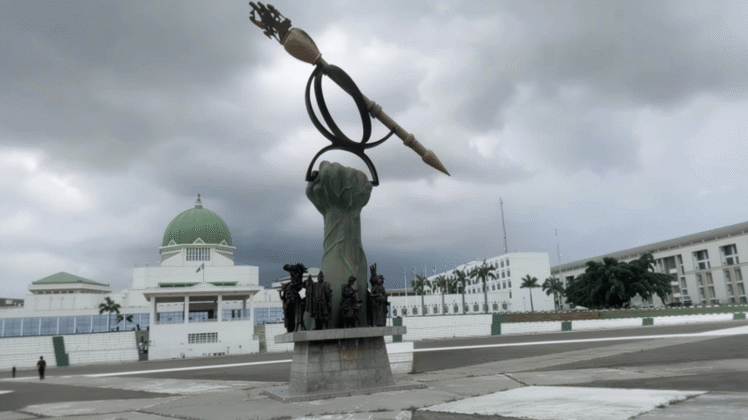
● Speaker Abbas Blocks Move to Summon President
● Lawmakers Lament Delayed Releases to MDAs, Unpaid Contractors, Stalled Constituency Projects
A rare show of defiance against President Bola Ahmed Tinubu may have emerged in the House of Representatives as lawmakers across party lines expressed frustration over what they described as the persistent failure of the Executive to fully implement budgets approved by the National Assembly.
But there may be more than meets the eye as different groups among the lawmakers are believed to be mad that the action of the Executive cost them their party tickets at the recently concluded primaries. There are those fearful that though they have their party tickets, the non-implementation of the budget and execution of projects will cost them the coming elections.
“It is not for any altruistic reason they have developed a capacity to bark, it is all about failing to deliver to the electorate and their political future ,” a source said.
The development on the floor of the House on Wednesday, amid suppressed anger in the Senate, signalled what observers describe as one of the most serious strains yet in the relationship between the Presidency and the 10th National Assembly, with members openly demanding greater accountability over the implementation of the 2025 Appropriation Act and the funding of capital projects nationwide.
Ex-Code of Conduct Tribunal Chairman Umar lands in Kuje Prison after corruption charges
Ex-Code of Conduct Tribunal Chairman Umar lands in Kuje Prison after corruption charges
US Publishes Names, Photos of 124 Nigerians on Deportation List
US Publishes Names, Photos of 124 Nigerians on Deportation List
For comments, adverts, releases, please reach us on:
Twitter on: @Everyday_ng;
E-mail: info@everyday.ng
Telephone, WhatsApp & Telegram: +234 802 2198060.
Contact Address: Back Suite, Off Umaru Musa Yar’Adua Way, Kukwaba District, Abuja.
God bless the Federal Republic of Nigeria.
The tension erupted during plenary following a motion sponsored by the member representing Aba North/Aba South Federal Constituency of Abia State, Hon. Alex Mascot Ikwechegh, titled “Urgent Need to Address the Poor Funding of Appropriated Budgets and Delayed Releases to Ministries, Departments and Agencies (MDAs) as Revealed During the 2026 Budget Defence Sessions.”
The motion came shortly after Hon. Benedict Etanabene, representing Okpe/Sapele/Uvwie Federal Constituency of Delta State, raised a constitutional point of order over a circular reportedly issued by the Office of the Accountant-General of the Federation suspending payments for Zonal Intervention Projects pending fresh verification by the Federal Ministry of Special Duties and Intergovernmental Affairs.
The circular immediately ignited a heated debate, with lawmakers accusing the Executive of frustrating projects already approved and funded by Parliament.
Rowdy Session
Proceedings became rowdy as members shouted down colleagues who attempted to oppose the motion. The atmosphere remained tense for several minutes, forcing Speaker Tajudeen Abbas to repeatedly appeal for order.
Several lawmakers argued that Parliament could no longer continue to approve budgets whose implementation remained poor, insisting that Nigerians expected them to account for projects captured in annual appropriations.
Although members from both the ruling All Progressives Congress (APC) and opposition parties supported stronger legislative action, Speaker Abbas ruled that the proposal seeking to summon President Tinubu could not be adopted, describing such a move as inconsistent with parliamentary practice.
His ruling temporarily calmed the chamber but did little to mask the growing dissatisfaction among members.
Lawmakers Question Budget Credibility
Leading the debate, Ikwechegh argued that the credibility of Nigeria’s appropriation process depended not merely on passing budgets but on the timely release and utilisation of funds.
According to him, testimonies presented by ministers and heads of MDAs during the ongoing 2026 budget defence sessions revealed that several agencies received either negligible or no capital releases throughout the 2025 fiscal year despite legislative approvals.
He warned that poor implementation was undermining governance, delaying critical infrastructure projects and weakening public confidence in government spending.
“The credibility of appropriation does not end with budget passage,” he said. “It also depends on faithful implementation through prompt releases, cash backing and utilisation of approved funds.”
Ikwechegh recalled repeated protests by indigenous contractors who executed federal projects but had yet to receive payment for verified certificates.
According to him, many contractors have become insolvent, while others are battling mounting bank debts after borrowing funds to execute government contracts.
He reminded the House that President Tinubu, during a Federal Executive Council meeting on December 10, 2025, directed the immediate settlement of verified contractor liabilities estimated at about ₦1.5 trillion and approved the establishment of an inter-ministerial committee to harmonise records and facilitate payments.
The lawmaker also noted that the National Assembly subsequently approved additional borrowing exceeding ₦1 trillion to finance outstanding contractor liabilities.
However, he lamented that despite those approvals and presidential directives, releases to MDAs had remained extremely slow.
“The consequences are obvious – abandoned projects, escalating contract costs, rising non-performing loans, and declining confidence in government budgeting,” he said.
Fresh Concerns Over Constituency Projects
Another major issue raised during the debate was the suspension of payments for constituency and zonal intervention projects.
Lawmakers argued that introducing fresh verification procedures after projects had already passed procurement processes and received legislative approval would create additional bureaucratic bottlenecks capable of delaying implementation further.
Many members warned that the development could affect thousands of constituency projects spread across the country.
Etanabene urged the House to invoke Sections 4, 88 and 89 of the 1999 Constitution by inviting President Tinubu alongside members of his economic management team to explain the government’s position.
“We cannot continue explaining to our constituents why projects approved by Parliament are not being implemented,” he said.
He further observed that Nigeria was simultaneously implementing the 2024, 2025 and 2026 budgets, describing the situation as unhealthy for fiscal planning and accountability.
Responding, Speaker Abbas ruled that the aspect of the motion seeking to compel the President’s appearance before the House could not be entertained.
According to him, such a procedure was inconsistent with parliamentary rules governing legislative proceedings.
Instead, the Speaker urged members to remain within established legislative procedures while continuing oversight of government agencies responsible for budget implementation.
Beyond the procedural arguments, the debate exposed growing political anxiety among lawmakers ahead of the 2027 general elections.
Several legislators privately expressed concern that delayed execution of constituency projects could significantly weaken their chances of re-election.
For members who secured return tickets, the fear is that they may have little tangible evidence of federal projects to present to constituents during campaigns.
Others who failed to obtain party nominations reportedly blamed the poor implementation of constituency projects for their political setbacks, arguing that the inability to deliver visible development undermined their standing with voters.
The open disagreement represents one of the strongest public expressions of dissatisfaction by federal lawmakers since the inauguration of the 10th National Assembly.
Although Speaker Abbas succeeded in blocking the attempt to summon President Tinubu, the overwhelming support for stronger legislative oversight underscored growing frustration over delayed budget implementation and the widening gap between appropriated funds and actual project execution.