
President Bola Ahmed Tinubu used his 2026 Democracy Day address to present a vision of a country making steady progress – democratically, economically, and in security terms – while acknowledging that many Nigerians still face hardship.
However, reactions from opposition parties, civil society groups, economists, public opinion surveys, and ordinary citizens reveal a stark gap between the administration’s narrative and the lived experiences of many Nigerians. The speech has therefore become a focal point in the debate over whether Nigeria’s 27 years of uninterrupted civilian rule have translated into meaningful democratic dividends.
The President’s address rested on five major themes:
1. Celebration of 27 years of uninterrupted democracy
2. Security gains against terrorism and banditry
3. Economic reforms as painful but necessary
4. Infrastructure and power sector improvements
5. National unity and the legacy of June 12
The speech was deliberately hopeful, arguing that Nigeria is moving “from uncertainty to stability” and that the next challenge is converting political freedom into economic prosperity.
His recurring message was that democracy should eventually be felt “in the pocket.”
Democracy at 27: A Success Story or a Disappointment?
Tinubu highlighted the fact that Nigeria has enjoyed its longest period of civilian rule since independence, with elections, courts, legislatures, and peaceful transfers of power replacing military interventions. That claim is historically accurate. Nigeria has maintained continuous civilian government since 1999, the longest democratic period in its history.
Yet critics argue that democracy’s survival is not the same as democracy’s success.
A recent survey cited by The Guardian found that 72% of Nigerians expressed dissatisfaction with how democracy is functioning, with insecurity, economic hardship, poor governance, and lack of visible democratic dividends cited as major reasons.
Opposition figures have similarly argued that democracy should be judged not by its age but by whether citizens are safer, wealthier, and better governed.
Many Nigerians acknowledge that military rule is gone and democratic institutions remain intact. However, frustration has grown over:
• Persistent poverty
• Youth unemployment
• Rising living costs
• Electoral controversies
• Weak public services
• Perceived elite capture of political power
For critics, the question is no longer whether democracy survived, but whether it has delivered.
Security Claims: Progress or Partial Picture?
One of the most striking claims in the speech was that:
• Terror-related deaths have fallen by 81% since 2015.
• Over 13,000 terrorists were neutralised in the past year.
• More than 124,000 fighters and dependents have surrendered through Operation Safe Corridor.

Tinubu also referenced recent operations against ISWAP in Borno State and highlighted record security spending in the 2026 budget.
What Supports the President’s Position?
There is evidence that military operations have degraded some insurgent networks and that the administration continues to invest heavily in security. The government has also backed major policing reforms, including state police proposals currently advancing through the legislature.
The Criticisms
The problem for the administration is that the speech itself acknowledged recent kidnappings in Oyo and Borno.
Civil society groups point out that:
• Kidnapping remains widespread.
• Rural communities continue to experience attacks.
• School abductions remain a recurring threat.
• Large areas still face insecurity.
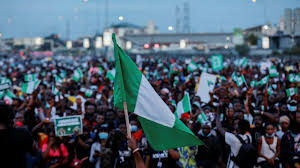
These concerns were significant enough that several groups organized Democracy Day protests focused specifically on insecurity and government performance.
Many critics therefore argue that while some security indicators may have improved, ordinary citizens still do not feel secure.
Economic Reforms: The Most Controversial Section
This was arguably the central policy portion of the speech.
Tinubu defended:
• Fuel subsidy removal
• Foreign exchange reforms
• Fiscal restructuring
• Revenue reforms
• Electricity sector restructuring
He argued these measures restored credibility and stability to the economy.
Evidence Supporting Tinubu
Several international institutions have indeed acknowledged macroeconomic improvements.
The IMF recently stated that reforms have strengthened Nigeria’s economic resilience and improved economic fundamentals.
The World Bank has projected continued economic growth and noted improvements in reserves, fiscal balances, and larger economic stability.
Reuters also reported improvements in investor confidence, public finances, and reduced fuel import dependence.
In purely macroeconomic terms, the government can point to:
• Better fiscal balances
• Higher government revenues
• Improved reserve positions
• More stable exchange-rate management
• Renewed investor interest
The Counterargument: Stability for Whom?
This is where criticism becomes strongest.
Even organizations acknowledging economic improvements also stress that poverty and food insecurity remain severe.
Economists speaking at recent policy forums warned that inflation, power shortages, unemployment, and weak productivity continue to undermine the benefits of reform.
The criticism frequently heard across media and civil society circles is: Macroeconomic indicators may be improving while household conditions remain difficult.
Many Nigerians continue to struggle with:
• High food prices
• Rising transport costs
• Reduced purchasing power
• Expensive electricity
• Weak job creation
This explains why many opposition voices argue that economic “stability” has not yet translated into economic relief.
The speech itself appeared to acknowledge this tension when Tinubu admitted that “many Nigerians still face economic hardship.”
The Power Sector: Ambitious Promises, Persistent Frustration
Tinubu devoted significant attention to electricity. His administration’s achievements cited include:
• The Electricity Act
• State participation in power generation and distribution
• Metering initiatives
• Debt restructuring plans
• Rural electrification projects
Reality Check
While reforms are ongoing, power supply remains one of the most visible frustrations for citizens and businesses.
Experts continue to identify electricity shortages as one of the biggest obstacles to economic growth and household welfare.
For many Nigerians, power sector success will be judged not by legislation or task forces but by whether electricity becomes more reliable.

June 12 and the Politics of Memory
One of the speech’s strongest sections was its tribute to the June 12 struggle.Tinubu honored:
• M.K.O. Abiola
• Kudirat Abiola
• Gani Fawehinmi
• Beko Ransome-Kuti
• And numerous activists, journalists, politicians, and military officers.
This section was consistent with long-standing efforts to institutionalize June 12 as a symbol of democratic resistance.
However, debates emerged online over:
• Who was included on the honors list.
• Whether some recipients deserve recognition.
• Whether present-day governance reflects the values of the June 12 movement.
Among critics, the argument is that honoring democracy heroes is important, but preserving their legacy requires stronger democratic accountability today.
Public Mood: Why the Speech May Not Have Fully Connected
Perhaps the most significant criticism comes not from political opponents but from ordinary citizens.
Interviews conducted ahead of Democracy Day found widespread fatigue with official speeches and promises, with many respondents saying they wanted tangible improvements in daily life rather than ceremonial rhetoric.
That sentiment reflects a recurring challenge for the administration:
• The government emphasizes reforms and long-term gains.
• Citizens focus on immediate living conditions.
The gap between those perspectives remains large.
The Verdict
Tinubu’s Democracy Day speech was carefully crafted around a central argument:
Nigeria has secured political freedom and is now laying the foundation for economic freedom.
From a policy standpoint, the administration can point to real achievements:
• Continued democratic stability.
• Ongoing security operations.
• Improved fiscal metrics.
• International endorsements of economic reforms.
• Major infrastructure and electricity-sector initiatives.
However, the speech arrives amid:
• Rising public dissatisfaction.
• Continued insecurity in many parts of Nigeria.
• Cost-of-living pressures.
• Democracy Day protests.
• Growing skepticism about whether reforms are improving ordinary lives.
The central question raised by both supporters and critics is therefore the same: Can the macroeconomic and institutional gains highlighted by Tinubu be converted into visible improvements in security, jobs, electricity, food affordability, and living standards before Nigerians are asked to renew his mandate in 2027?
That question, more than the ceremonial celebration of 27 years of democracy, is likely to define the public’s assessment of both the speech and the administration itself.