
By Iliyasu Gadu
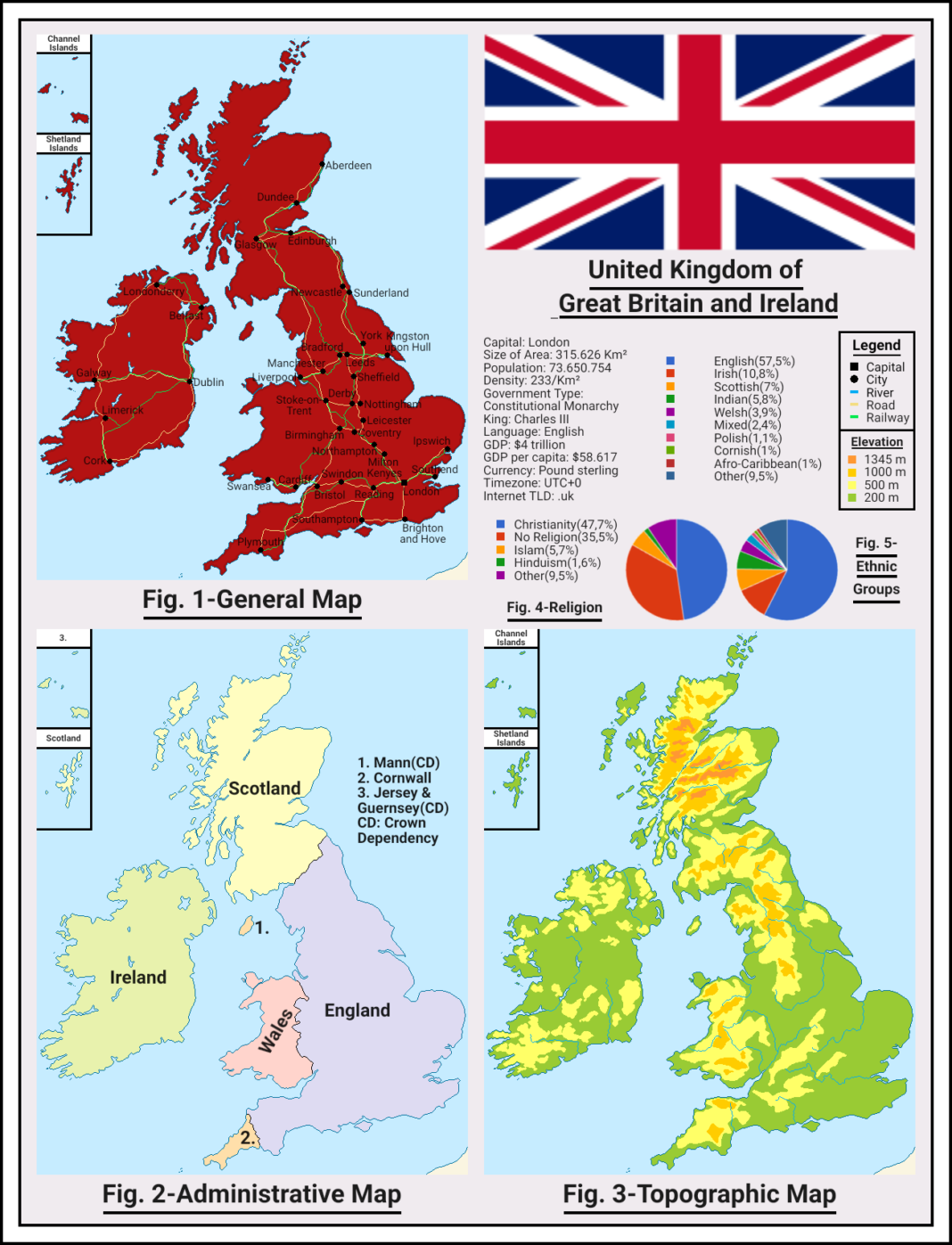
Last week Monday September 14, 2026, a significant and unprecedented event occurred in Britain when for the first time in British history, leaders of the home nations of Scotland, Wales and Northern Ireland held a summit in Cardiff, the capital of Wales, to determine how to go about their quest for self-determination. In other words, the three nations met to pursue a long sought course to detach from the United Kingdom (UK) of which they have been very much a part for centuries.
At the end of the summit which was christened the Cardiff Accord, the leaders declared that Westminster, which is where the seat of government in the United Kingdom resides, ”has no right to block democracy.” They asserted that ”each nation had the right to self-determination and future constitutional change.”
One of the core topics of discussion at the summit was closer ties with the European Union and paths towards potential independence.
The signatories of the Cardiff Accord were the First Ministers of Wales, Scotland and Northern Ireland; Rhun ap Iorwerth, John Sweeney and Michelle O’ Neill respectively. They were joined by the leader of Sinn Fein, Mary Lou Macdonald, the party representing the Irish in Northern Ireland.
The next step in this process is that these leaders will meet with British Prime Minister, Andy Burnham, next month to present their proposals and decide the way forward.
The question that prompts the mind here is: Where was England, by far the most populous and dominant nation in the UK, excluded at the meeting?
The obvious answer is that the three nations historically and distinctly consider themselves the representatives of the aboriginal inhabitants of the British Isles, the Celts. The area where the English inhabit in Britain was once populated too by the Celts, an ancient aboriginal people dominant in most of Europe. But with Roman conquest and waves of migration from Northern Europe, specifically The Netherlands, Denmark and Saxony in Germany into eastern part of Britain and invasion by the marauding Viking fleets, the Celtic component of the eastern part of the British isles which is now known East Anglia, Essex, Wessex, Kent, etc gradually gave way to the Anglo-Saxon genetic dominance. By the Norman conquest of 1066 in which William the Duke of Normandy from the French province of the same name defeated King Harold Godwinson the English King, the part of Britain that is now called England moved further from the Isles in terms of identity. The rest of the Isles – namely Scotland, Wales and Ireland retained their Celtic identities despite wars of conquest and incorporation by the English. Scotland especially had endured several brutal wars with its southern neighbour over the centuries up until the union of the two parliaments in 1707.
Wales was conquered and incorporated into the Kingdom of England in 1536 and Ireland became the first colony of England in a gradual process from 1169 to 1801 when the Act of Union following the merger with England.
The long held desire of the three nations in the UK to mantain their distinct identities as Celtic nations had been manifested in many ways throughout British history from Norman times to the present.
Many have attributed the present move by the Celtic nations of Britain in seeking independence, from the remarks of President Donald Trump of the United States of America. Trump was reported to have favoured the dismembering of the UK as punishment for not supporting the US in the ongoing Iran war.
But the underlying factor for the push by the Celtic nations to leave the UK has more to do with the vote by Britain to leave the European Union in the referendum of 2016. In the breakdown of the voting in the various nations, England voted 53 per cent in favour of leaving, Scotland voted 62 per cent to remain in the European Union, Wales voted 52 per cent to leave and Northern Ireland voted 55 per cent in favour of remaining in the EU.
Of the three Celtic nations angling to leave the UK, Scotland and Northern Ireland voted to remain in the EU during the Brexit referendum. Even though the results from Wales showed a 52 per cent majority wanted to leave, those in favour of remaining (47%) were substantial meaning that depending on how the post Brexit situation pans out in Britain, the situation could swing either way.
Ten years on, it is now crystal clear that the expected economic and other benefits of the Brexit referendum had not been realised. Economically, Britain is on the skids and as a measure of how abysmally low the political fortunes have become, Britain has had six Prime Ministers in that time. With the benefit of hindsight that there is an overwhelming sense in all of Britain that Brexit was a hasty and not well thought out decision and if another referendum was to be conducted on the subject, majority of people in the UK will likely vote in favour of returning to the EU.
Nowhere is the is this feeling more pronounced than in Scotland. For the Scots, it is double whammy of sorts. In 2014, two years before Brexit, the Scots had voted in a referendum for Independence which produced a 55-47 per cent result against. Two years later during the Brexit referendum, whereas Scotland voted to remain, the overall result came out in favour of leaving.
At the Cardiff meeting, against the background of the unfulfilled economic expectations and mounting economic problems in post Brexit Britain, the Celtic nations have once again revived the need to quit the union in order to find new directions and alliances. Scotland and Wales want independence and a return to Europe; Northern Ireland which through the Good Friday agreement of 1988 secured peace in the province, wants reunification with the Republic of Ireland to the south and a return to Europe through this route.
Realistically, the route to what the three Celtic nations desire is by no means easy. The final decision to grant the referendum lies with the Parliament in Westminster, London as well the Prime Minister Andy Burnham and this may take a convoluted process that will take years to fruition. But to judge from the determination of the three States in seeing the process through, they will be relentless in pursuit. For them, with the way things are economically, socially and politically in Britain, the future seem not to hold any bright prospects for their continued stay in the union. They have set their sights inevitably on leaving the union than staying and the unprecedented efforts they have collectively taken to actualize this indicates that there is no going back.
What lessons does this hold for Nigeria?
Nigeria being a former colony of Britain and a member of the Commonwealth of Nations of which Britain is the leader, coupled with the fact there are many Nigerians and Britons of Nigerian descent, it is imperative for our government and our people to keep track of developments in this regard.
● Iliyasu Gadu, a former Foreign Service Officer who served at the Nigerian Missions in Germany and the United Kingdom (UK), is a syndicated columnist. He can be reached at ilgad2009@gmail.com, 08035355706 (Texts only)