● ADC Challenges Tinubu, Ribadu Over Reported $4.5m US Lobbying Deal Linked to Diana London
The African Democratic Congress Presidential Campaign Council (ADC-PCC) has called on President Bola Ahmed Tinubu to explain the circumstances surrounding a reported $4.5 million payment to a United States lobbying firm, raising questions about the Federal Government’s handling of public funds and its international communications strategy.
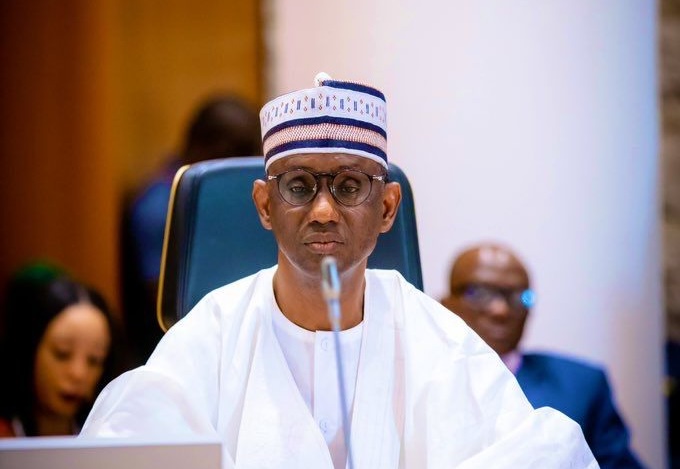
The campaign council, through its Director of Media and Publicity, Kola Ologbondiyan, challenged the President to clarify the role of National Security Adviser (NSA), Nuhu Ribadu, in facilitating the arrangement involving American political strategist and lobbyist Diana London.
The controversy centres on a $9 million lobbying agreement involving Washington-based public affairs firm DCI Group and Kaduna-based law firm Aster Legal.
However, available United States regulatory filings and media investigations indicate that the $4.5 million represents the initial six-month retainer paid to DCI Group, rather than money established to have been received personally by London.
The development has attracted public attention following reports that London recently travelled to Nigeria, interviewed President Tinubu at the Presidential Villa in Abuja and subsequently published photographs and complimentary remarks about the Nigerian leader.
The emerging questions concern the transparency of the government’s engagement with foreign lobbyists, the authorisation and accountability of the expenditure, and the measurable benefits the arrangement has delivered to Nigeria.
How the controversy emerged
The controversy gained renewed attention following a report published by Peoples Gazette on November 18, 2026, examining United States Department of Justice disclosures relating to Nigeria’s engagement of American lobbying interests.
The publication identified London, an American conservative political strategist affiliated with DCI Group, as being connected to the firm’s Nigeria account.
London reportedly visited Nigeria, met President Tinubu at the Presidential Villa and conducted an interview with him.
Following the engagement, she shared photographs of herself with the President and other senior government officials on social media. In one of her posts, she described Tinubu as a leader revolutionising Nigeria’s economy and referred to the country as the “America of Africa”.
She also praised the relationship between Tinubu and United States President Donald Trump, particularly their reported cooperation on security and counterterrorism.
However, her professional association with DCI Group, a firm reportedly retained by the Nigerian government, raised questions about the nature of the interview and whether it formed part of a government-sponsored communications campaign.
The controversy was further amplified by reports concerning London’s previous criminal conviction in the United States and payments allegedly connected to her involvement in the lobbying arrangement.
According to Peoples Gazette, London subsequently deleted social media posts relating to her Nigerian engagement.
What the US regulatory filings reveal
The United States Foreign Agents Registration Act (FARA) disclosures have become central to the controversy.
FARA is an American law requiring individuals and organisations acting on behalf of foreign governments or political interests to disclose relevant relationships, activities and financial arrangements to the US Department of Justice.
The disclosures provide a documentary basis for examining the relationship between the Nigerian government and DCI Group.
According to published investigations four principal parties were associated with the arrangement:
▪︎Nuhu Ribadu: Nigeria’s National Security Adviser, reportedly associated with facilitating the government’s engagement with American lobbying interests.
▪︎Diana London: An American political strategist registered as a consultant associated with DCI Group’s Nigeria account.
DCI Group: The Washington-based lobbying and public affairs firm retained to manage Nigeria’s international communications campaign.
▪︎Aster Legal: A Kaduna-based law firm that reportedly served as the intermediary through which DCI Group was engaged on behalf of Nigeria.
Breakdown of the reported $9 million agreement
Available reports indicate that the agreement was structured around a monthly retainer of $750,000 for an initial six-month period, with a possible renewal for another six months.
The initial $4.5 million payment was reportedly made on December 12, 2025.
The agreement was subsequently signed on December 17, 2025, by Oyetunji Olalekan Teslim, managing partner of Aster Legal, and Justin Peterson, managing member of DCI Group.
The contract reportedly contained an automatic renewal provision and allowed either party to terminate the arrangement by providing 60 days’ written notice.
The financial and contractual details were reported by the media in January 2026 and subsequently covered by Reuters.
Although the $4.5 million figure has been widely associated with London in public discussions, available reporting identifies DCI Group as the recipient of the initial six-month retainer.
The disclosures do not establish that London personally received the entire amount.
Separate DCI Group filings reportedly identified payments to London’s company, London Global Strategies, amounting to:
$75,000 for retainer services.
$375,000 for additional services.
The payments were reportedly made on December 23, 2025, with the funds identified as originating from the Republic of Nigeria through Aster Legal.
However, some secondary reports have cited $345,000 rather than $375,000 for the second payment.
What was Nigeria paying the American lobbyists to do?
The stated objectives of the lobbying arrangement were principally diplomatic and strategic.
According to reports on the agreement, DCI Group was engaged to help communicate Nigeria’s efforts to protect Christian communities and maintain American support for the country’s counterterrorism operations against jihadist groups and other destabilising elements in West Africa.
The engagement was therefore presented as extending beyond the promotion of President Tinubu’s personal image.
Its broader objectives reportedly included improving perceptions of Nigeria within the American political establishment, communicating the government’s security policies and strengthening diplomatic cooperation between Abuja and Washington.
The arrangement also reflected the importance the Nigerian government attached to international advocacy at a time when its relationship with the United States was facing increased diplomatic scrutiny.
Nevertheless, the distinction between legitimate national-interest advocacy and political image management remains relevant to the accountability debate.
While governments may engage foreign communications consultants and lobbyists to advance diplomatic objectives, such expenditure raises questions about public authorisation, contractual transparency, financial oversight and measurable outcomes.
Why Nigeria engaged American lobbyists
The background to the agreement is linked to deteriorating diplomatic relations between Nigeria and the United States in late 2025.
During that period, President Donald Trump raised concerns about the security situation in Nigeria, particularly allegations of attacks against Christian communities and the government’s response to religiously motivated violence.
The developments increased diplomatic pressure on the Tinubu administration and placed Nigeria’s security policies under greater international scrutiny.
Against this backdrop, the engagement of DCI Group was reportedly intended to strengthen Nigeria’s position in Washington, communicate the government’s counterterrorism efforts and sustain American cooperation on security matters.
The arrangement therefore raised questions about how much Nigeria should spend on foreign lobbying to protect its diplomatic interests, particularly when the country continues to face significant domestic security and economic challenges.
Accountability questions confronting the Tinubu administration
The controversy has placed renewed attention on the government’s responsibility to explain major international expenditure involving public resources.
Among the questions requiring clarification are whether the lobbying agreement received all necessary government approvals, which public institution authorised the expenditure, and what procedures were followed in selecting Aster Legal and DCI Group.
There are also questions about the precise services delivered by the lobbying firm, the role and compensation of individual consultants, and whether the government has conducted an independent assessment of the arrangement’s effectiveness.
The reported interview between London and President Tinubu has introduced another dimension to the debate: the need for transparency when individuals associated with government-retained lobbying firms engage in activities presented to the public as independent journalism.
For the ADC Presidential Campaign Council, the matter requires an explanation from the President and the National Security Adviser, particularly regarding the circumstances surrounding the reported payment and the government’s relationship with the American lobbyists.
Ultimately, the controversy goes beyond the personalities involved. It touches on the management of public resources, the credibility of Nigeria’s international communications and the responsibility of public officials to account for government contracts.
As scrutiny of the FARA disclosures continues, the Tinubu administration faces questions about the financial structure of the engagement, the services provided and the extent to which the arrangement has advanced Nigeria’s national interests.
The central issue remains whether Nigerians have received sufficient transparency and demonstrable public value from a lobbying arrangement potentially worth $9 million.