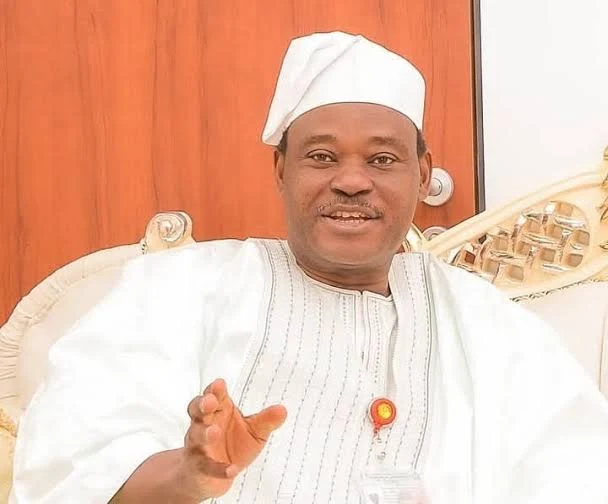
Receiver/Liquidator of NICON Insurance Limited, Chukwuma-Machukwu Ume (SAN), has accused Nigeria’s Permanent Representative to the United Nations, Ambassador Jimoh Ibrahim, of allegedly abusing his public office, intimidating the judiciary and interfering with the administration of justice in connection with ongoing legal disputes involving the insurance company.
Ume, in a formal complaint to President Bola Tinubu, called for an independent investigation into the circumstances surrounding a letter allegedly written by Ibrahim to the Chief Judge of the Federal High Court on October 2, 2026, concerning matters pending before the court.
The senior lawyer questioned why Ibrahim, in his official capacity as Nigeria’s Permanent Representative to the United Nations, would intervene in matters involving NICON Insurance Limited (in Liquidation), particularly when he was not a party to the proceedings.
According to Ume, the letter amounted to an inappropriate use of public office and could create the impression that the ambassador was attempting to bring political influence to bear on judicial proceedings in which he allegedly has a private interest.
He further alleged that Ibrahim used the letter to communicate to political authorities where his interests lay in the pending litigation, thereby raising concerns about possible interference with the independence of the judiciary.
Dispute over Federal Government’s ownership of NICON
A major issue raised in the complaint concerns Ibrahim’s reported assertion in the October 2 letter that the Federal Government owns 40 per cent of NICON Insurance Limited.
Ume strongly disputed the claim, describing it as inaccurate and inconsistent with the company’s shareholding records at the Corporate Affairs Commission (CAC).
Citing page 18 of the company’s CAC status report, the receiver stated that NICON Insurance has 14 billion issued ordinary shares, with Global Fleet Oil Limited holding 13,561,538,462 shares, while the Bureau of Public Enterprises (BPE), on behalf of the Federal Government, holds 438,461,538 shares.
Based on these figures, the Federal Government’s direct shareholding amounts to approximately 3.13 per cent, rather than the 40 per cent allegedly claimed in Ibrahim’s letter.
Ume maintained that the shareholding information raises serious questions about the accuracy of the ownership representation and the basis upon which the ambassador made the claim.
He urged the President to investigate the circumstances surrounding the letter and establish whether government authority or resources were deployed in advancing interests connected to the private disputes.
Background: NAICOM cancels NICON’s operating licence
The controversy comes amid an ongoing regulatory and legal crisis involving NICON Insurance Limited.
On August 3, 2026, the National Insurance Commission (NAICOM) cancelled the insurer’s Certificate of Registration following its failure to meet the prescribed minimum capital requirements applicable to its licence category under the Nigerian Insurance Industry Reform Act (NIIRA) 2025.
NAICOM subsequently appointed Ume as Receiver/Provisional Liquidator on August 4, 2026, with a mandate to take control of the company’s assets, secure its records, establish its liabilities and oversee the statutory winding-up process.
The appointment also requires the receiver to facilitate the transfer of NICON’s life insurance portfolio to another licensed insurer, subject to regulatory approval, and ensure that legitimate claims are addressed in accordance with applicable laws.
The development marked a significant turning point for the insurance company, which has a substantial policyholder base and outstanding obligations to creditors, financial institutions, vendors and other stakeholders.
In September 2026, the Federal High Court in Abuja became involved in the winding-up process following a petition filed by Ume seeking formal liquidation of the company.
The petition, marked FHC/ABJ/PET/18/2026, was filed on August 12, 2026, with the receiver seeking confirmation of his appointment as liquidator and orders compelling the company’s former directors and officers to surrender its books, financial records, assets and other relevant documents.
Justice Chigozie Sergius Onah had earlier granted an order directing that NICON’s assets, properties, investments, bank accounts, books and other proprietary interests be preserved pending the determination of the winding-up petition.
The preservation order was intended to prevent the dissipation, alienation, encumbrance or unauthorised disposal of the company’s assets and protect the interests of policyholders, creditors and other stakeholders.
In a further development, the Federal High Court directed that 13 former directors of NICON Insurance be served with the relevant order requiring accountability for their roles in the company’s operations and financial transactions over the preceding seven years.
The development underscored the importance of asset recovery, financial accountability and proper documentation in the ongoing liquidation exercise.
Four pending cases highlighted in the complaint
Ume also drew attention to four court cases which he said were connected to the dispute surrounding NICON Insurance and related entities.
They include:
▪︎FHC/ABJ/CS/1671/2026 – Nigerian Reinsurance Corporation v. National Insurance Commission.
▪︎FHC/ABJ/CS/1670/2026 – NICON Insurance Limited v. National Insurance Commission.
▪︎FHC/ABJ/PET/18/2026 – Chukwuma-Machukwu Ume (SAN), Receiver/Provisional Liquidator, v. NICON Insurance Limited (in Liquidation).
▪︎FHC/ABJ/CS/1196/2026 – Nigerian Reinsurance Corporation (in Receivership) v. Dr. Muiz Banire (SAN), Provisional Liquidator.
He maintained that the existence of these pending proceedings makes it particularly inappropriate for a public officer who is not a party to the relevant proceedings to communicate with the court in a manner that could be perceived as an attempt to influence judicial processes.
Ume invokes Supreme Court’s position on abuse of office
To reinforce his complaint, Ume referred President Tinubu to the Supreme Court’s decision in Offoboche v. Ogoja Local Government & Others (2001), which he cited in support of the principle that public power must not be deployed for purposes other than those for which it was granted.
He quoted the court’s description of abuse of office as:
“Abuse of office is the use of power to achieve ends other than those for which power was granted, for example for personal gain, to show undue favour to another or to wreak vengeance on an opponent.”
The senior advocate argued that public offices must be exercised strictly within the limits of their statutory responsibilities and should not become instruments for advancing private interests or exerting pressure in matters before the courts.
He therefore called on President Tinubu to initiate appropriate disciplinary measures against Ibrahim if the allegations are established following an independent investigation.
Ume demands withdrawal of letter and apology
Beyond the investigation, the receiver asked the President to compel the ambassador to withdraw the October 2, 2026 letter and tender an apology over what he described as an affront to the integrity and independence of the judiciary.
He maintained that the judiciary must be allowed to determine disputes strictly on the basis of the law and evidence