
By Jacob EDI
Power, its business and mechanics, is no tea party; neither is it for the faint-hearted. The politics of power is rarely just about the acquisition of public office. Even the framers of democracy could hardly have imagined that its operation would be entirely without encumbrances. In a diverse society, the question of power is equally about the distribution of opportunity, the management of competing aspirations, and the construction of a political order in which every constituent part can find a credible place.
Herein lies the essence and imperative of the debate on power rotation in Kogi State.
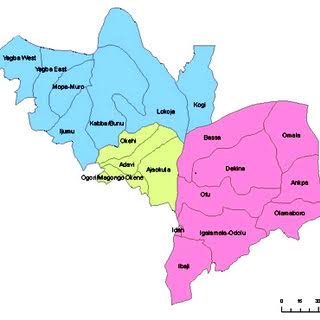
Thirty-five years after its creation on 27 August 1991, Kogi State stands at an important juncture in its political evolution. Its diversity remains one of its greatest assets, but translating that diversity into a durable sense of belonging demands more than ceremonial declarations of unity. It requires deliberate political arrangements that are sufficiently fair, inclusive and transparent to inspire confidence across the state’s constituent communities.
The Kogi State Power Rotation Summit 2026, arguably the first of its kind, held in Lokoja on 30 September and 1 October under the theme Retooling Kogi for Unity, Equity and Shared Prosperity. It presented an opportunity to confront this question directly. Its significance lies not merely in the advocacy of rotational leadership, but in the attempt to move the conversation from political grievance to a broader understanding of equity, inclusion and the future of governance.
At the heart of the matter is a simple but consequential question: can Kogi State consolidate its unity and realise its full developmental potential if significant sections of its political community remain uncertain about their prospects of attaining the highest office in the state?
The question deserves serious consideration, not because any senatorial district possesses an inherent entitlement to govern indefinitely, but because the legitimacy of a political system is strengthened when its conventions and practices are perceived to offer credible opportunities to all.
The history of representative government offers useful lessons here. Across different political traditions, societies have devised arrangements to broaden representation, manage competing interests and prevent the permanent concentration of power in the hands of a narrow constituency.
Such arrangements may take different forms, but their underlying purpose is recognisable: to ensure that political competition does not become a perpetual contest in which some groups see little prospect of meaningful participation.
For Kogi State, this is not merely an abstract democratic proposition. It is a question with direct implications for political trust, peaceful coexistence and the future of governance.
Of History and the Argument for Rotation
Since the return to democratic governance in 1999, the governorship of Kogi State has been occupied by leaders from Kogi East and Kogi Central, while Kogi West has yet to produce a governor. The report of the 2026 summit, reflecting the position presented by its chairman, Vice Admiral Joseph Ajayi (retd.), put the period of executive leadership from Kogi East at 17 years, covering 1999 to 2015, and Kogi Central at 10 years, from 2016 to the time of the summit.
This historical pattern constitutes a legitimate basis for discussing the future distribution of executive power. It does not, by itself, establish a constitutional obligation to rotate the governorship. It does, however, raise a question of political equity that cannot reasonably be dismissed as the grievance of an ambitious district.
Nigeria’s political experience provides a wider context for this debate. Although the Constitution does not prescribe a rotational formula for the presidency among the country’s geopolitical zones, the North-South understanding has become an influential feature of political negotiation and power-sharing. Political parties have also, at different times, relied on zoning arrangements to manage internal competition and accommodate competing regional interests.
These conventions are not substitutes for constitutional provisions, nor have they always been observed consistently. Nevertheless, they demonstrate that rotation is neither peculiar to Kogi State nor an idea without practical precedents in Nigerian politics. Its proponents regard it as a gentlemanly approach to leadership succession: an understanding through which competing interests can negotiate access to power without making every succession an existential contest.
The issue is particularly important because political power is not an abstract possession. The governorship influences the direction of public policy, the composition of government, the allocation of appointments, the prioritisation of infrastructure and the overall character of political engagement. Although a governor is constitutionally expected to serve the entire state, the political symbolism of who occupies the office is significant, especially in a society where identity, history and representation intersect.
Persistent perceptions of exclusion can gradually weaken confidence in the political system, even where elections are conducted within the established democratic framework. A people who cannot see a credible pathway to the highest political office may begin to interpret ordinary political competition through the lens of sectional disadvantage.
The imperative, therefore, is not to reopen old wounds or establish a hierarchy of entitlement. It is to fashion an understanding that acknowledges historical realities while creating a more balanced political future.
In this context, the argument for Kogi West to receive serious consideration in the next phase of the governorship rotation debate is compelling. It offers an opportunity to address a longstanding representational imbalance and demonstrate that the political future of Kogi State is not the exclusive preserve of any one zone.
But the argument must not end at Lugard House.
Rotation Must Go Beyond the Governorship
It would be a contradiction to advocate equity at the state level while ignoring comparable questions of representation at the federal and state constituency levels. If rotation is considered a legitimate instrument for widening access to political power, its underlying principle deserves consideration wherever the structure of political competition creates persistent barriers to representation.
The Bassa/Dekina Federal Constituency offers a useful illustration of the concern.
Given the numerical advantage of Dekina Local Government Area, securing the election of a representative from Bassa Local Government Area may be difficult without a deliberate understanding among the constituent communities. According to the account presented in this debate, Bassa has occupied the federal seat for only four years over a 27-year period, while the sharing of the seat within Dekina has largely occurred among its own political constituencies rather than through a systematic understanding between the two local governments.
That history raises a legitimate question: should numerical advantage alone determine representation indefinitely, or can political consensus provide room for a more equitable arrangement?
The issue is not to deny the democratic significance of population or to suggest that rotation should automatically override the electorate’s choice. It is to recognise that where enduring numerical disparities leave one constituent community with little practical prospect of representation, a voluntary, transparent and broadly accepted rotational understanding may offer a pathway towards inclusion.
The same principle deserves discussion in relation to other constituencies where communities believe their opportunities for representation have been persistently constrained.
The objective should not be to multiply political entitlements or create an endless chain of competing claims. Rather, it should be to encourage arrangements that widen participation, preserve democratic choice and strengthen the sense that public institutions belong to everyone.
After all, the logic of inclusion cannot be persuasive at one level of government and irrelevant at another. If power must not become the permanent preserve of a senatorial district, neither should smaller constituent communities be left without a credible opportunity to participate in the representation of their common interests.
Equity Won’t Kill Competence
One of the most frequently advanced arguments against power rotation is that it may compromise merit by restricting the field of candidates according to geographical considerations. This objection deserves attention, but it is not sufficient to invalidate the principle of rotation.
The assumption that competence is concentrated in one geographical zone, or that a particular district must repeatedly produce the state’s leadership to guarantee good governance, is difficult to sustain. No geographical district possesses a monopoly on intelligence, experience, integrity or administrative capacity. Every part of Kogi State has individuals with the experience, character and intellectual resources required for public leadership.
The appropriate question is not whether rotation should replace competence, but whether a political framework can accommodate equitable opportunity while retaining competence as a fundamental requirement for leadership.
And it can.
Rotation, properly conceived, does not guarantee office to an unqualified individual. Rather, it establishes a political understanding under which a district has an opportunity to present its most capable candidates when its turn arrives. The electorate retains its responsibility to assess the candidates, political parties retain their responsibility to nominate credible aspirants, and the eventual occupant of the office remains accountable to the entire state.
This distinction is essential. Power rotation should not become an instrument for protecting mediocrity or insulating political officeholders from scrutiny. Neither should the language of competence become a convenient argument for preserving an established pattern of political advantage.
The two principles are complementary. Equity broadens access to opportunity; competence determines the quality of the individuals who emerge to exercise that opportunity.
A rotation arrangement that fails this test would merely exchange one form of exclusion for another. A credible arrangement, by contrast, would combine fair access, transparent political competition, integrity and measurable performance.
The case for rotation is therefore not a case against merit. It is a case against the presumption that merit belongs perpetually to one geographical constituency.
Unity Must Be Oiled by Inclusion
Kogi State is often described as a confluence state, reflecting its strategic location and the meeting of different geographical, cultural and political identities. Its people include the Igala, Ebira, Okun, Bassa-Nge, Bassa-Komu, Oworo, Kupa and other communities whose histories and interests contribute to the state’s collective identity.
But diversity does not automatically produce unity. Unity becomes sustainable when people believe that their differences are respected and that they can participate meaningfully in the institutions that govern their common affairs.
The summit’s deliberations were instructive in this regard. Traditional rulers and other participants raised concerns about the place of smaller ethnic communities in a conversation that could otherwise become confined to the three senatorial districts or their dominant ethnic constituencies.
These concerns should not be treated as incidental to the debate. If power rotation is intended to promote inclusion, its architecture must be broad enough to recognise the diversity within each senatorial district as well as the differences among the districts themselves.
Kogi West, for instance, is not ethnically homogeneous. Neither are Kogi East and Kogi Central. A framework that recognises zonal equity but ignores minority communities within those zones would remain incomplete.
This is a critical distinction. Zonal rotation can address one dimension of political imbalance without necessarily resolving other inequalities in representation. The interests of smaller ethnic communities must not be subsumed under the assumption that a governor from their senatorial district automatically speaks for every group within it.
The principle must therefore extend beyond the question of which district produces the governor. It should include the distribution of appointments, the composition of strategic institutions, access to development opportunities, and the participation of women, young people, persons with disabilities and historically underrepresented communities.
This is how rotation can become a genuine instrument of state-building rather than a transaction among political elites.
The summit’s keynote speaker, Professor Babatunde Emmanuel Durowaiye, proposed a Kogi Charter of Equity and Inclusion to provide a framework for such an understanding. The proposal deserves serious consideration because it could transform a recurring political debate into a more structured and enduring commitment.
Such a charter should emerge from broad consultation rather than elite prescription. It should articulate the principles of equitable representation, competence, integrity, peaceful dispute resolution and respect for the diversity of the state’s constituent communities. It should also establish an expectation that inclusion will be measured not merely by the geographical origin of the governor, but by the extent to which government institutions and public opportunities reflect the state’s wider composition.
The task is to make inclusion a governing principle, not a slogan deployed at moments of political convenience.
Beyond the Governorship: A Shared Prosperity
The political argument for rotation becomes more persuasive when placed alongside the developmental obligations of government.
Kogi State possesses substantial agricultural potential, solid mineral resources, strategic transport advantages and opportunities for industrial expansion. Yet the existence of natural wealth does not automatically translate into broad-based prosperity. These assets must be converted into better healthcare, quality education, employment, infrastructure, security and improved living conditions across the state.
This is where the concept of shared prosperity becomes compelling.
Power rotation cannot, on its own, resolve the state’s development challenges. Nor should any district assume that producing a governor automatically guarantees its communities a disproportionate share of public resources. Such an interpretation would contradict the very principle of equity that gives rotation its moral and political justification.
The governor, irrespective of geographical origin, must govern for all Kogites. Public investment should be guided by transparent criteria, developmental priorities and demonstrable needs, not by political patronage or the imperative to reward a particular constituency.
The summit also highlighted the need for equitable benefits from mining and industrial activities, as well as fair access to public services. These concerns should form part of the broader rotation conversation.
It is not enough for communities to be told that they belong to a state blessed with natural resources. They must be able to see how those resources translate into livelihoods, infrastructure, opportunities and improved living standards. The benefits of development must be sufficiently broad-based to reinforce the belief that the state is a common enterprise rather than an arena in which some communities prosper at the expense of others.
The objective must be to create a political environment in which every district can anticipate a fair opportunity to lead, while every community can expect equitable treatment regardless of who occupies Government House.
In that sense, rotation should be understood as one component of a wider compact for inclusive governance. It is neither a substitute for development policy nor a guarantee of good government. It is a possible mechanism for strengthening the trust upon which effective governance depends.
The Ododo Conundrum
Some commentators have argued that a genuine power-rotation arrangement should take effect after the completion of the incumbent governor’s first tenure. Others may prefer a different timeline, depending on how they interpret the historical sequence and the political circumstances surrounding the debate.
Conversations about power rotation in a politically conscious state such as Kogi cannot be hurried or reduced to the arithmetic of succession. The question requires careful deliberation, broad consultation and a clear understanding of how any proposed arrangement would interact with constitutional provisions, party processes and the electorate’s ultimate choice.
The summit’s chairman reportedly proposed a mutually agreed four-year timeline from October 2026 for steps towards Kogi West attaining executive power. That proposal offers a possible starting point for structured engagement, but it should not be mistaken for a binding consensus unless the relevant stakeholders formally adopt it.
There is also a legislative dimension. If the State House of Assembly proceeds with a proposal to give power rotation legal expression, the nature and scope of the proposed legislation will require careful scrutiny. A bill is not law merely because legislators favour its objectives; it must pass through the applicable legislative process and meet the requirements of the Constitution.
The important question, therefore, is not simply whether the governor will assent to such a bill when the time comes. It is whether the emerging framework will be sufficiently inclusive, constitutionally sound and democratically legitimate to command broad acceptance.
Governor Ahmed Usman Ododo, often described as the Chief Servant of Kogi State, has a stake in the outcome of this conversation. The administration’s approach to dialogue, inclusion and institutional engagement will inevitably form part of the wider discussion about the state’s political future. But the responsibility does not rest with the governor alone. Political parties, legislators, traditional institutions, civil society, community leaders and the electorate all have roles to play.
The most durable arrangement will not be one imposed by a single officeholder or negotiated exclusively among political elites. It will be one whose principles have been discussed openly, whose implications are understood, and whose legitimacy rests on a broad-based commitment to fairness.
The challenge is to make the process an exercise in consensus-building rather than another arena for political confrontation.
The Imperative of a New Political Compact
Ultimately, the expediency of power rotation in Kogi State rests on the opportunity it presents to strengthen political trust and address perceptions of exclusion without compromising democratic choice or the quality of governance.
The state does not need a rotation arrangement that merely changes the geographical origin of its governors while preserving the same culture of patronage, weak accountability and uneven development. It needs an understanding that expands participation, improves the distribution of opportunities and reinforces the obligation of every administration to serve all its citizens.
The Kogi Power Rotation Summit has placed these questions firmly within the public conversation. Its lasting value will be determined not by the number of dignitaries who attended or the eloquence of the speeches delivered, but by the seriousness with which its proposals are pursued after the gathering.
There is a compelling argument for Kogi West to be given a credible opportunity to produce the next governor within an agreed, inclusive and constitutionally compliant political framework. But that opportunity must form part of a larger commitment to fairness among the three senatorial districts and meaningful participation for all communities.
Equally, the debate should encourage a wider examination of representation at the state and federal constituency levels, where political arrangements may help communities overcome persistent barriers without displacing democratic choice. Inclusion must be a principle applied consistently, not a privilege demanded at one level and ignored at another.
The task before Kogi’s political leadership is to convert a legitimate debate over representation into a durable compact for peace, inclusion and development.
Power must not be treated as the inheritance of a geographical constituency or the permanent possession of a political class. It is a public trust, and its exercise must be judged by the extent to which it improves the lives of the people.
When power goes round in the spirit of fairness, and when its benefits reach every part of the state, rotation can become more than a political arrangement. It can become an instrument of reconciliation, a foundation for shared prosperity and a statement of collective confidence in Kogi’s common future.
That is the real expediency. That is the enduring imperative.