
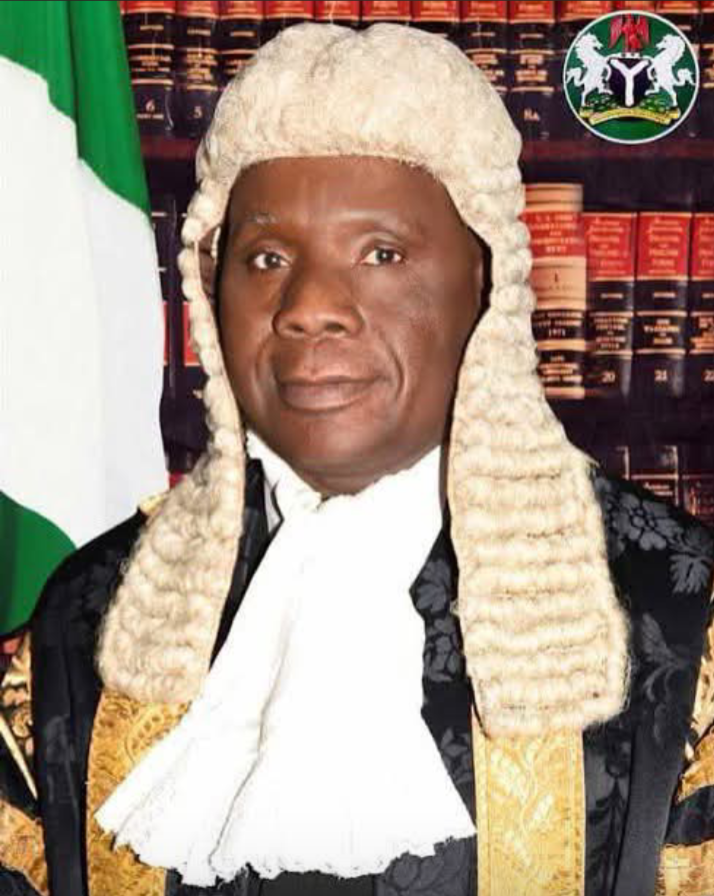
After 44 years in the legal profession, the retiring Supreme Court justice has challenged the practice of politicians giving gifts to judges and recalled the Court of Appeal’s response to conflicting orders during the June 12, 1993 election crisis.
For Justice Ibrahim Mohammed Musa Saulawa, who retired from the Supreme Court of Nigeria upon attaining the mandatory age of 70, such gifts raise questions about the independence of judicial officers and the boundaries between customary hospitality and attempts to influence the administration of justice.
At his valedictory court session in Abuja on September 29, 2026, Saulawa urged the Chief Justice of Nigeria, Justice Kudirat Kekere-Ekun, to address the practice of politicians and litigants presenting gifts to judges.
“Why will a politician send gifts to judges?” he asked, describing the practice as demeaning and frustrating. He referred to the gifts as “Greek gifts” and called on judicial officers to uphold contentment, integrity, morality and honesty in the discharge of their responsibilities.
In a separate account of the address, THISDAY reported that Saulawa cited instances in which politicians allegedly inflated the prices of livestock presented to judges, including a ram purchased for N200,000 but represented as costing N2 million. He questioned the practice of politicians sending such gifts to members of the Supreme Court.
The remarks placed judicial ethics at the centre of his final public engagement as a member of the apex court, drawing attention to a longstanding principle: judicial independence depends not only on how judges decide cases but also on how they conduct themselves outside the courtroom.
The rules governing gifts to judges
The Law and Society Magazine explains that the National Judicial Council’s Code of Conduct for Judicial Officers provides a framework for assessing the practice.
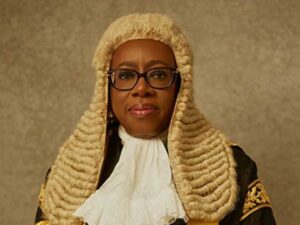
Rule 1 requires judges to avoid impropriety and even the appearance of impropriety in their professional and private lives. It directs judicial officers to consider how their conduct might appear to the public and cautions against relationships that could create an impression of preferential treatment.
Rule 10 prohibits judges and members of their families from requesting or accepting gifts, loans, favours or other benefits connected with the performance of judicial duties. It also prohibits benefits or advantages, however disguised, offered in connection with judicial functions.
The code makes limited exceptions for ordinary social hospitality, modest customary items such as food and refreshments, greeting cards and certain other benefits unrelated to judicial status. It also permits some festive gifts from lawyers, provided they are generally given to judges, are not excessive and are not pecuniary in nature.
These exceptions do not remove the requirement to avoid circumstances that could undermine public confidence in judicial impartiality.
Rule 8 further warns judges against allowing family, social, civic or political relationships to influence their conduct or decisions. It cautions against individuals using their relationships with judges as channels through which to influence judicial proceedings.
This is particularly relevant when the giver is a politician, businessperson or litigant who has an interest in a case before a court.
The concern is not limited to proof that a gift changed a judgment. The appearance that a person has obtained privileged access to a judge can itself raise questions about impartiality.
The full code is available on the National Judicial Council’s website.
The Peugeot 504 he refused
Saulawa illustrated his position with an incident from his early years on the Magistrates’ Court Bench in Katsina.
He recalled that Alhaji Ali Bagobiri, an influential fuel and motor dealer, offered him a brand-new Peugeot 504, which he rejected.
According to Saulawa, Bagobiri subsequently sought the intervention of the Emir of Katsina, Alhaji Muhammadu Kabir Usman, and other prominent individuals to persuade him to accept the vehicle. The retired justice said he remained firm in his refusal.
The businessman later appeared before Saulawa in a case involving allegations that he and his workers had beaten an employee, Ahmad, into a coma after the employee asked to borrow money to buy food.
Saulawa said the accused were convicted and fined N7,000 each, while Ahmad was awarded N10,000 in damages. He also recalled that the victim spent two weeks in intensive care and later became a trader and homeowner.
The account, which Saulawa recounted at his retirement ceremony, illustrates the potential conflict between private benefits and official responsibilities. He said the car had been offered before the case came before him.
The retired justice also disclosed that he had declined invitations to some social gatherings during his career to protect his principles.
His warning was directed at judicial officers across the country, whom he urged to resist offers that could compromise their responsibilities or create doubts about their decisions.
June 12: Inside the Court of Appeal during the election crisis
Saulawa’s valedictory address also revisited the political and judicial crisis surrounding the annulment of Nigeria’s June 12, 1993 presidential election.
At the time, he was Chief Registrar of the Court of Appeal in Lagos, while Justice M. M. A. Akanbi was president of the court.
According to Saulawa, competing court orders emerged over the conduct of the election and the announcement of its results. He recalled that an FCT High Court had issued interim orders restraining the National Electoral Commission, then headed by Professor Humphrey Nwosu, from conducting the election and announcing the results, while other state high courts issued conflicting directives.
The conflicting orders created uncertainty for the electoral commission and the judicial institutions responsible for addressing the disputes.
Saulawa said Akanbi directed him to travel from Lagos to Kaduna to take control of the Court of Appeal registry and supervise the filing and processing of appeals brought by the electoral commission.
After returning to Lagos and briefing Akanbi, he said, the president of the Court of Appeal convened an emergency meeting of presiding justices to address the situation.
Saulawa maintained that the judiciary resisted what he described as attempts by the military government to interfere with the electoral process through conflicting court orders.
“We actually did all we could do to frustrate the military,” he said.
He further alleged that the government headed by General Ibrahim Babangida annulled the election after efforts to influence the judiciary had been frustrated.
Those assertions reflect Saulawa’s recollection as a participant in the events. His account of the alleged motives behind the military government’s actions was another insight into the history of the election and its annulment.
The historical significance of the June 12 election
The June 12, 1993 election, widely regarded as one of Nigeria’s most credible elections, was contested principally by Moshood Kashimawo Olawale Abiola of the Social Democratic Party and Bashir Tofa of the National Republican Convention.
The military government annulled the election before the official completion and announcement of the results. The decision triggered a major political crisis, widespread opposition and a prolonged struggle for the restoration of democratic government.
In 2018, President Muhammadu Buhari declared June 12 Nigeria’s Democracy Day, replacing May 29, and posthumously conferred the Grand Commander of the Federal Republic, the country’s highest national honour, on Abiola.
The historical record gained further official recognition in February 2025, when Babangida acknowledged that Abiola had won the election. At the launch of his autobiography, A Journey in Service, the former military leader accepted responsibility for decisions taken under his administration and described the annulment as a regrettable episode.
According to the Presidency’s account of the event, Babangida acknowledged that the election had been credible and that Abiola had secured the majority of votes and the required geographical spread.
The admission, more than three decades after the election, reinforced the significance of June 12 in Nigeria’s democratic history. It also provides context for Saulawa’s recollection of the legal disputes and institutional pressures surrounding the election.
His account adds the perspective of a court administrator involved in the processing of appeals during the crisis, although the allegation that the military deliberately used conflicting court orders to undermine the judiciary is his own account of events.
A career spanning the judicial system
Born in Katsina on September 29, 1956, Saulawa obtained his Bachelor of Laws degree from Bayero University, Kano, in 1981 and was called to the Nigerian Bar on July 2, 1982.
He began his career at the Kaduna State Ministry of Justice before joining the Kaduna State Judiciary as a Grade II Magistrate in 1983. He later rose to Chief Magistrate, serving in Katsina from 1987 to 1991.
Between 1991 and 1994, he served as Deputy Chief Registrar and Chief Registrar of the Court of Appeal in Lagos, a period that included the June 12 election crisis.
In 1994, he was appointed a judge of the Katsina State High Court, where he served until his elevation to the Court of Appeal on June 10, 2006.
At the appellate court, he served in several divisions, including Calabar, Ilorin and Port Harcourt, and later became a presiding justice.
He was elevated to the Supreme Court on November 10, 2020, joining the court responsible for delivering final judicial decisions on matters within its jurisdiction.
His career also included participation in legal scholarship, conferences and educational initiatives. He received the national honour of Commander of the Order of the Federal Republic.
At the valedictory session, Kekere-Ekun described him as “a man whose life has been defined by service”, acknowledging his contributions to the judiciary and the example his career provided to legal practitioners and judicial officers.
The CJN also recalled an earlier encounter with Saulawa at the Court of Appeal involving an attempt to offer a personal benefit in connection with judicial duty. She said they rejected the attempt because the integrity of judicial office could not be compromised, including through conduct that created an appearance of impropriety.
Her remarks echoed the central theme of Saulawa’s retirement address: judicial integrity is demonstrated not only through judgments but also through decisions made outside the courtroom.
Valedictory session draws senior legal figures
The ceremony brought together judicial officers, legal practitioners and other dignitaries to mark Saulawa’s retirement.
The News Agency of Nigeria reported that two former Chief Justices of Nigeria, Justice Mahmoud Mohammed and Justice Olukayode Ariwoola, attended the session alongside the Deputy Governor of Katsina State and other stakeholders in the judiciary.
However, Damien Dodo, SAN, representing the Body of Senior Advocates of Nigeria, expressed concern about the attendance of legal practitioners. He said six Senior Advocates of Nigeria and 13 other lawyers attended and attributed the turnout to miscommunication rather than Saulawa’s standing in the profession.
Dodo described the retiring justice as a jurist who served Nigeria with “granite integrity”.
The attendance issue was a separate matter from the substantive concerns raised in Saulawa’s address, which centred on ethical conduct, judicial independence and the protection of public confidence in the courts.