
Revenue is rising, the economy is growing and inflation is slowing — but the real test of Nigeria’s reforms is whether households can actually afford more food, transport, housing, electricity and healthcare
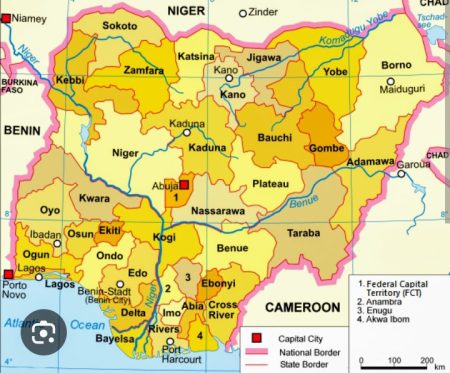
The States and the Federal Capital Territory generated a record N5.15 trillion in internally generated revenue (IGR) in 2025, a 40.93 per cent increase from the N3.65 trillion recorded in 2024.
On the face of it, the number is impressive.
It suggests stronger tax administration, a widening revenue base and greater fiscal capacity at the sub-national level. It also fits neatly into the Federal Government’s argument that the country is moving from the difficult phase of economic reform and stabilisation towards growth, production and what it calls “shared prosperity.”
But for millions of Nigerians confronting the price of food, transport, housing, electricity and other essentials, the obvious question is not how much governments collected.
And so what?
What does N5.15 trillion mean for a household whose income has struggled to keep pace with the cost of living?
This is particularly important because the revenue increase comes at a moment when Nigeria’s macroeconomic indicators are improving, but household welfare remains under pressure.
The National Bureau of Statistics reported that real GDP grew by 4.43 per cent in the second quarter of 2026, compared with 4.23 per cent a year earlier. Inflation has also moderated substantially from the exceptionally high levels recorded in 2025.
Yet in August 2026, headline inflation was still 15.39 per cent, while food inflation stood at 19.57 per cent year-on-year.
In other words, the economy is expanding and the rate at which prices are rising has slowed, but prices have not gone back to where they were before the inflation shock.
This is at the heart of the Nigerian cost-of-living story.
The N5.15 trillion headline
The latest NBS figures show that the 36 states and the FCT generated N5.15 trillion in IGR in 2025, up from N3.65 trillion in 2024. Tax revenue accounted for N3.79 trillion, or 73.64 per cent of the total, while Ministries, Departments and Agencies generated about N1.36 trillion.
PAYE was the largest individual tax component, generating N2.64 trillion, equivalent to 69.51 per cent of total tax revenue.
There is an important message in that composition.
A significant portion of the money being celebrated as stronger government revenue ultimately comes from economic activity and incomes within the states themselves — particularly formal-sector workers and businesses.
The FCT is an especially clear example.
Its IGR rose to N356.34 billion in 2025 from N282.36 billion in 2024. PAYE alone accounted for about N320.15 billion of the FCT’s collection.
So the revenue story is partly a story about government becoming better at collecting money from an economy in which workers and businesses are already facing higher costs.
That makes the next question unavoidable: What happens to the money after it is collected?
Revenue growth is not the same thing as welfare growth
The 40.93 per cent increase in IGR should not automatically be interpreted as a 40.93 per cent improvement in the ability of governments to provide services.
IGR is a nominal revenue measure. Its value is affected by inflation, wages, business turnover, tax compliance, changes in tax administration and other factors.
Nevertheless, the increase is substantial.
The World Bank estimates that Nigeria’s inflation averaged about 23 per cent in 2025, while state and FCT IGR increased by about 41 per cent. That suggests that the rise in revenue was not simply a statistical reflection of higher prices, although it would be wrong to treat the difference as a precise measure of real fiscal expansion because state revenue structures and price movements vary.
The more important issue is what additional fiscal space produces.
If additional revenue finances better roads, cheaper and more reliable electricity, public transport, functioning hospitals, schools, water systems, security and agricultural infrastructure, households may experience the benefit without receiving a naira directly.
But if revenue rises without a corresponding improvement in public services, the citizen experiences mainly the cost of taxation, not its benefit.
That is the “so what?” test.
Food remains the biggest household pressure
The strongest reason for caution is food.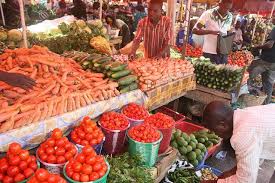
Nigeria’s August 2026 headline inflation rate of 15.39 per cent was considerably lower than the 23.14 per cent recorded in August 2025.
Food inflation, however, remained much higher at 19.57 per cent.
The good news is that food inflation slowed sharply during August. Monthly food inflation fell to 1.02 per cent from 5.56 per cent in July.
But slowing inflation does not mean food has become cheap.
It means that food prices are increasing more slowly.
The NBS itself reported that the consumer price index increased to 146.3 points in August from 145.3 points in July.
This matters enormously to a household.
A family that spent N100,000 on a basket of goods before a prolonged period of inflation does not suddenly return to N100,000 simply because the inflation rate has fallen.
The price level has already shifted upward.
And food continues to account for the largest contribution to Nigeria’s annual inflation, contributing 6.16 percentage points to the August headline rate.
The World Bank has previously estimated that poorer Nigerian households can spend as much as 70 per cent of their income on food. It also reported that the cost of a basic food basket rose fivefold between 2019 and 2024.
That is why a falling inflation rate can coexist with continuing hardship.
Transport tells a completely different story
For workers, traders, students and small businesses, transport provides perhaps the clearest connection between macroeconomic reforms and daily life.
NBS data for May 2026 showed that the average national fare for a bus journey within a city was N1,431.25, up 38.63 per cent from N1,032.46 a year earlier.
The average intercity bus fare rose 21.89 per cent year-on-year to N9,699.55.
The average Okada fare rose by 52.45 per cent, from N703.54 in May 2025 to N1,072.51 in May 2026.
Over the three years from May 2023 to May 2026, the NBS data analysed by The PUNCH showed that the average city-bus fare rose by about 120 per cent, while the average intercity bus fare increased by about 142 per cent.
A significant rise because transport is not simply a consumption item.
For many Nigerians, transport is the price of accessing employment.
A worker who cannot afford the journey to work has effectively suffered a reduction in income even if his or her nominal salary has not changed.
A trader who spends more getting goods to market faces higher operating costs.
A farmer who pays more to move produce from farm to market faces a higher cost structure that can eventually appear as a higher food price.
This is where infrastructure investment becomes more than a development slogan.
A functioning road, affordable mass transit system or reliable rail connection can effectively reduce the cost of living without directly increasing household income.
Fuel remains the wild card
The fuel story demonstrates why the government’s transition from reform to growth is not yet complete from the household’s perspective.
Recent international oil-market pressures have pushed petrol prices in Nigeria to around N1,400 per litre in Lagos and Abuja, with prices reaching about N1,500 in parts of northern Nigeria, while diesel has moved above N2,000 per litre.
The pressure is transmitted through the economy.
Fuel affects transport.
Transport affects food distribution.
Fuel affects generators.
Generators affect small businesses.
Energy costs affect manufacturing.
Manufacturing costs affect consumer prices.
The result is that the price of energy becomes embedded in the price of almost everything else.
This is why the government’s claim that domestic refining capacity is expanding is economically important – but its ultimate success should be measured by whether consumers and businesses actually experience lower and more predictable energy costs.
The minimum wage question
Nigeria’s national minimum wage was raised to N70,000 in 2024, with the implementation backdated to April 1 of that year.
But a wage increase cannot be assessed in isolation from the prices workers face.
Consider transport alone.
The NBS May 2026 national average city-bus fare of N1,431 means that two bus trips a working day for 22 days would amount to roughly N63,000 a month.
That is an illustration rather than a representative household budget – workers make different numbers of journeys and many use other forms of transport – but it demonstrates the scale of the problem.
A nominal N70,000 wage therefore cannot be interpreted simply as N70,000 of additional purchasing power.
The relevant question is what that wage can buy.
This is precisely why the World Bank has continued to distinguish Nigeria’s improving macroeconomic position from household welfare. Its April 2026 Nigeria Development Update said macroeconomic stability was improving but that household incomes had yet to recover fully and poverty remained high.
The revenue is heavily concentrated
There is another “so what?” buried inside the N5.15 trillion figure.
The revenue is not evenly distributed.
Lagos alone generated about N1.77 trillion, or roughly 34 per cent of the total.
Rivers generated N428.42 billion and Enugu N406.77 billion.
Together, Lagos, Rivers and Enugu accounted for roughly half of the combined IGR.
At the other end, Yobe generated N16.01 billion, Ebonyi N17.18 billion and Sokoto N20.48 billion.
This is significant because Nigeria does not have 37 sub-national governments with roughly comparable fiscal capacity.
It has a handful of jurisdictions with substantial tax bases and many others whose ability to raise revenue internally is much smaller.
The result is a difficult policy question.
Can rising IGR reduce inequality between states, or could stronger revenue mobilisation widen the gap between states that already have large formal economies and those that do not?
The answer depends heavily on fiscal transfers, the quality of public spending and the ability of weaker states to turn federal and internally generated resources into productive economic activity.
Enugu provides a useful warning about the headline
Enugu’s N406.77 billion IGR is striking because it more than doubled from N180.50 billion in 2024.
But the composition is as important as the headline.
About N355.25 billion came from MDAs, while tax revenue was about N51.52 billion.
Nationally, by contrast, tax revenue accounted for 73.64 per cent of total IGR.
This demonstrates why simply ranking states by IGR can be misleading.
Two states can report similar revenue totals while having very different underlying revenue structures.
One may be collecting large amounts from a broad tax base generated by businesses and workers.
Another may receive substantial revenue through government agencies, assets, fees or other non-tax channels.
For policy analysts, therefore, the important question is not simply “Who collected the most?”
It is: “What generated the revenue, how sustainable is it, and what did government do with it?”
The poverty problem has not disappeared
Nigeria’s most comprehensive national multidimensional poverty survey, conducted by the NBS, found that 62.9 per cent of Nigerians — almost 133 million people — were multidimensionally poor in the 2021/22 survey.
The measure covered not only income but deprivation in areas including education, health, living standards, sanitation, housing and food security.
That survey is not a current 2026 poverty estimate, and it should not be presented as one.
But it establishes the scale of the structural problem that today’s revenue growth must ultimately address.
More recent World Bank estimates indicate that poverty remains widespread and that millions of Nigerians were estimated to have fallen below the national poverty line during the period of elevated inflation.
So the government’s new phase of “shared prosperity” faces a demanding starting point.
Nigeria is not beginning from a position where modest improvements in macroeconomic indicators automatically translate into widespread prosperity.
It is beginning with a large population of households whose living standards have already been damaged by years of inflation and weak purchasing power.
What should Nigerians look for now?
The N5.15 trillion figure becomes meaningful when it can be connected to measurable outcomes.
There are at least six questions that state governments should now be able to answer.
■ How much of the additional revenue is reaching public services?
Citizens need to see whether increased revenue is translating into functioning hospitals, schools, water systems, roads, public transport and security.
■ Are governments increasing revenue without increasing the cost of formal economic activity?
Because PAYE is such a large component of state tax revenue, aggressive collection can become counterproductive if it discourages employment or pushes businesses further into informality.
Revenue mobilisation should broaden the tax base rather than simply increase pressure on the same compliant taxpayers.
■ Is the money producing assets rather than recurrent expenditure?
The real fiscal dividend comes when additional revenue improves productive capacity.
A better road can reduce transport costs for years.
A functioning irrigation system can increase farm output.
A reliable electricity network can reduce generator dependence.
A good school can improve human capital.
A hospital can prevent a household from losing income to illness.
These are the mechanisms through which government revenue becomes household welfare.
■ Are poorer states closing the development gap?
The huge difference between Lagos’s N1.77 trillion and Yobe’s N16.01 billion shows that fiscal capacity is deeply uneven.
Revenue policy therefore has to be considered alongside the federal allocation system and targeted development spending.
■ Are wages catching up with the cost of living?
A falling inflation rate is welcome, but what matters to workers is the relationship between income and the prices of food, transport, rent, energy and healthcare.
■ Can government keep the gains when oil prices and fuel costs change?
The latest fuel-price shock is a reminder that Nigeria remains vulnerable to external energy-market movements.
Diversifying government revenue is therefore important, but diversifying household income and domestic production is equally important.
So, what does N5.15 trillion actually mean?
It means the states and the FCT have acquired more fiscal capacity.
This may be significant because it means there is potentially more money with which to finance infrastructure, education, healthcare, security, social protection and economic development.
It also provides evidence that tax administration and other forms of sub-national revenue mobilisation have become more effective.
But it does not yet establish that Nigerians are experiencing shared prosperity.
The household evidence is more complicated.
GDP is growing: real GDP expanded by 4.43 per cent in Q2 2026.
Inflation is falling: headline inflation reached 15.39 per cent in August 2026, down sharply from a year earlier.
Food inflation is also slowing, although it remained 19.57 per cent year-on-year.
Yet transport costs remain dramatically higher than they were before the reforms, fuel prices are again under pressure, and the World Bank says household incomes have not fully recovered.
That leaves Nigeria at a critical economic junction.
The first phase of reform was about correcting prices, markets, foreign exchange and public finances.
The next phase has to demonstrate something more tangible: that a stronger government balance sheet can produce a stronger household balance sheet.
That is the real meaning of “shared prosperity”.
For the ordinary Nigerian, the success of the reforms will ultimately not be measured by the size of an IGR report, the growth rate of GDP or the number of billions collected by state revenue services.
It will be measured in simpler terms:
Can I afford food?
Can I get to work without spending an excessive share of my income on transport?
Can my business operate without depending on expensive fuel and generators?
Can my children receive quality education?
Can my family access healthcare without financial distress?
Can my income rise faster than the cost of living?
And perhaps most importantly: Can the N5.15 trillion that governments are now collecting be converted into lower costs, better services, more productive jobs and higher real incomes?
Until that conversion becomes visible in household budgets, the N5.15 trillion remains primarily a story about government revenue.
The next story that needs to be told is about what that revenue buys for citizens.