
24.8 C
Lagos
Tuesday, October 6, 2026

Six Years After Promise, Nigerian Teachers Still Await Special Salary Scale, Others

Must read

As Nigeria marks 2026 World Teachers’ Day, the NUT says a key part of the Buhari administration’s pledge to transform the teaching profession remains unfulfilled, while classrooms remain overcrowded and thousands of teaching positions are vacant.
Six years after late former President Muhammadu Buhari announced a sweeping package intended to make teaching more attractive in Nigeria, one of its most prominent promises – the introduction of a special salary scale for teachers – remains at the centre of an unresolved dispute between the Nigeria Union of Teachers (NUT) and the Federal Government.
The renewed complaint came on Monday in Abuja as teachers gathered at Eagle Square to mark the 2026 World Teachers’ Day.
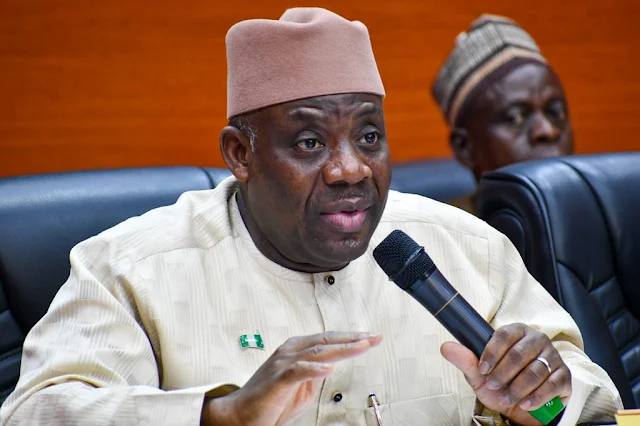
Delivering the NUT’s address, the union’s National Deputy President, Kizito Kalu, said teachers were still waiting for the special salary structure approved for basic and secondary school teachers under the Buhari administration.
“Teachers must receive remuneration that reflects the importance of their responsibilities and the prevailing economic realities in the country,” Kalu said.
He recalled that the Federal Government approved the special salary scale in 2022 alongside other welfare measures, but said implementation had not commenced four years after the approval.
“We, therefore, renew our call on the government to set machinery in motion for actualisation of the new salary regime for teachers in order to boost their morale and enhance their dignity,” he said.

A Nigerian teacher in a classroom.
For the NUT, the issue is no longer simply about an old government promise. It is about whether Nigeria can attract, retain and adequately support the teachers it needs to educate a rapidly growing school-age population.
And the numbers suggest that the problem has become increasingly difficult to ignore.
The promise that began in 2020
The story goes back to October 2020.
Marking World Teachers’ Day that year, Late Buhari announced what his administration described as fundamental measures to revitalise the teaching profession.
The President said his government had approved a special salary scale for teachers in basic and secondary schools, with provisions for rural-posting allowances, science-teacher allowances and peculiar allowances.
He also announced a review of teachers’ retirement age from 60 to 65 years and an increase in the length of service from 35 to 40 years.
But the package went considerably further.
Buhari promised the reintroduction of bursaries for students studying education in universities and colleges of education, stipends for Bachelor of Education students, automatic employment for qualifying graduates, funding for teaching practice, a career-path policy for the profession, teacher-conversion programmes and ICT training.
The stated objective was clear: make teaching more attractive, retain experienced teachers and encourage more qualified Nigerians to enter the profession.
The administration itself described the situation as an “emergency” because of the shortage of qualified and dedicated teachers.
In other words, the government recognised the problem six years ago.
The question now is why a major part of the proposed solution remains unresolved.
January 2022: the promised take-off date
The controversy deepened in 2021 when the Federal Government indicated that teachers would begin receiving the new salary structure from January 2022.
But even before that date arrived, questions were being raised about implementation.
A report at the time noted that states were uncertain about whether they could afford the new salary structure, while the Federal Government indicated that the new regime would initially apply to teachers in federal schools.
There were also concerns about how the policy would be funded and coordinated across the country’s different levels of government.
The NUT had warned from the outset that the government’s announcement needed effective legal and administrative backing if it was to survive beyond the publicity surrounding World Teachers’ Day.
That warning has acquired renewed relevance.
The Federal Government’s own end-of-administration factsheet later listed a new Special Teachers Salary Scale effective January 1, 2022, alongside the new retirement age of 65 years and 40 years of service and a special teachers’ pension scheme.
Yet the NUT now says the salary scale has still not been implemented.
What was implemented?
The record is more complicated than a simple story of promises made and forgotten.
One significant part of Buhari’s package did become policy: the extension of teachers’ retirement age to 65 and length of service to 40 years.

Teacher.
The NUT itself acknowledged in 2025 that the retirement reform had been implemented in 22 states and the Federal Capital Territory, although it said other major welfare measures approved under the package remained outstanding.
The Federal Government also reported that bursary provisions for education students had been included in the 2022 Budget. In addition, the government announced plans for free secondary education for four biological children of teachers working in federal unity colleges.
But the union’s position is that these developments do not amount to full implementation of the promised package.
In June 2025, then NUT President Audu Amba appealed to President Bola Tinubu to implement the welfare measures approved under Buhari, including the special salary structure, special teachers’ pension scheme and other incentives.
By October that year, the union was again demanding implementation, this time linking the unresolved welfare question directly to a growing manpower crisis.
The shortage behind the salary dispute
According to the NUT, Nigeria’s public primary and secondary schools were facing a shortage of more than 194,876 teachers.
The union’s 2025 warning was stark: without sufficient numbers of qualified teachers, efforts to improve learning outcomes and meet the Sustainable Development Goal on quality education could be compromised.
The Universal Basic Education Commission has also identified a substantial teacher deficit.
A World Bank-supported assessment of Nigeria’s basic education system found a national average pupil-teacher ratio of 49:1 at primary level and 29:1 at junior secondary level. When teacher qualifications were taken into account, the effective ratio was considerably worse – 98 pupils per qualified teacher at primary level and 75 at junior secondary level.
It is necessary to understand this distinction.
A classroom may technically have a teacher, but that does not necessarily mean it has a teacher with the appropriate qualifications for the pupils and subjects being taught.
The classroom tells another story
The NUT’s latest intervention also points teachers to improve literacy and numeracy, prepare children for examinations, integrate technology into teaching, manage increasingly large classrooms and help produce the skilled workforce required and conditions that cannot be solved by a salary adjustment alone.
Kalu cited overcrowded classrooms, inadequate furniture and insufficient instructional materials as some of the challenges confronting teachers.
The Federal Ministry of Education’s 2024/25 Annual School Census provides a striking illustration.
The data recorded 39.8 million learners, 1.19 million teachers and 725,778 classrooms among the schools covered. The national learner-teacher ratio was 33.6, slightly better than the UBE benchmark of 35.
But the learner-classroom ratio was 60.1, compared with the UBE standard of 35. The national learner-toilet ratio was 65.9 against a standard of 30.
The implication is that even where there may be enough teachers on paper relative to the national learner-teacher benchmark, there is still a serious shortage of adequate physical learning spaces.
And the national averages conceal sharp disparities.
For example, the 2024/25 data for Kurmi Local Government Area in Taraba State recorded a learner-teacher ratio of 95.8, while the ratio in Kusada LGA, Katsina State, was 95.1.
For teachers posted to such environments, the challenge is not simply how much they earn.
It is how many children they are expected to teach, whether there is a desk for each child, whether instructional materials are available and whether the school itself provides a conducive environment for learning.
A profession caught between expectations and reality
The contradiction is increasingly difficult to overlook.
Nigeria expects teachers to improve literacy and numeracy, prepare children for examinations, integrate technology into teaching, manage increasingly large classrooms and help produce the skilled workforce required for economic development.
At the same time, the NUT says teachers continue to face inadequate remuneration and poor working conditions.
Late Buhari himself recognised this tension in 2020.
In announcing the special salary scale, he said government had identified a shortage of qualified and dedicated teachers and argued that better conditions were necessary to attract people into the profession.
Six years later, the NUT is making essentially the same argument.
The warning from UNESCO
The dispute comes at a particularly symbolic moment.
The 2026 World Teachers’ Day marks the 60th anniversary of the 1966 ILO/UNESCO Recommendation concerning the Status of Teachers.
UNESCO’s theme this year is “Standing with teachers: 60 years of protecting the profession, advancing the status and shaping our futures.”
The organisation says teachers’ status has three interconnected dimensions: their social recognition, their professional standing and their material conditions—including salaries, workload and working environments.
That makes the Nigerian debate about the special salary scale part of a much bigger question.
What does it mean to value teachers?
Is it enough to praise them on October 5, give awards to outstanding educators and describe teachers as nation-builders?
Or must that recognition also be reflected in salaries, classrooms, equipment, professional development, career progression and the conditions under which teachers work?
The NUT’s answer is unequivocal.
From speeches to pay slips
There is an important distinction between an announcement, an approval and implementation.
In 2020, Buhari announced the package.
By 2022, the administration’s own records described the special salary scale as effective.
Yet in 2026, the NUT says teachers are still waiting for the promised salary regime.
That gap has now lasted long enough to become more than an administrative delay. It has become a question of policy continuity and accountability.
The current administration inherited the commitment. The NUT is asking it to complete it.
And the circumstances confronting the education system have arguably made the original rationale for the reform even more urgent.
The country needs more teachers, not fewer. It needs qualified teachers, particularly in underserved communities. It needs classrooms and learning materials. And it needs a remuneration system capable of persuading qualified Nigerians that teaching is a profession in which they can build a secure and respected career.
The Federal Government has also begun new teacher-development initiatives. In 2025, UBEC and the Federal Ministry of Education launched programmes aimed at improving school management and providing professional development for more than 223,000 teachers and school administrators.
But professional development cannot substitute for adequate remuneration, just as a salary increase cannot by itself solve classroom shortages.
The challenge is an educator working without adequate instructional materials, and for the young graduate deciding whether teaching offers a viable career, the measure of government policy is ultimately not what was announced.
What teachers are asking for
The NUT’s message on this year’s World Teachers’ Day therefore amounts to a demand for the government to revisit the entire promise made in 2020.
At its centre is the special salary scale.
Around it are demands for better working conditions, adequate instructional materials, sufficient classroom space, recruitment of more qualified teachers and professional support.
The union’s position is that teachers cannot be expected to perform optimally in schools where basic resources are inadequate.
That argument finds support in the government’s own statistics.
The numbers show millions of learners, hundreds of thousands of classrooms and more than a million teachers – but also a national classroom ratio substantially above the UBE benchmark.
The unfinished promise
The significance of the NUT’s complaint is therefore not limited to a dispute over an old salary policy.
It is a test of whether a reform announced with considerable political attention can survive changes in administration and eventually reach the people for whom it was designed.
Buhari promised to make teaching more attractive.
His administration raised the retirement age and length of service and formally listed the special salary scale among its achievements.
But in 2026, the NUT is again asking the Federal Government to implement that salary structure.
Meanwhile, the country continues to grapple with teacher shortages, inadequate classrooms and uneven educational resources.
As Nigeria celebrates its teachers, the central issue is increasingly difficult to avoid:
A profession cannot be transformed by promises alone.
For the teacher standing before an overcrowded classroom, for the educator working without adequate instructional materials, and for the young graduate deciding whether teaching offers a viable career, the measure of government policy is ultimately not what was announced at a World Teachers’ Day ceremony.
It is what appears in the salary account, what is available inside the classroom and what support the teacher receives when the applause ends.
Six years after Buhari’s promise, Nigerian teachers are still waiting to see the full reform translated from policy documents into everyday professional reality.

More articles

LEAVE A REPLY

Please enter your comment!
Please enter your name here

Related articles