
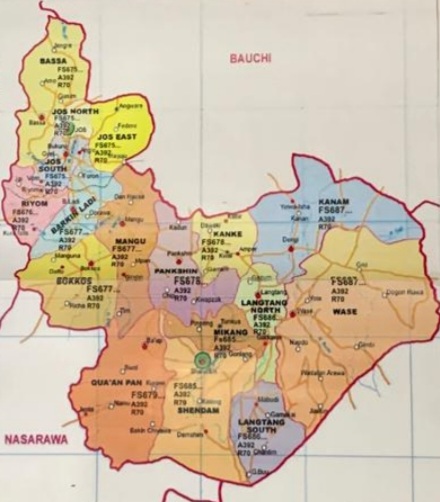
Last Sunday night in Gako Village, Riyom Local Government Area of Plateau State, the stillness was shattered by gunfire. By morning, a pastor, Rev. Ayuba Choji, his wife Chundung, and their two children lay dead—victims of yet another attack in a region where violence has become an almost routine disruption to life.
In Adamawa State, a fresh wave of violence struck communities, where at least 29 civilians were reportedly killed in a village attack on Sunday. The assault, linked to fighters associated with Islamic State West Africa Province, is the latest in a series of deadly incidents underscoring the fragile security situation in the North-East.
Residents say the attackers on the Plateau struck around 11 p.m., moving through the community under cover of darkness, firing indiscriminately and forcing families to flee into the night. For many, it was a familiar pattern – one that has left entire communities trapped in a cycle of fear, loss, and uncertainty.
While the killing of the Choji family is shocking, local accounts suggest it is far from an isolated incident. Community leaders and youth representatives describe a worrying shift in how such attacks are carried out.
According to these accounts, armed groups now operate in coordinated units. One group targets residents directly, another destroys farmlands, while others position themselves along access routes – blocking escape paths and delaying any potential intervention.
This level of coordination marks a departure from earlier, more sporadic incidents. What is emerging instead is a pattern that appears organized, deliberate, and increasingly difficult for local communities to defend against.
Farms Under Siege
Beyond the immediate loss of life, the violence is taking a quieter but equally devastating toll on livelihoods.
In nearby Barkin Ladi Local Government Area, residents report that within just 48 hours, large swathes of farmland in Kassa were destroyed. Crops such as maize, cabbage, and pepper – essential both for income and sustenance – were wiped out.
Living in Fear
For residents like Martha Dalyop, the impact is as psychological as it is physical. Nights are no longer for rest but for vigilance. The sound of distant gunfire or even sudden movement can trigger panic.
Communities report:
▪︎Sleepless nights and constant anxiety
▪︎Declining agricultural activity
▪︎Increasing displacement as families abandon vulnerable homes
The killing of a religious leader and his family has also struck a symbolic nerve, deepening a sense of insecurity and loss.
The latest attack in Riyom, combined with farmland destruction in Barkin Ladi, points to a geographical spread. These neighboring areas have long experienced tensions, but residents say the frequency and intensity of attacks are increasing.
Multiple incidents occurring within short time frames suggest a growing capacity among attackers to strike repeatedly and across locations.
A recurring theme in conversations with residents is frustration over security response. Many allege that help often arrives too late—or not at all.
The attackers’ ability to:
▪︎Coordinate movements
▪︎Strike multiple targets
▪︎Withdraw without interception
raises questions about gaps in surveillance, intelligence, and rural policing.
Communities are increasingly relying on local vigilante groups, but even these have reportedly become targets of attacks.
A Crisis Deepening
The violence in Plateau State is often linked to longstanding tensions over land, identity, and resources. But observers warn that the current trend may represent a dangerous escalation.
The combination of:
▪︎Coordinated armed assaults
▪︎Economic sabotage through farm destruction
▪︎Expanding targets and areas
suggests a shift toward a more entrenched and systemic crisis.
For now, communities in Riyom, Barkin Ladi, and beyond remain on edge. Farms lie untended, homes are half-empty, and night brings more fear than rest.
Residents continue to call on authorities to strengthen security presence, protect rural livelihoods, and break the cycle of violence.
In Adamawa, residents described a sudden attack during a football match in Guyaku community of Gombi Local Government Area. Another nighttime raid, with gunmen storming another community and opening fire and killing another 12 before disappearing into surrounding bushes. As in many previous attacks, the victims were largely civilians caught off guard.
A Pattern of Relentless Attacks
The latest killings are part of a trend of recurring violence across Adamawa. Though often overshadowed by neighboring Borno State, Adamawa has increasingly come under pressure from insurgent groups spilling across state lines.
Earlier in 2026, multiple deadly incidents were recorded:
• In February, at least 25 people were killed in coordinated attacks on two communities.
• In January, 14 villagers were killed in Hong Local Government Area, with homes set ablaze.
These repeated assaults point to a sustained campaign rather than isolated outbreaks of violence.
Security observers note that attackers in Adamawa rely on predictable but effective tactics:
• Striking rural communities at night
• Targeting civilians and burning homes
• Operating in areas with limited security presence
Communities Under Strain
For residents, the impact extends far beyond the immediate loss of life. Fear has become a constant presence, altering daily routines and undermining livelihoods.
Farmers are among the hardest hit. With insecurity spreading into agricultural sector, many are unable to tend their land, raising concerns about food production and income loss.
Displacement is also rising, as families abandon villages in search of safer locations, often with little support or resources.
The violence in Adamawa reflects wider insecurity across the North-East, where insurgent groups continue to adapt despite ongoing military operations.
Observers warn that:
• Armed groups are dispersing into new areas
• Attacks are becoming more localized but frequent
• Civilians remain the primary targets
The ability of attackers to strike repeatedly suggests gaps in rural security coverage and intelligence gathering.
Calls for Urgent Action
Local leaders are calling for increased military deployment, improved surveillance, and stronger protection for vulnerable communities. There is also growing demand for support to rebuild affected villages and restore livelihoods.
COMPLIMENTS.
Please read trending reports on Everyday.ng
FCT Teachers Suspend Strike After Wike’s Intervention
RESCUE RACE IN KOGI: Gunmen Strike Orphanage, Children Freed as Search Intensifies
RESCUE RACE IN KOGI: Gunmen Strike Orphanage, Children Freed as Search Intensifies
Conflicting Accounts Deepen Questions Over Killing of NYSC Member in Abuja
Conflicting Accounts Deepen Questions Over Killing of NYSC Member in Abuja
For comments, adverts, releases, please reach us on:
Twitter on: @Everyday_ng;
E-mail: info@everyday.ng
Telephone, WhatsApp & Telegram: +234 802 2198060.
Contact Address: Back Suite, Off Umaru Musa Yar’Adua Way, Kukwaba District, Abuja.
God bless the Federal Republic of Nigeria.