
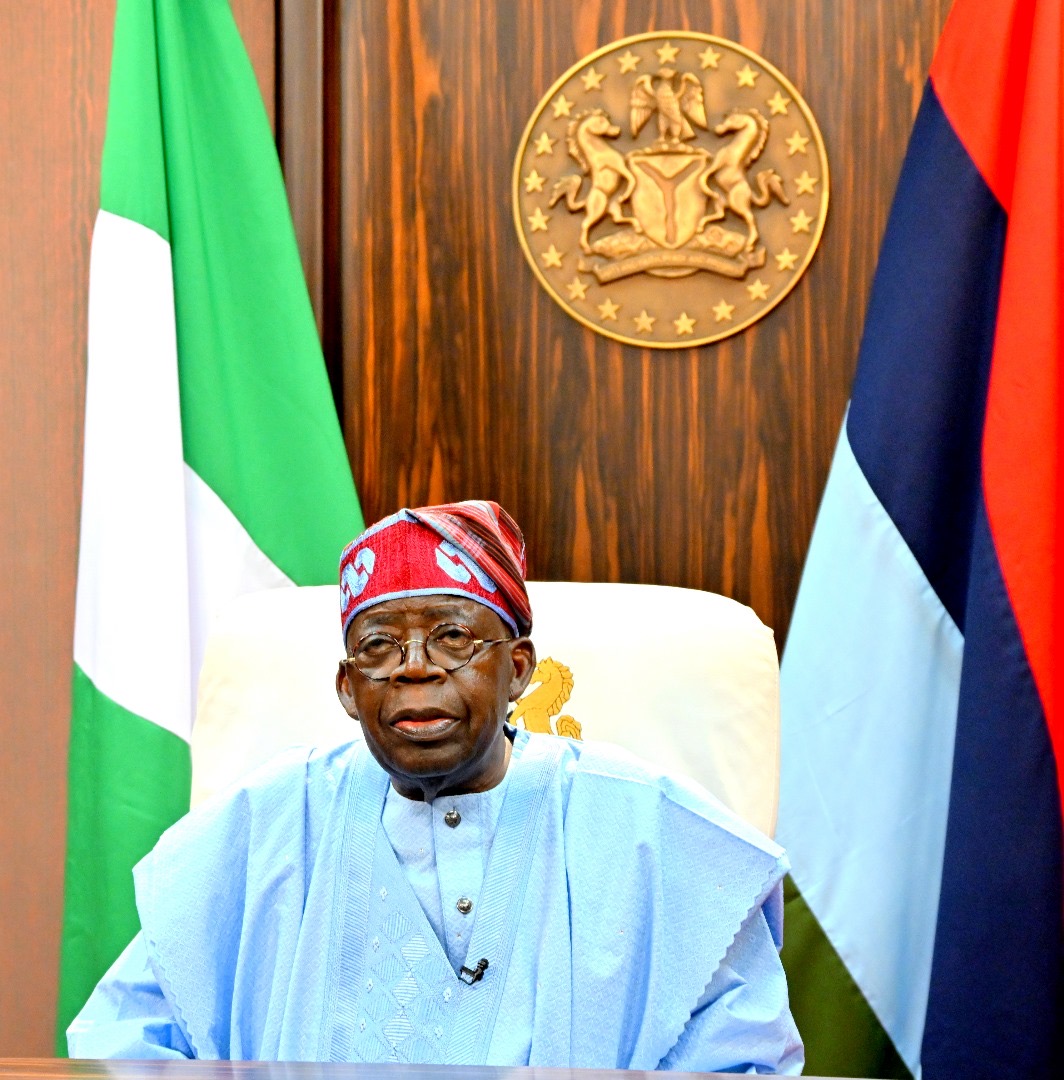
A courtroom drama unfolded on Wednesday at the Federal High Court as prosecutors laid bare what they described as a chilling and meticulously planned attempt to overthrow the government of President Bola Tinubu.
At the heart of the testimony was a masked witness — identified only as “AAA” — a soldier from the Nigerian Army Corps of Military Police, who told the court how a web of secret meetings, coded messages and suspicious financial transactions allegedly pointed to a coup plot in motion.
According to the witness, the story began with a whisper of intelligence.
That whisper reached the desk of the then Chief of Army Staff, General O. O. Oluyede, who, after reviewing the report, deemed it credible enough to trigger a full-scale investigation. What followed, the court heard, was a swift operation that led to the arrest of a central figure — Colonel M. A. Ma’aji.
From that moment, investigators say the plot began to unravel.
A search of the colonel’s residence yielded what the witness described as a “telling discovery” – a simple jotter. But its contents, he said, were anything but ordinary. Inside were alleged operational plans, names of top government officials, and even a list of officers marked for assassination.
“It detailed not just actions,” the witness testified, “but a vision of what the country would look like after the takeover.”
More revelations came from the colonel’s mobile phone. Forensic analysts, the court heard, uncovered encrypted communications, shared code words among alleged conspirators, and links connecting several of the six defendants.
Even more striking were the financial trails.
The witness alleged that funds flowed through multiple channels, including a company identified as Purple Wave, which investigators believe served as a conduit for financing the operation. Bank records presented in court showed a rapid sequence of withdrawals — tens of millions of naira at a time — totaling hundreds of millions within just weeks in September and October 2025.
Some transactions, though labeled as routine business payments, were, according to investigators, anything but.
One ₦100 million transfer described as payment for clearing debris along a coastal corridor was, the witness claimed, diverted to support the alleged plot.
The courtroom grew tense as the witness described a series of clandestine meetings in Abuja locations, including Green Land Apartment and BrookVille Hotel. There, he said, the accused and others allegedly gathered to discuss what he termed “anti-government rhetoric” and the need for regime change.
“They didn’t just talk,” he said. “They planned.”
Targets were allegedly identified — including military barracks housing senior officers — and strategies mapped out to seize key roads and infrastructure. Roles were assigned, agencies envisioned, and even post-coup appointments discussed, the court heard.
In one of the more unusual claims, the witness alleged that some participants engaged in “consultations and divination” as part of preparations, receiving funds for the purpose.
Investigators also traced the purchase of vehicles allegedly being modified for tactical use — vehicles later recovered, the court was told.
As proceedings continued, prosecutors submitted bank records, hotel receipts, and digital extracts from the colonel’s phone as evidence. Defence lawyers objected at several points, particularly over the admissibility of audio-visual recordings of statements made by the accused.
Justice Joyce Abdulmalik ruled that while some documents would be admitted, the prosecution must first provide the defence with copies of the recordings before they could be played in court.
Earlier witnesses from three banks — Jaiz Bank, SunTrust Bank, and Providus Bank — had presented account statements linked to the defendants and associated companies, further anchoring the prosecution’s claims of a financial network behind the alleged conspiracy.
Despite the weight of the allegations, the defence maintains its objections, signaling that the legal battle ahead will be fiercely contested.
The trial, now on an accelerated track, has been adjourned to May 4 and 5, when the fourth prosecution witness is expected to continue testimony.
For now, the court – and the nation – watches closely as a case unfolds that, if proven, could rank among the most consequential security trials in recent Nigerian history.