
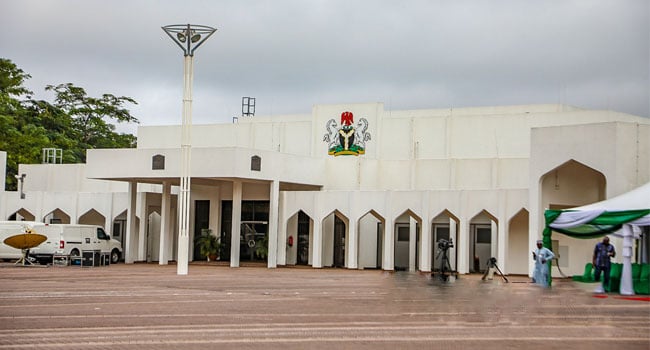
The Presidency has defended the reported killing of senior ISWAP commander Abu-Bilal al-Manuki, insisting that the latest joint Nigerian-American counterterrorism operation was backed by extensive intelligence gathering and leaves “no ambiguity” about his death.
In a statement issued by presidential spokesman Bayo Onanuga, the Presidency said criticism surrounding the announcement stemmed from confusion over an earlier report in 2024 that had mistakenly listed al-Manuki among insurgent commanders killed during military operations in Kaduna State.
According to the statement, security and intelligence officials now maintain that the earlier claim was based on “mistaken identity or misattribution” during complex counterinsurgency operations. Authorities argued that the Birnin Gwari forest axis, where the earlier operation occurred, was outside al-Manuki’s known operational territory, further undermining the previous assessment.
The Presidency said the latest operation was carried out after months of coordinated Intelligence, Surveillance and Reconnaissance (ISR), including communications monitoring, digital surveillance and human intelligence reportedly conducted from December 2025. Officials disclosed that operatives initially sought to capture the ISWAP commander alive and tracked his movements across several northern Nigerian locations, including Abuja and Maiduguri, before authorising the final strike.
The government stressed that the operation involved “multi-source intelligence confirmation” and extensive target validation conducted jointly with international partners, including the United States government. According to the statement, officials are “100 per cent certain” that al-Manuki was successfully neutralised.
The development aligns with Washington’s long-standing support for Nigeria’s counterterrorism campaign against extremist groups operating in the Lake Chad region. The United States government has repeatedly pledged intelligence-sharing, surveillance support and military cooperation with Nigerian forces in efforts to degrade both Boko Haram and the Islamic State West Africa Province (ISWAP).
Successive US administrations have described ISWAP as a significant regional security threat, particularly because of its links to the broader Islamic State network. American officials have also consistently emphasised the importance of intelligence-led operations and multinational cooperation in combating insurgency across West Africa.
The government, meanwhile, has presented al-Manuki’s death as a major operational breakthrough in the ongoing war against terrorism. Officials argued that dismissing the operation prematurely could weaken public confidence and undermine the morale of troops engaged in one of the world’s most difficult insurgency environments.
The Presidency noted that historical cases involving insurgent leaders previously declared dead — including Boko Haram leader Abubakar Shekau and former ISIS leader Abu Bakr al-Baghdadi — illustrate the challenges of intelligence gathering in asymmetric warfare, where militant figures often operate under multiple aliases and across difficult terrain.
Despite public scepticism, security officials insist the latest operation marks a verified and intelligence-driven success against a senior ISWAP figure, describing the mission as significantly more precise and better corroborated than previous battlefield assessments.