The votes are counted, the political drums have gone quiet, and the result that many in Osun had waited through a fiercely fought campaign to hear has finally arrived: Governor Ademola Adeleke is staying in office.
The incumbent, flying the flag of the Accord Party, was declared winner of Saturday’s governorship election early Sunday by the Independent National Electoral Commission (INEC), securing 511,067 votes to defeat the All Progressives Congress (APC) candidate, Bola Oyebamiji, who polled 444,815.
The margin was 66,252 votes — substantial enough to settle the contest without the drama of a narrow finish.
Adeleke won 19 of Osun’s 30 local government areas, while Oyebamiji carried 11. African Democratic Congress candidate Najeem Salaam finished a distant third with 17,180 votes.
At about 7:24 a.m. on Sunday, the State Returning Officer, Prof. Joshua Ogunwole, Vice-Chancellor of the Federal University, Oye-Ekiti, announced the final figures and returned Adeleke elected for another four-year term. INEC recorded 1,010,684 accredited voters, with 985,079 valid votes and 20,721 rejected ballots.
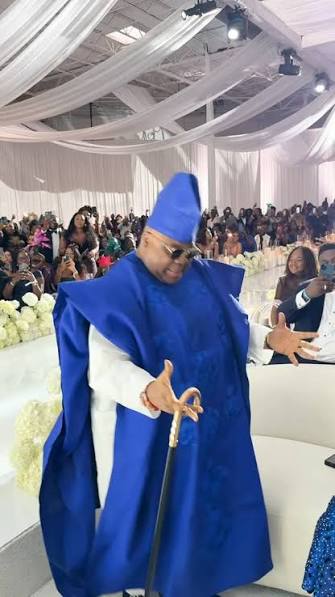
There was, understandably, a rapturous celebration in Adeleke’s camp as evidenced below in a video from his camp.
The official result brought the curtain down on an election that was never merely about two men seeking the Osun Government House. It was also a referendum on political influence, old rivalries, party machinery and the reach of the federal establishment into a state President Bola Tinubu regards as his ancestral home.
And on Sunday morning, the verdict belonged to Adeleke.
Adeleke’s return is more than a repeat of his 2022 triumph. Early analysis of the results indicates that he substantially expanded his electoral performance, increasing his vote haul by more than 100,000 compared with the previous contest and more than doubling his winning margin over the APC. He also added two local government areas to his 2022 tally.
The significance was difficult to miss.
The governor entered the election after leaving the Peoples Democratic Party for Accord, amid a shifting political landscape in which alliances were being rewritten almost by the day. Yet when the ballots were opened, the electorate handed him another mandate.
His victory was celebrated by his famous nephew, Afrobeats star David Adeleke, popularly known as Davido, who posted a brief message on X: “We did it, Uncle.”
For Adeleke, however, the political meaning was larger than family celebration. In his post-election remarks, he described the victory as a “thank you” from the people of Osun for what he said was his administration’s delivery of democratic dividends.
Tinubu congratulates the man his party tried to defeat
The result also produced one of the election’s more striking political reversals.
President Bola Ahmed Tinubu had called for a peaceful and transparent election before voting day, urging INEC and security agencies to protect voters and electoral officials.
After the declaration, Tinubu congratulated Adeleke, saying the outcome reflected the confidence Osun voters had placed in the governor.
The President urged the returning governor to use the next four years to unite the state, irrespective of how individuals voted, and to pursue growth, stability and social and economic progress.
He also commended the other contestants for their participation and praised INEC and the security agencies for conducting what he described as a peaceful and transparent exercise.
The symbolism was unmistakable: a president whose governing party had fought hard to reclaim Osun was now publicly saluting the victor who had kept the state out of the APC column.
The power brokers who could not deliver Osun
That is where the story becomes more interesting.
The 2026 election was fought on the ballot by Adeleke, Oyebamiji and the other candidates. But behind them stood a much larger cast of political actors.
Tinubu’s name hovered over the contest. Former Governor Gboyega Oyetola, now Minister of Marine and Blue Economy, was heavily invested in the APC campaign. APC National Secretary Ajibola Basiru campaigned in his home state.
Former Governor Olagunsoye Oyinlola dramatically crossed political lines to endorse Oyebamiji. Former governor and APC elder statesman Bisi Akande backed his party’s candidate. Senator Francis Fadahunsi was also an outspoken APC campaigner.
Their combined political weight made the election look, at times, like an attempt to reclaim Osun for the ruling party.
It did not happen.
The defeat was particularly uncomfortable for some of the figures who could not translate their personal influence into statewide victory.
Edo State governor was considered particularly loud-mouthed, but he met his match in Adeleke’s nephew Davido.
Governor Monday Okpebholo, whose supporters were on social media posting threats against Adeleke and his nephew, caused controversy after describing Osun State Governor Ademola Adeleke as a “dancing governor” and accusing him of neglecting his official responsibilities.
Speaking to supporters, Okpebholo mocked Adeleke’s penchant for dancing, saying: “Before somebody signs a paper, he will dance. Are you not tired? For four years, this man has been dancing. Before he takes breakfast, before he drinks tea, he will dance.”
Adeleke and his nephew, Afrobeats star Davido, subsequently hit back at the Edo governor.
Davido appeared to mock Okpebholo by sharing what purported to be the governor’s West African Examinations Council (WAEC) results on his Instagram Stories. Although the singer attached no caption to the post, it was widely interpreted as a response to Okpebholo’s comments about Adeleke.
The exchange also extended to other APC governors, including Imo State Governor Hope Uzodimma, chairman of the party’s Campaign Council, and Kwara State Governor AbdulRahman AbdulRazaq.
Davido took aim at AbdulRazaq over comments the Kwara governor made at the APC mega rally in Osun State.
During the rally, AbdulRazaq argued that Osun needed a governor capable of accessing the Presidency and attracting development and other benefits to the state. He also stressed the importance of having a governor with direct access to President Bola Tinubu.
Responding in a post on his verified X account, Davido criticised the Kwara governor, writing: “Your accessibility to the President or the Villa brought nothing but insecurity to Kwarans. These so-called leaders are watery.”
Oyinlola, who had openly backed Oyebamiji after once being regarded as politically close to Adeleke, could not even deliver his own polling unit to the APC. Accord won there with 125 votes, against the APC’s 85.
Akande, by contrast, delivered his polling unit to the APC, where Oyebamiji secured 181 votes against Adeleke’s 121. But a victory at one polling unit could not become a victory across Osun.
Basiru also won his own polling unit for the APC, but the statewide result went the other way.
And Oyetola, the former governor whom Adeleke defeated in 2022, had to watch another chapter close with his political camp again on the losing side. Adeleke’s 2026 victory also revived the familiar imagery of 2022, when he defeated Oyetola in the former governor’s political strongholds.
The APC’s grand campaign falls short
For the APC, the defeat will invite uncomfortable questions.
The party did not approach Osun casually. Governors and national leaders descended on the state. Its campaign presented Oyebamiji as the candidate who could restore the state to the governing party and improve its access to Abuja.
During the campaign, APC figures repeatedly attacked Adeleke’s record and his highly publicised dancing persona. The governor’s supporters answered in kind, and the campaign became increasingly colourful, personal and occasionally combative.
Yet the electorate ultimately separated the theatre from the ballot.
The APC won 11 local governments, demonstrating that it remains a formidable force in Osun. But Adeleke’s 19-LGA sweep was enough to prevent the opposition from converting its organisational strength and high-profile endorsements into victory.
A state chooses continuity
The result also carries a message beyond the personalities involved.
INEC had scheduled the Osun election for August 15, 2026, as one of the country’s major off-cycle governorship contests ahead of the 2027 general elections.
In that sense, Osun was always going to be watched beyond its borders.
For the APC, it was an opportunity to demonstrate that the political machinery of the federal ruling party could reclaim one of the South-West’s strategically important states.
For Adeleke, it was a test of whether the personal popularity and grassroots network that carried him to victory in 2022 could survive party realignment, attacks on his administration and an unusually muscular opposition campaign.
The answer, according to the ballots, is yes.
Perhaps the most revealing feature of the result is that Adeleke did not merely scrape through. He emerged with a lead of more than 66,000 votes and victories in 19 of the state’s 30 local governments.
The political map of Osun therefore remains divided, but the governorship is not.
The morning after
By Sunday morning, the campaign slogans had given way to the arithmetic of democracy.
511,067.
That was the number that mattered.
It was enough to return a governor who had been mocked, challenged, attacked and politically isolated by some former allies.
It was enough to defeat an APC candidate backed by a formidable coalition of party leaders and governors.
And it was enough to remind every political heavyweight who entered the Osun contest without appearing on the ballot that, in the end, influence is not the same thing as votes.
Adeleke now begins a second term with a fresh mandate — and an equally fresh burden.
The election is over. The dancing may continue. But governance, as the governor’s opponents have repeatedly demanded, must now take centre stage.
For Osun, the ballot has spoken.
And for another four years, Adeleke remains the man at the centre of the state’s political stage.