
By Dennis Mordi
Nigeria is arguing again. This time, the argument is about cloth.
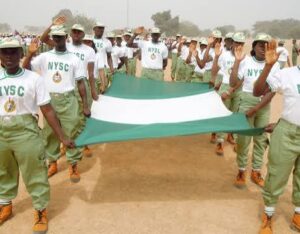
The National Youth Service Corps, our 52-year-old bridge between university and nationhood, is at the center of a raging controversy: Should corps members continue to wear the familiar olive-green Khaki, or should we replace it with “Adire”?
On social media, the lines are drawn. One side says Khaki is sacred, a symbol of discipline, uniformity, and the Scheme’s founding military ethos. The other side says it is outdated, uninspiring, and disconnected from the Nigeria we are today — a nation of over 250 ethnic groups with rich textile traditions.
Both sides are right. And both sides are missing the point.
This conversation is no longer hypothetical because the Minister of Youth Development said the Federal Government was considering replacing NYSC khaki with Adire to support local textiles. Within hours, the clarification came: no final decision has been taken, and Adire was only one example among others.
But the reaction revealed the real problem. Nigerians split instantly along ethnic lines. Many argued Adire is Yoruba heritage, not a national fabric. Others said khaki is the one unifying symbol the Scheme cannot afford to lose. Both sides were defending the same thing: identity.
That is why the “one fabric” approach will always fail. You cannot pick one ethnicity’s cloth and call it national. You cannot also keep only colonial khaki and call it relevant. The answer is not to choose between Adire and Khaki. The answer is to choose Nigeria in full; 36 states plus the FCT, each with a voice in the uniform.
The question should therefore not be “Adire or Khaki?” The question should be: “How do we make the NYSC uniform reflect the Nigeria we want to build; and equip the young people who wear it for the life ahead?” A simple way to end the debate is to allow every state, including the FCT, to have a culturally inspired NYSC uniform for corps members serving within its jurisdiction.
Instead of introducing one new national fabric, each state could adopt a design that reflects its own cultural heritage while keeping the overall NYSC uniform style the same. For example, corps members serving in Kano could wear uniforms with subtle Zani-inspired embroidery; those in Benue could have Tiv A’nger patterns; those in Edo could feature Benin motifs; those in Kogi could incorporate Igala Aso Ofi or Ebira geometric designs; those in the South-East could include Akwete patterns; and those in the South-West could wear uniforms with Adire accents.
The result would not be one fabric replacing another, but 37 unique designs celebrating Nigeria’s rich cultural diversity while reinforcing national unity. Every corps member would still wear the same NYSC-style uniform with the official insignia to maintain identity, discipline, and uniformity. The only difference would be that each uniform reflects the culture of the state where the corps member serves.
This is not a call for elaborate traditional attire but for practical uniforms inspired by local cultures. A common objection is that corps members cannot wear heavy Isi Agu or richly embroidered Zani while teaching or working in rural communities. That is true—but the proposal is for cultural inspiration, not costumes.
NYSC would simply set standards to ensure the uniforms are practical, durable, easy to wash, and modest. Traditional motifs could be incorporated into everyday fabrics—for example, Isi Agu as a pocket or collar detail, Adire as the main fabric, or Nsibidi symbols as subtle printed accents. The goal is to preserve heritage without sacrificing comfort or functionality.
When NYSC was established, the khaki uniform symbolized discipline and national unity in a post-war Nigeria. Today, the challenge is different. Beyond promoting unity, the Scheme should also celebrate the country’s cultural diversity. A corps member serving in Jigawa, Ebonyi, or any other state should feel connected to the people and culture of that state.
Each year, hundreds of thousands of corps members are deployed across Nigeria. Imagine them serving as ambassadors in state-inspired attire. Such uniforms could create jobs for local designers, tailors, and textile producers while boosting the textile industry. They could also promote tourism by sparking curiosity about the unique cultures each design represents.
Critics will say, “This will break our unity.” But unity is not sameness. Unity is coherence in diversity. When a corps member from Borno serves in Bayelsa wearing Bayelsa’s design, he learns Bayelsa. When a Bayelsa corps member serves in Borno wearing Borno’s design, she learns Borno. They return home with respect for another people’s symbols.
That is how you build “Nigerian-ness,” not by erasing differences, but by celebrating them. The national flag and NYSC logo would still unite every corps member; the diversity would be in the design.
But uniforms alone are not enough. Changing what corps members wear means little if we do not also change what they leave with. For too long, NYSC has ended with a certificate and a job search. That model suited 1973, but not 2026. If we are going to ask states to invest in culturally inspired uniforms, we must also ask the Scheme to invest in life-enduring skills for every corps member, which is what the government says it going to do.
The reform should go beyond uniforms. Every corps member should complete the service year with at least one certified, employable skill through partnerships with organizations such as NITDA, SMEDAN, NDE, and the private sector. The local tailors producing the uniforms could also serve as apprenticeship hubs, giving corps members practical experience in design, production, and entrepreneurship.
At the end of service, every corps member should leave with two certificates: one for national service and another for a marketable skill. After all, a uniform without skills is only clothing, and skills without identity miss an opportunity to strengthen national unity.
Rather than replace khaki overnight, NYSC should pilot state-inspired uniforms, set national standards for quality and design, and invite each of the 36 states and the FCT to submit every day and ceremonial prototypcultural diversity while equipping young people with the skills they need to build their future.

● Dr. Mordi, a Development Communication Practitioner, lives in Kaduna