
The Nigeria Democratic Congress (NDC) has rejected the judgment of the Federal High Court in Lokoja which set aside an earlier ruling that compelled the Independent National Electoral Commission (INEC) to register the party, describing the decision as a serious threat to Nigeria’s multiparty democracy and vowing to challenge it at the Court of Appeal.
The judgment, delivered by Justice Isah Dashen, nullified the court’s December 2025 order that had directed INEC to register the NDC after the electoral commission declined its application. However, the party insists that the latest ruling does not amount to deregistration and has assured its members, supporters and candidates that it remains a legally recognised political platform pending the determination of its appeal.
Addressing an emergency press conference in Abuja on Friday, the National Chairman of the NDC, Senator Moses Cleopas Zuwoghe, maintained that the court did not issue any order directing INEC to remove the party from its register.
“The NDC has not been deregistered. There was no order to that effect. We have instructed our legal team to file an appeal immediately and we are confident that justice will prevail,” he said.
Zuwoghe argued that the trial court had become functus officio after delivering its final judgment in December 2025 and therefore lacked the jurisdiction to revisit issues already determined. According to him, any party dissatisfied with the original judgment ought to have approached the Court of Appeal instead of returning to the same court to seek its reversal.
He maintained that the judgment neither invalidated the party’s structures nor affected its preparations for the 2027 general elections.
“Our platform remains lawful and legitimate. There is no cause for panic. We remain committed to democracy and to offering Nigerians a credible alternative in 2027,” he added.
The NDC disclosed that since securing registration through the earlier judgment, it had embarked on nationwide membership registration, conducted ward, local government, state and national congresses, held its national convention and concluded primary elections for various elective offices.
According to the party, it has also participated in INEC activities, contested recent by-elections in Nasarawa and Enugu states, and has already nominated candidates for governorship, National Assembly and presidential elections ahead of the 2027 polls.
The party said all nominations and congresses conducted under its platform remain valid pending the outcome of the appeal.
Beyond the legal implications, the NDC warned that the ruling raises concerns about Nigeria’s democratic trajectory, particularly at a time opposition groups are mobilising ahead of the next general election.
The party accused unnamed political interests of attempting to narrow the democratic space by weakening emerging opposition platforms, arguing that democracy flourishes through competition rather than political exclusion.
“Nigerians deserve a genuine multiparty democracy where all qualified political parties and candidates are free to participate in the 2027 general elections,” Zuwoghe stated.
The controversy has drawn widespread reactions from opposition leaders and civil society figures, many of whom argue that the dispute extends beyond the fate of a single political party.
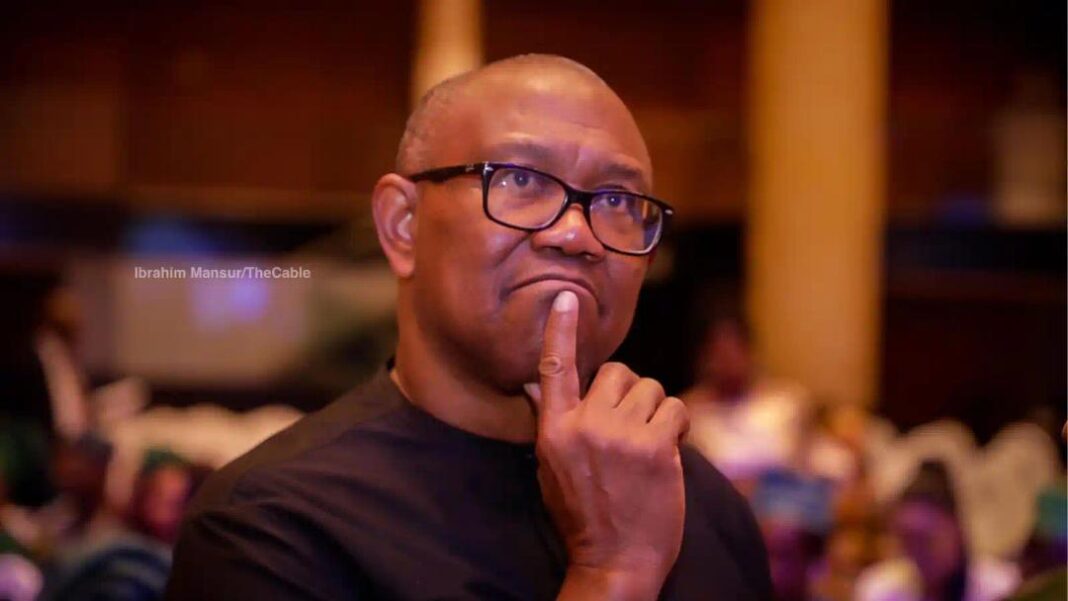
Presidential candidate of the NDC, Peter Obi, described the Lokoja judgment as a disturbing attack on Nigeria’s democracy, warning that the country is witnessing a systematic weakening of institutions meant to safeguard democratic freedoms.
In a strongly worded statement issued on Friday, Obi said he received news of the judgment while attending engagements in Imo State, where he visited the School of Nursing Sciences in Emekuku, participated in activities marking the 80th birthday of Emeritus Archbishop Anthony Obinna and later attended an event at Madonna University.
“It was at Madonna University that I received the court news of the Lokoja court rulings through my brother, Senator Rabiu Musa Kwankwaso,” Obi said.
The former Anambra State governor argued that the implications of the ruling transcend partisan politics and should concern every Nigerian committed to constitutional democracy.
“Every Nigerian committed to the country’s progress should be deeply concerned. This judgment represents another setback for our democracy and the institutions upon which our future depends,” he stated.
Without mentioning the ruling All Progressives Congress (APC) by name, Obi accused some political actors of prioritising political advantage over democratic values and institutional integrity.
“It is regrettable that some who claim to champion democracy now appear determined to weaken the very institutions that sustain it. In doing so, they are undermining public confidence and endangering the future of millions of Nigerians.”
He warned that both the legislature and the judiciary risk losing public confidence if they are perceived as instruments of partisan political interests.
“The legislature and the judiciary are increasingly being drawn into this pattern of institutional decline. Democracy cannot thrive where institutions lose their independence and credibility,” Obi said.
The former governor stressed that he had consistently spoken against actions capable of undermining political plurality irrespective of which political party was affected.
“When a similar situation recently affected the ADC, I condemned it without hesitation. I do so again today because my position has always been guided by principle.
“My concern is not about who becomes President. My concern is that Nigeria works.”
Obi cautioned that democracy loses its essence when institutions designed to guarantee fairness become vulnerable to political manipulation.
“Our politics must move beyond the quest for power and focus instead on building a united nation founded on justice, strong institutions, the rule of law and equal opportunity. That is the Nigeria we owe ourselves and the one we must leave for future generations.”
Calling on Nigerians to defend democratic institutions, Obi added: “I therefore urge all well-meaning Nigerians to rise above partisan interests and defend our democracy. The survival of our institutions is inseparable from the survival of our nation.”
“It is when we work together that a New Nigeria of our dream is made possible.”
Prominent democracy activist Aisha Yesufu also condemned the development, describing it as a defining moment for Nigeria’s judiciary.
According to her, the controversy goes beyond the fortunes of the NDC and raises fundamental questions about the independence of institutions entrusted with protecting democratic rights.
“This is the time for the judiciary to show Nigerians and the world that its independence remains intact. This is not something any Nigerian should ignore,” she said.
Yesufu argued that efforts to suppress opposition platforms often produce the opposite effect by strengthening public support for alternative political movements.
She urged members of the NDC to remain focused on grassroots mobilisation, voter registration and political engagement rather than becoming distracted by the ongoing legal battle.
Also reacting, the leader of the Peter for Nigeria Movement, Peter Ahmeh, warned against any attempt to create a political environment in which Nigerians are denied meaningful electoral choices.
According to him, democracy can only thrive where citizens have genuine alternatives at the ballot box.
“Nigeria can never be a one-party state. In 2027, Nigerians must have options. President Bola Tinubu will not run alone. Peter Obi will be on the ballot, the NDC will be on the ballot, and every other qualified candidate will be on the ballot,” Ahmeh declared.
He questioned the legal basis of the Lokoja judgment and urged the appellate courts to safeguard democratic values and restore public confidence in the electoral process.
Ahmeh also advised the ruling party to focus on defending its record in office rather than engaging in legal battles that could be interpreted as efforts to weaken opposition platforms.
Political observers note that the dispute comes at a time when opposition parties are exploring alliances and realignments ahead of the 2027 elections, amid growing debates over electoral reforms, judicial independence and the resilience of Nigeria’s democratic institutions.
The case is expected to proceed to the Court of Appeal, where the NDC hopes to overturn the Lokoja judgment and reaffirm its legal status.
Until then, the party insists it will continue submitting candidates to INEC, maintaining its nationwide political activities and preparing for the 2027 general elections.
For many opposition figures, however, the controversy has evolved beyond a legal dispute over party registration into a contest over the future of Nigeria’s democratic space, the independence of state institutions and the preservation of political pluralism in Africa’s largest democracy.