Despite having 18.5 million out-of-school children, state governments have left N264.12 billion in Universal Basic Education (UBE) funds unspent in their accounts as of August 2026, with Benue, Imo, Osun, Kwara and Delta holding 28 per cent of the idle cash. With another N65 billion unaccessed, IYABO LAWAL, in this report, examines the diversion, due process breaches, and politics behind Nigeria’s learning crisis.
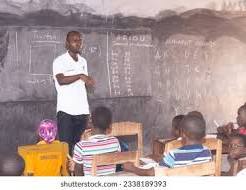
PAt exactly 8:15 a.m. on a Tuesday, pupils of LGEA Primary School, Nbegha in Buruku Local Council of Benue State, filed into a classroom without a roof. A windstorm ripped it off in 2017. Seven years later, lessons still hold under the sun. When it rains, school closes.
At Warah Community Junior Secondary School in Ilorin West, Kwara State, 67 children crowd into a makeshift shed built from zinc and bamboo by parents. Their original block collapsed after its ceiling caved in. There are no chairs. They sit on cement blocks.
But less than 400 kilometres from both schools, in the vaults of the State Universal Basic Education Boards (SUBEBs) in Makurdi and Ilorin, lies the money meant to fix them.
The Guardian’s findings showed that as at August 2026, a staggering N264.12 billion released by theUniversal Basic Education Commission (UBEC)to 36 states and the Federal Capital Territory (FCT) for basic education development is sitting idle and unspent in state accounts.
This is happening at a time when Nigeria’s education sector is in its worst crisis. The United Nations Children’s Fund (UNICEF) recently put the number of out-of-school children in Nigeria at 18.5 million, the highest in the world.
One in three Nigerian children is out of school. One in every five out-of-school children in the world is a Nigerian. The paradox is brutal and nationwide: money without classrooms, and classrooms without money.
The two failures: unutilised and unaccessed
The Guardian’s analysis of UBEC documents showed the crisis is two-pronged, both stemming from the same law.
Under the compulsory, free Universal Basic Education Act of 2004, the Federal Government contributes two per cent of itsConsolidated Revenue Fund (CRF)to UBEC. The money is meant to be shared with states as matching grants to build classrooms and provide furniture, toilets, boreholes, instructional materials, and teacher training.
But there is a condition: to draw from it, a state must provide 50 per cent counterpart funding and submit an approved action plan showing what it will build, where, and how.
That simple condition has created two pools of idle money. Pool one is the failure to utilise: N264.12 billion that UBEC has released; states have collected and lodged in their SUBEB accounts but have not spent. As at August 2026, this money was still there. Pool two is a failure to access: money that has never left UBEC’s coffers because states refused to pay their counterpart funding.
According to a UBEC document obtained by human rights lawyer, Mr Femi Falana (SAN), under the Freedom of Information (FoI) Act, as at June 2026, over N97.88 billion in matching grants was unaccessed for that reason.
The UBEC Executive Secretary, Dr Aisha Garba, updated the picture at a stakeholders’ meeting last August. According to her, about N267 billion in previously released funds remained unutilised nationwide, while more than N65 billion in counterpart funding was still unaccessed.
Starting in 2024, the yearly federal grant allocation from UBEC per state has more than doubled from N1.5 billion to about N3.5 billion, totalling N7 billion with matching grants. The more money available, the more money left idle.
The Federal Ministry of Education’s 2024 statistics put the learner-to-classroom ratio at 60:1, almost double theUnited Nations Educational, Scientific and Cultural Organisation’s (UNESCO)benchmark of 35:1. In that overcrowding, the cost of idle funds is measured in children who cannot read.
“About 70 per cent of Nigerian children of primary school age cannot read and understand a simple text,” Garba lamented, outlining UBEC’s strategic blueprint, which focuses on expanding access for rural populations, improving quality of teaching, reforming financing, and optimising systems.
Five states hold 28% idle billions
THE concentration of unspent funds is striking and reveals where the crisis is deepest. Benue alone has N19.18 billion unspent – the highest in the country. It is a cruel irony for a state where schools like LGEA Nbegha have no roofs. It is followed by Imo with N14.12 billion, Osun with N14.02 billion, Kwara with N13.99 billion, and Delta with N13.40 billion.
These five states alone account for N74.72 billion, about 28.3 per cent of the total idle fund.
But the rot spreads across all six geopolitical zones. In the North-East and North-West where out-of-school numbers are highest: Borno has N13.20 billion unspent, Anambra N12.67 billion, Kano N12.15 billion, Adamawa N11.38 billion, Gombe N11.09 billion, Jigawa N7.92 billion, Kebbi N7.21 billion, Kaduna N7.09 billion, Zamfara N7.03 billion, Katsina N6.15 billion, Sokoto N1.96 billion, Yobe N4.37 billion, Taraba N168.48 million, and Bauchi N825.99 million.
In the North-Central: Kogi has N7.60 billion, Plateau N6.98 billion, Nasarawa N6.75 billion, Niger N3.62 billion, and the FCT N5.67 billion.
In the South-East: Abia N8.64 billion, Enugu N5.03 billion, Ebonyi N2.81 billion. In the South-West: Ekiti N8.40 billion, Ogun N5.26 billion, Oyo N5.09 billion, Ondo N3.48 billion, and Lagos N1.85 billion – the lowest in that zone but still enough to build over 100 classrooms.
In the South-South: Akwa Ibom N8.09 billion, Edo N2.48 billion, Cross River N2.47 billion, Bayelsa N1.60 billion, and Rivers N329.28 million. Only three states in the federation – Bauchi (N825.99m), Rivers (N329.28m) and Taraba (N168.48m) – have less than N1 billion unspent.
Diversion, slow utilisation, linked to sloppy money movement
TO understand why billions sit idle while children sit on bare floors to learn, one must understand the politics of UBEC funds. At a financial management training for SUBEB finance directors in Abuja in July, Garba listed the official reasons: slow utilisation, non-compliance with action plan guidelines, alleged diversion of funds, failure to deduct and remit taxes, breaches of due process in contract awards, and failure to follow approved action plans.
“The difference between releasing funds and delivering benefits is implementation,” a UBEC monitoring officer who pleaded anonymity told The Guardian.
But stakeholders said the official reasons hide deeper political economy issues.
Lawyer and education rights advocate Falana, whose FoI request forced UBEC to release data on unaccessed funds, said the non-utilisation is not merely a bureaucratic delay but a breach of the law that should attract prosecution.
He said: “Section 11 (2) of the UBE Act makes it a duty for states to provide free, compulsory basic education. Section 12 makes it an offence to obstruct that. When a governor collects UBEC matching grant and keeps N19 billion in the bank while children learn under trees in Buruku, that is not inefficiency; that is a breach of trust and criminal negligence.
“These are funds meant for children. The Economic and Financial Crimes Commission (EFCC) and the Independent Corrupt Practices Commission (ICPC) should track this money because, in many cases, what we see is diversion to other uses. We have asked UBEC to publish the action plans and contract awards for these unspent billions, because transparency is the only antidote,” Falana stated.
A former executive chairman of a SUBEB in the North-Central, who spoke on condition of anonymity because he still consults for UBEC, gave an insider account of how governors frustrate spending.
“Governors see UBEC money as political money, not education money; to access it, you must bring 50 per cent from the state. Many governors don’t want to allocate state funds for basic education, which they consider the job of local governments. Even when they access it, they want to award contracts to their cronies at inflated costs.
UBEC’s new system, HOPE-Gov, now demands e-procurement, BVN verification of contractors, and geo-tagged photographic evidence of projects before the next tranche is released.
The human cost and way forward
IN Benue, Osun and Kwara – the top three defaulters – primary school completion rates have dropped. In Benue, SUBEB’s own 2023 audit showed that 4,200 classrooms needed urgent renovation. With N19.18 billion idle, the state could build over 2,000 blocks of three classrooms at the current UBEC unit cost of about N25 million per block.
In Imo, N14.12 billion is idle, while teachers buy chalk from their salaries. Education Consultant and Proprietor of Advanced Learner Consults, Mr Joseph Olaojo, said erring states, especially those in the north where 60 per cent of out-of-school children are concentrated, should be encouraged to recommit and activate the process of accessing grants.
Olaojo said stringent measures should be put in place to discourage and sanction defaulting states, including withholding other federal allocations.
A retired Principal from Oke-Odo High School, Lafenwa, Ogun State, Mr Odejimi Somefun, said: “I wonder why states should default in accessing funds that are readily and freely made available by the federal government when primary education is in bad shape, begging for urgent attention. If a child fails at the primary level, he has failed for life.”
The Programme Coordinator at Education for All, a non-governmental organisation, Mrs Olabisi Kilanko, called on the federal government to initiate measures to sanction states that default in paying counterpart funds and impose stiffer sanctions on states that collect the funds but fail to utilise them.
“That is money meant for our children, sitting idle.”
“With HOPE-Gov, we are very optimistic that the situation will improve,” Garba assured. But for the pupils of LGEA Primary School, Nbegha, optimism does not provide a roof. As of this November, their N19.18 billion is still in the bank in Makurdi. Their classrooms are still under direct attack from the sun. The bell still rings, but learning does not happen in the right atmosphere. The money has not reached the classroom.
● Report by Iyabo Lawal of The Guardian