
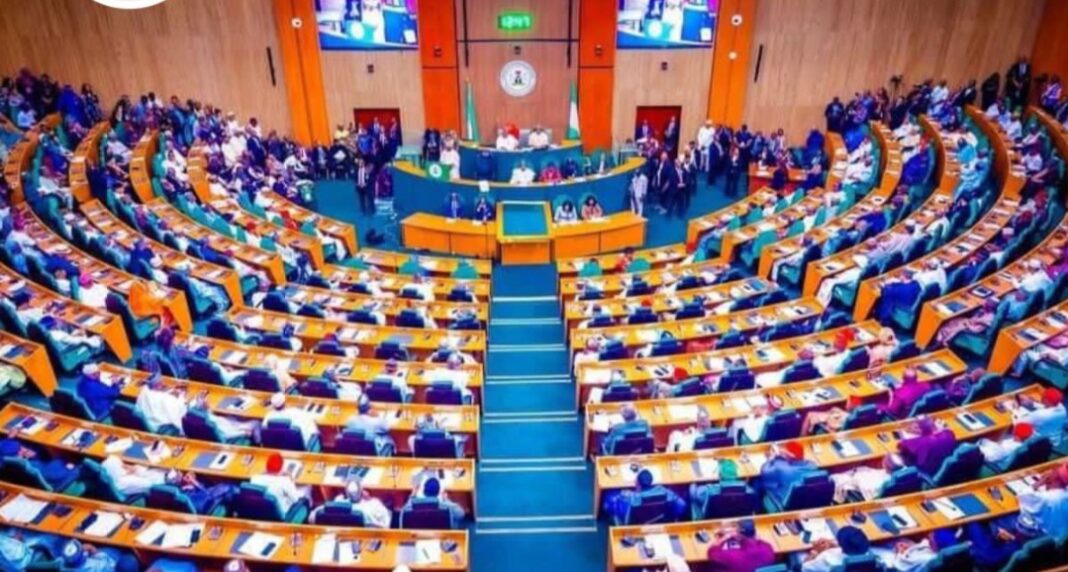
The Senate has approved President Bola Tinubu’s proposed $20.52 billion and €1.045 billion supplementary external borrowing plan for 2026 and 2027, alongside a separate N10.79 trillion ($7.7 billion) external financing request already captured in the 2026 budget, raising fresh concerns over the country’s growing debt burden and the government’s increasing reliance on loans to finance public expenditure.
The approvals were granted during plenary on Tuesday, November 24, following consideration of reports by the Senate Committee on Local and Foreign Debts.
The supplementary borrowing plan comprises $20.517 billion and €1.045 billion, equivalent to approximately N29.6 trillion, and is intended to finance government projects and programmes across key sectors of the economy.
The Senate’s decision followed consideration of the committee’s recommendations, presented by its Vice Chairman, Senator Tokunbo Abiru, on behalf of the Chairman, Senator Aliyu Wamakko.
The House of Representatives had also endorsed the supplementary borrowing proposal, paving the way for its approval by both chambers of the National Assembly.
However, the approval of the separate $7.7 billion external financing facility is not an additional borrowing provision. Rather, it is intended to facilitate access to an existing external borrowing allocation in the 2026 Appropriation Act.
This was particularly important because the Federal Government had already incorporated the facility into its approved borrowing framework.
According to the parliamentary records, the $7.7 billion request, estimated at approximately N10.79 trillion, would be sourced through a combination of Eurobonds, concessional and commercial loans, as well as bridge financing arrangements.
Borrowing Approvals Come Amid Budget Revision
The Senate’s approval came on the same day Tinubu sought legislative consideration of a revised 2026 budget, reducing the previously approved expenditure from N68.323 trillion to N65.176 trillion.
The reduction of approximately N3.147 trillion represents a downward adjustment of the Federal Government’s spending plan, although its borrowing programme and fiscal deficit remain unchanged.
Under the revised fiscal framework, projected government revenue, including receipts from government-owned enterprises, stands at N33.720 trillion, while aggregate capital expenditure is estimated at N26.232 trillion.
Despite the reduction in expenditure, the fiscal deficit remains at N31.457 trillion, representing approximately 5.64 per cent of the Gross Domestic Product (GDP).
The Federal Government also retained its proposed borrowing plan of N29.218 trillion, comprising N18.428 trillion in domestic borrowing and N10.790 trillion in external financing.
This means borrowing will continue to account for a substantial proportion of the government’s financing requirements, with the administration expected to depend heavily on both domestic and international credit markets to bridge the gap between revenue and expenditure.
The retention of the borrowing plan despite the reduction in the overall budget has also drawn attention to the government’s revenue projections and its capacity to meet existing financial obligations without accumulating further debt.
Debt Profile Under Fresh Scrutiny
The latest borrowing approvals have renewed concerns about the sustainability of Nigeria’s public debt, particularly as the government continues to allocate substantial resources to debt servicing.
Data released by the Debt Management Office (DMO) showed that Nigeria’s total public debt stood at approximately N166.79 trillion as of June 30, 2026.
The figure comprised N91.59 trillion in domestic debt and N75.20 trillion in external debt.
According to the DMO, external obligations accounted for approximately 45.09 per cent of the country’s total public debt, while domestic borrowing represented 54.91 per cent.
The figures cover the combined obligations of the Federal Government, state governments and the Federal Capital Territory.
The growing debt stock has intensified discussions about the country’s ability to balance infrastructure financing, economic development and debt repayment obligations.
Although external borrowing provides access to funds for large-scale infrastructure and development projects, it also exposes the country to foreign exchange risks, particularly when loans are denominated in currencies such as the United States dollar and the euro.
A depreciation of the naira could increase the domestic currency cost of servicing such obligations, potentially placing additional pressure on government revenue.
The Federal Government has maintained that external financing is necessary to address infrastructure gaps, support economic development and fund priority programmes that could improve productivity and generate future revenue.
Senate Demands Transparency and Oversight
Despite approving the borrowing proposals, lawmakers stressed the importance of transparency, accountability and effective monitoring of the funds.
The Senate mandated its Committee on Local and Foreign Debts to maintain continuous oversight of the borrowing programme, including monitoring financing arrangements, loan drawdowns, utilisation of proceeds and compliance with approved terms and conditions.
The Debt Management Office is also expected to provide regular updates on loan agreements, repayment schedules, interest rates and the utilisation of borrowed funds.
Lawmakers emphasised the need for phased disbursement and appropriate monitoring to ensure that the funds are directed towards their intended projects and programmes.
The oversight measures are particularly significant given the scale of the proposed borrowing and the potential long-term implications for public finances.
Senate President Godswill Akpabio commended members of the committee for their work in examining the proposals and explaining the borrowing arrangements to lawmakers.
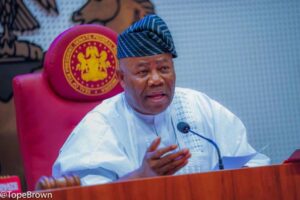
He expressed optimism that the funds would support the completion of ongoing government projects and programmes under Tinubu’s Renewed Hope Agenda.
Akpabio also expressed hope that the administration would deploy the resources towards projects capable of delivering tangible benefits to Nigerians.
What the Supplementary Borrowing Will Finance
The supplementary external borrowing plan is designed to support government projects and development programmes across several sectors, including infrastructure, agriculture, healthcare, education, water supply, security, employment generation and financial management reforms.
President Tinubu had argued that the proposed financing was necessary to accelerate economic growth, address infrastructure deficit and provide funding for programmes expected to generate employment, promote entrepreneurship, improve food security and reduce poverty.
The government is expected to rely on a combination of bilateral and multilateral financing arrangements, commercial loans and international capital market instruments to implement the borrowing programme.
However, the terms of the facilities, including interest rates, repayment periods and associated foreign exchange risks, remain important considerations in assessing their long-term implications for the economy.
Tinubu Seeks Approval for Revised N65.17trn Budget
Meanwhile, Tinubu has transmitted a revised 2026 Appropriation Bill and Federal Government Fiscal Framework to the House of Representatives for consideration and approval.
The President’s letter, titled Transmission of FGN 2026 Appropriation Repeal and Reenactment Bill and Revised 2026 Federal Government Fiscal Framework, was read by the Speaker of the House, Tajudeen Abbas, during Tuesday’s plenary.
In the communication, Tinubu requested the lawmakers’ approval to repeal and reenact the 2026 Appropriation Act to align government expenditure with existing obligations and available resources.
The President explained that the revision was intended to accommodate outstanding financial commitments and improve the implementation of the national budget.
Among the adjustments is the regularisation of certain expenditures incurred by the Nigerian National Petroleum Company Limited (NNPCL) on behalf of the Federation.
The revised framework also provides for the settlement of underprovided debt-service obligations, recognition of issued capital warrants and supplementary commitments, as well as refunds to Ministries, Departments and Agencies (MDAs) and Special Accounts.
According to the President, most MDA capital allocations in the revised proposal consist of amounts that had already been warranted.
However, additional capital and overhead provisions were introduced for selected priority interventions considered necessary to support national development.
These include the completion of critical road projects, protection of agricultural production, reduction of production costs, improvement of farm yields, expansion of market access and measures to address water vulnerability.
The administration said the adjustments were designed to prioritise existing commitments, improve the credibility of the capital budget and facilitate the orderly implementation of government projects.
Borrowing and Revenue Generation Remain Major Challenges
The decision to retain the N29.218 trillion borrowing programme despite reducing the overall 2026 budget underscores the continuing challenge of generating sufficient revenue to finance government expenditure.
With projected revenue of N33.720 trillion against expenditure of N65.176 trillion, the Federal Government faces a substantial financing gap that will require significant borrowing.
The situation has placed renewed attention on the government’s ability to improve tax collection, strengthen revenue administration, reduce leakages and increase earnings from non-oil sectors of the economy.
It has also raised questions about how effectively borrowed funds will translate into infrastructure development, improved public services, employment opportunities and stronger economic productivity.
The immediate challenge will be ensuring that new loans finance productive investments capable of generating economic returns rather than creating additional repayment obligations without corresponding improvements in government revenue.
The revised 2026 budget and the supplementary borrowing approvals therefore place greater responsibility on the National Assembly, the DMO and other relevant institutions to ensure transparency, responsible debt management and measurable outcomes from the government’s borrowing programme.