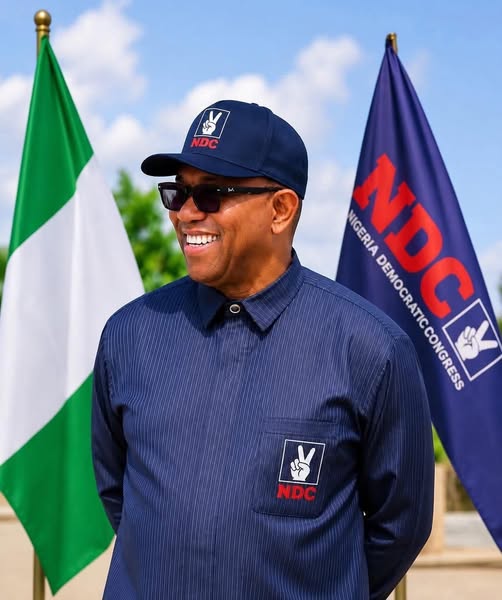
Peter Obi, presidential candidate of the Nigeria Democratic Congress (NDC), has issued a strong warning against electoral manipulation ahead of Nigeria’s 2027 general elections, declaring that those who attempt to rig the polls will face consequences under his proposed administration.
Obi made the remarks on Wednesday during an NDC town hall meeting in Nasarawa State, where he addressed supporters on electoral integrity, political accountability and the need to strengthen Nigeria’s democratic institutions.
The former Anambra State governor made the declaration while responding to a question about how his party would respond if the 2027 elections were manipulated.
Five Dead in Crash Involving Niger Governor’s Convoy and FUT Minna Students
Video: The Deep State & Terrorism in Nigeria – A General’s View
Binnari Attack: Death Toll Rises to 62 as 52 Others Are Injured, Thousands Displaced in Taraba
“You didn’t ask about what we are going to do if people rig the election next year. Let me assure you, number one, this coming election, we will rig those who rig it,” Obi said.
The statement drew attention amid growing political preparations for the 2027 polls, with the NDC candidate promising to confront electoral malpractice and strengthen the mechanisms responsible for protecting the integrity of the ballot.
Obi promises tougher action against election rigging
Obi, who previously served as governor of Anambra State and contested the 2023 presidential election, said his administration would prioritise reforms aimed at making electoral manipulation more difficult and ensuring that those found guilty of wrongdoing were held accountable.
He maintained that preventing electoral fraud would require more than political promises, arguing that political parties and the electoral process itself must be strengthened.
“And let me assure you, number two, if I’m elected the President of Nigeria, nobody will rig elections in this country again because the first thing we need to do is to strengthen our parties, strengthen the process,” he said.
The NDC presidential candidate also warned officials of the Independent National Electoral Commission (INEC) and other individuals involved in election administration against compromising the process.
“Any INEC official, anybody who is involved with elections under my watch that rigs elections will go to jail,” Obi declared.
He said his proposed approach would be anchored on the rule of law, insisting that public officeholders and ordinary citizens must be subject to the same legal standards.
“Under my watch, Nigeria must be a country that has a law, and both from the number one person to the last person must obey the rule of law. Nobody must be above the law,” he added.
The remarks amount to a pledge of tougher enforcement against electoral offenders, although any prosecution or imprisonment would have to follow applicable law and due process.
Candidate qualifications, certificate forgery also in focus
Beyond election rigging, Obi called for stricter verification of the educational backgrounds of candidates seeking elective office.
He argued that aspirants should be able to demonstrate that they attended primary and secondary school, warning that anyone who falsified academic credentials should face legal consequences.
“Our laws will be strict. For you to contest an election, you must have attended a primary school, you must have attended a secondary school, and it will be visible, it will be clear. If you didn’t attend any of them or forge your certificate, you go to jail,” he said.
His proposal places candidate qualifications and the verification of academic records among the issues he wants addressed as part of a reform agenda.
However, any new eligibility requirements or penalties would need to be consistent with Nigeria’s Constitution and applicable electoral legislation.
Obi’s comments come as political parties intensify preparations for the 2027 general elections.
The Independent National Electoral Commission’s revised timetable, announced in February 2026 following changes to the electoral legal framework, scheduled the presidential and National Assembly elections for January 16, 2027, while governorship and State House of Assembly elections are scheduled for February 6, 2027.
INEC has also set out campaign periods and other pre-election activities under the revised timetable. Political parties and candidates are expected to comply with the commission’s regulations throughout the electoral process.
The elections will be an important test of Nigeria’s electoral institutions, including their capacity to conduct credible polls, enforce electoral laws and address complaints of irregularities.
For Obi and the NDC, the challenge will be to translate promises of electoral reform into clear policy proposals and practical measures capable of earning public confidence.
NDC steps up campaign preparations
The remarks also come as the NDC strengthens its political organisation ahead of the elelections.
The party had constituted its National Campaign Council for the 2027 general elections, naming National Leader Henry Dickson as chairman and Obi as co-chairman.
The development signals a further step in the party’s preparations to mobilise supporters and present its political agenda to voters nationwide.
Obi has repeatedly used the slogan “A New Nigeria Is Possible” to communicate his vision for political and economic change. At the Nasarawa meeting, he returned to that message, presenting his campaign as an effort to build a country governed by stronger institutions and respect for the law.
“We want to change Nigeria. A new Nigeria is possible, and that new Nigeria will be OK,” he said.
Electoral credibility remains a key issue
Election credibility remains central to political debate in Nigeria, where disputes over results, allegations of malpractice and calls for greater transparency have featured prominently in successive election cycles.
Obi’s latest remarks place electoral accountability at the centre of his campaign message, with particular emphasis on sanctions for officials and political actors found to have manipulated election results.