
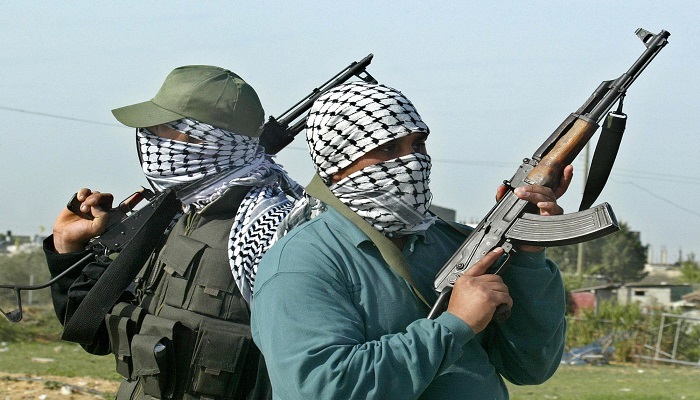
At least 62 people have been killed and 52 others injured after suspected bandits attacked Binnari community in Karim-Lamido Local Government Area of Taraba State, northeastern Nigeria, triggering mass displacement and destroying homes, shops and food supplies.
The National Emergency Management Agency (NEMA) confirmed the updated casualty figures on Tuesday, October 27, as search and recovery operations continued in the aftermath of the October 23 attack. Thousands of residents have reportedly fled their homes, with many seeking refuge in neighbouring communities.
According to the Associated Press, which quoted emergency officials, 52 bodies had been recovered at the time of reporting, including 15 retrieved from the Benue River. Authorities warned that the death toll could rise as efforts to locate missing residents continued.
Ladan Ayuba, head of NEMA in Taraba State, said the attack had displaced thousands of people, highlighting the growing humanitarian needs in the affected community.
Attack Destroyed Homes, Shops and Food Supplies
The gunmen reportedly invaded Binnari on Friday afternoon, shortly after Muslim congregational prayers, opening fire and spreading panic among residents.
The attackers reportedly looted food items and other property before setting homes, shops, motorcycles and food supplies ablaze.
Initial reports from the Taraba State Police Command confirmed 10 deaths, but subsequent accounts from residents and human rights organisations indicated a significantly higher casualty figure as more bodies were discovered in nearby bushes and waterways.
Amnesty International Nigeria initially reported at least 40 deaths on October 24, while community accounts subsequently put the toll at 50. The latest figure of at least 62 was reported by the national emergency agency, reflecting the evolving scale of the tragedy.
Residents Flee Through River as Casualties Mount
Amid the violence, several residents reportedly attempted to escape towards the Benue River, where some drowned while fleeing the attackers.
Isa Sanusi, director of Amnesty International Nigeria, said residents were chased towards the river as they tried to escape the gunmen.
“What happened was that people were chased towards the river, they launched into the river trying to escape the bandits,” Sanusi said, according to the Associated Press.
The recovery of 15 bodies from the river has added to the death toll and underscored the dangers faced by residents during the attack.
Police spokesperson Victor Mshelizah said security personnel remained in the area and that the casualty figure was not yet final.
“We still have men on the ground, and the more we recover bodies, we will put them in account,” Mshelizah told the Associated Press.
Security Agencies Deploy Reinforcements
Following the attack, the Taraba State Police Command said additional security personnel had been placed on alert, with reinforcement teams comprising police tactical units, the Police Mobile Force, conventional police and the Nigerian Army deployed to the area.
The authorities have also faced pressure to restore security, protect displaced residents and prevent further attacks on surrounding communities.
Earlier reports said the state government had begun providing relief materials to affected residents through the Taraba State Emergency Management Agency. The agency also assessed the damage and the needs of displaced households.
However, the immediate humanitarian situation remains a concern, particularly for families who have lost their homes, livelihoods and food supplies.
Amnesty International Condemns Failure to Protect Rural Communities
Amnesty International Nigeria has criticised the authorities over what it described as inadequate protection for vulnerable rural communities exposed to repeated attacks by armed groups.
In its response to the Binnari killings, the organisation called for an impartial investigation, justice for victims and adequate reparations for survivors.
It also warned that repeated attacks on rural communities, coupled with what it described as impunity for perpetrators, continue to undermine public confidence in the authorities’ ability to protect lives and property.
The organisation maintained that issuing statements condemning attacks was insufficient without effective investigations, accountability and concrete measures to prevent further violence.
The attack comes amid persistent insecurity across several parts of Nigeria, where criminal armed groups commonly described as bandits carry out killings, kidnappings for ransom, village raids and attacks on farming communities.
The country also continues to confront a prolonged insurgency involving Boko Haram and the Islamic State West Africa Province (ISWAP), particularly in the northeast. However, criminal banditry and jihadist insurgency are distinct security challenges, even where their effects on civilians overlap.
Analyses by security researchers, including the Institute for Security Studies, have highlighted the links between armed violence, illegal mining, illicit weapons flows and the expansion of criminal networks in parts of Nigeria and the wider Sahel region.
In some areas, armed groups exploit weak state presence and rural insecurity to extort residents, impose illegal levies and profit from mining and other illicit activities. These sources of revenue can help sustain recruitment and weapons acquisition, making such networks difficult to dismantle.
The Binnari attack has renewed concerns about the vulnerability of remote communities and the challenges facing security agencies in responding to armed groups operating across difficult terrain.