
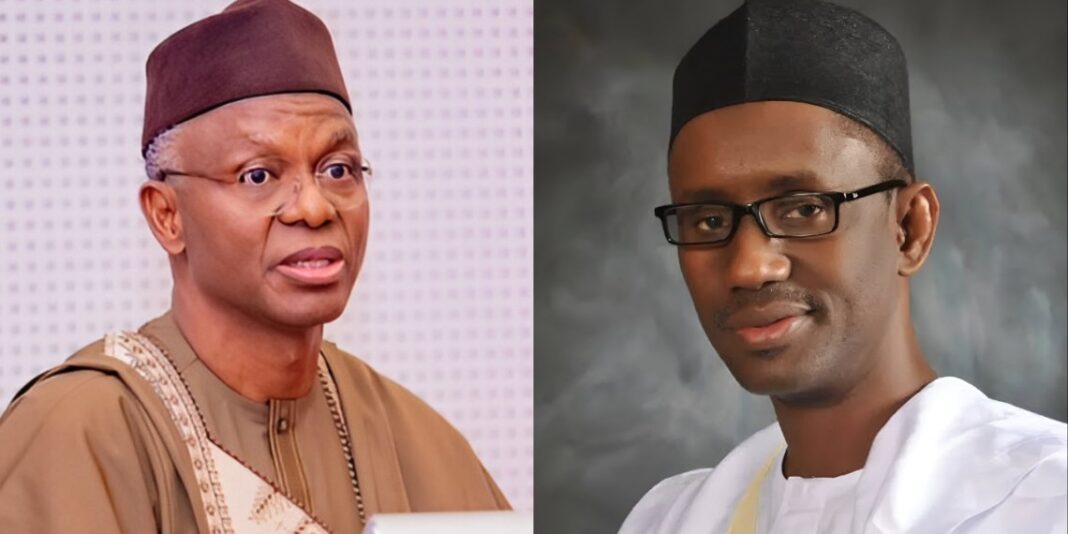
As court battles, detention and political realignment reshape Nasir El-Rufai’s world, the former Kaduna governor says the silence of some old allies has taught him something about relationships—and about power.
There was a time when a phone call from Nasir El-Rufai could change the temperature of a political room.
For years, the former Kaduna State governor operated at the centre of Nigeria’s political establishment – first as a technocrat who rose to become Minister of the Federal Capital Territory, then as governor of Kaduna, a prominent figure in the All Progressives Congress (APC) and one of the more influential voices in the North.
Today, his world looks markedly different.
He is in custody. He is fighting multiple legal battles. His political home has changed. Former allies have moved in different directions. Some relationships have fractured publicly; others appear to have faded into silence.
And now, El-Rufai is speaking about the silence.
In a deeply personal statement dated September 23 and titled “My Relationships and the Aftermath,” the former governor acknowledged what supporters around him have increasingly noticed: some people he once stood beside have not publicly stood beside him during his present difficulties.
He did not name them.
He did not threaten them.
He did not accuse them of betrayal.
But the message was unmistakably personal.
“What I learn in difficult times like the past few months may lead me, quietly and without regret, to reconsider the nature of certain relationships,” he wrote.
That sentence may ultimately prove more consequential than a list of names.
Because El-Rufai is not merely talking about friendship.
He is talking about what happens to relationships when power changes hands.
From the corridors of power to a detention facility
El-Rufai’s predicament has developed against the backdrop of a prolonged legal battle.
He has been in the custody of the Independent Corrupt Practices and Other Related Offences Commission since February 19 following his earlier appearance before the Economic and Financial Crimes Commission. The ICPC subsequently instituted criminal proceedings against him over allegations arising from his years in office as Kaduna governor.
El-Rufai has pleaded not guilty to the charges and maintains that the proceedings against him are politically motivated. The allegations, however, remain matters for determination by the courts.
The legal battles have multiplied.
In one Kaduna case, the ICPC alleges offences involving abuse of office, money laundering and fraud, including allegations concerning approximately ₦579.6 million and $1.1 million. In another Abuja case, El-Rufai is contesting allegations concerning the unlawful interception of telephone conversations.
The courts have also become the setting for his attempts to challenge the circumstances of his detention.
In June, a Kaduna High Court declined his third application for bail on medical grounds after the prosecution challenged the authenticity of a medical report submitted in support of the application. The court nevertheless directed the ICPC to ensure that El-Rufai retained access to his personal doctors and could be taken to specialised medical facilities when necessary.
And only this week, the Federal High Court in Abuja adjourned to October 27 his ₦1 billion fundamental-rights suit against the ICPC, Inspector-General of Police and Attorney-General of the Federation.
For a man accustomed to directing events from government offices, the reversal is glaring.
The battles are now being fought largely through lawyers, court filings and statements.
Even political access became an issue
The symbolism became particularly powerful in May.
Leaders of the African Democratic Congress sought to visit El-Rufai at the ICPC detention facility in Abuja. Among those reported to have been involved were former Osun State governor Rauf Aregbesola, ADC National Publicity Secretary Bolaji Abdullahi and Salihu Lukman.
They were denied access.
The ICPC said the restriction was based on a court order that limited visitation to specified categories, including family members, doctors and legal counsel.
Whatever the competing political interpretations, the episode captured something unusual about El-Rufai’s new reality.
A man who once operated within the inner circles of power now required permission for political associates to see him.
And some of those associates were themselves part of a political movement that El-Rufai had joined after his break with the APC.
The political divorce
El-Rufai’s departure from the APC and movement toward the ADC represented another major turn in his political journey.
Once deeply associated with the ruling party, he repositioned himself within the opposition camp as the political landscape began shifting towards the 2027 elections.
His son, Bello El-Rufai, also left the APC and joined the ADC, further underlining the family’s political realignment.
But the opposition has not offered a simple sanctuary.
The ADC itself has experienced internal tensions, including disagreements involving figures who had been associated with El-Rufai’s political network.
That is the nature of Nigerian politics: yesterday’s ally may become today’s independent actor, while yesterday’s adversary may become tomorrow’s negotiating partner.
El-Rufai’s latest statement appears to acknowledge precisely that fluidity.
“I have no regrets”
There is an important distinction in what he wrote.
El-Rufai says he is disappointed by the silence of some people.
But he does not say he regrets helping them.
“Throughout my life, I’ve tried to do my best for my co-workers and friends, my family, and people everywhere,” he wrote, attributing his conduct to his Islamic faith, his Arewa roots, his personal values and, above all, his conscience.
He says he supported people and causes because he believed they were right – not because he expected gratitude later.
That is where the statement becomes more than a complaint.
It becomes a meditation on political memory.
People who once needed help eventually acquire power of their own.
People who once depended on another person’s influence eventually develop their own constituencies.
And people who once shared a political project can discover that their interests no longer coincide.
El-Rufai appears to have accepted that reality.
“The people I have supported are now free to make their own decisions since the situation has changed,” he said.
Some may speak.
Some may remain silent.
Some may distance themselves.
Some, he acknowledged, may even deny previous relationships.
The Ribadu connection – and how politics changes relationships
Few episodes illustrate the transformation of old relationships more dramatically than El-Rufai’s current legal battle involving National Security Adviser Nuhu Ribadu.
The two men have known each other for years and once belonged to overlapping circles of Nigeria’s reform-minded political and technocratic elite.
Today, Ribadu is the complainant at the centre of an alleged unlawful telephone-interception case in which El-Rufai is a defendant.
El-Rufai has pleaded not guilty.
On September 22, the Federal High Court in Abuja fixed October 26 to rule on his no-case submission.
It is a remarkable transformation in circumstances.
Relationships that once existed in the world of meetings, alliances and political calculations are now being examined through the language of evidence, charges and courtroom procedure.
Kaduna: from successor to adversary
The deterioration of El-Rufai’s relationship with his successor, Governor Uba Sani, provides another chapter in the story.
When Sani succeeded El-Rufai in 2023, the transition initially appeared to represent continuity within the Kaduna political establishment.
It did not last.
The relationship deteriorated into one of the most consequential political disputes in the state, with both camps offering sharply different accounts of the administration El-Rufai left behind and the direction of Kaduna politics thereafter.
The fallout helped transform what might ordinarily have been a succession arrangement into a political contest over legacy, influence and control.
And now El-Rufai’s own words suggest that he is taking stock not only of political disagreements but of personal relationships.
A politician refusing to call it revenge
Perhaps the most striking part of the statement is what El-Rufai says he will not do.
He says he bears no resentment towards those who have chosen not to stand by him.
He says he seeks neither revenge nor retribution.
And he invokes a higher form of accountability.
“Ultimate accountability belongs to Almighty Allah,” he wrote.
That language is significant.
El-Rufai has often been portrayed as a combative politician – direct, sometimes abrasive, rarely reluctant to confront opponents.
Yet the statement is remarkably restrained.
There are no threats.
No names.
No demand that former allies return.
No public accounting of who called and who did not.
Instead, there is something quieter: a warning that difficult times have changed the way he sees people.
The silence may be the story
In Nigerian politics, loyalty is frequently measured by visibility.
Who visits the detained politician?
Who speaks at the press conference?
Who attends the court hearing?
Who issues a statement?
Who calls the family?
And, perhaps most revealingly, who says nothing?
The ICPC’s restriction on visits by some ADC leaders earlier this year offered one public illustration of how access to El-Rufai had changed.
His latest statement suggests that he has also been measuring a different kind of access: the willingness of old associates to publicly identify with him when doing so may carry political or personal consequences.
That is the uncomfortable question at the heart of his reflection.
Not whether everybody he helped owes him loyalty.
He expressly says they do not.
But whether adversity has revealed the true boundaries of relationships that once appeared stronger than they now seem.
What remains when power goes?
El-Rufai’s career has always been defined by movement.
From Kaduna to Abuja.
From the civil service to the political frontline.
From ministerial office to the Kaduna Government House.
From APC insider to opposition figure.
And now from the executive corridors of government to the courtroom.
The latest chapter is not finished.
His criminal cases remain before the courts. His fundamental-rights action continues. His political realignment places him in a new coalition. And the 2027 political contest is approaching.
But the most intimate battle may not be taking place in a courtroom.
It may be taking place in his reassessment of the people around him.
The former governor says he will leave ultimate judgment to God and posterity.
For now, however, he appears to have reached his own private conclusion about one thing:
Power can attract people.
Adversity reveals them.
And sometimes, silence says enough.