
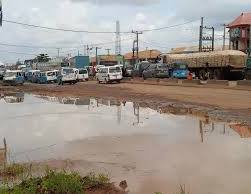
After an ongoing grueling experience by Nigerians, and being stuck on the road, the Federal Government has moved to take control of the troubled Benin-Asaba Expressway after Works Minister David Umahi accused the concessionaire, Benin-Asaba Expressway Concession Company Limited (BAECC), of lacking the technical capacity to deliver the 125-kilometre highway and worsening conditions for motorists.
At a stakeholders’ meeting in Benin City on Thursday, Umahi expressed regret over the structure of the concession agreement, saying the Federal Government had effectively put itself in a difficult position by the terms it accepted.
“I want the public to know that by the concession agreement, we played into the hands of the concessionaire,”
the minister said.
His comments came after days of severe traffic congestion and reports of motorists spending several days on parts of the strategic corridor, which links Benin City in Edo State with Agbor and Asaba in Delta State and provides an important transport connection between the South-South and South-East regions. The Federal Government had apologised to road users over the hardship and promised emergency intervention.

FG seeks concessionaire’s exit
Umahi asked BAECC to formally communicate to the Federal Government, through the Ministry of Works, its willingness to terminate the concession, while directing that the company be removed from the project site within the limits of the government’s contractual rights.
He said the ministry no longer had confidence in the company’s ability to restore the highway to an acceptable standard.
“We are therefore pleading with you to give us written approval to proceed and bring a competent contractor to do the job. With this poor job, we don’t see you as having the capacity to do the work,” he said.
The minister ordered the immediate removal of blockages along the highway and called for urgent measures to restore the free movement of vehicles.
He also directed the Ministry of Works to ask the project’s Independent Engineer to measure and document all work executed by the concessionaire. Work that resulted from what Umahi described as improper or destructive construction activity would not be recognised as completed work.
According to the minister, removing existing asphalt contrary to contractual specifications amounted to “negative work”, and the cost of repairing any resulting damage would have to be established. 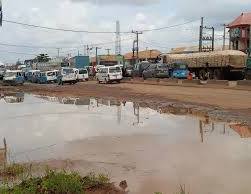
Three options on the table
The government has, however, stopped short of simply walking away from the concession without a settlement.
At the stakeholders’ meeting, Umahi presented three possible pathways for resolving the impasse.
Under the first option, the Federal Government could bring in competent contractors to complete the highway, after which BAECC would be given the right of first refusal to operate and toll the road, enabling it to recover its investment.
The second option is termination of the concession agreement because of the disputes that have arisen between the parties.
The third would allow BAECC to remain the concessionaire but require it to engage a competent contractor already operating in Nigeria. Under that arrangement, the Federal Government would take responsibility for the design and supervision of the construction, while BAECC would retain the right to toll the highway and receive 70 per cent of toll revenue, with the Federal Government taking 30 per cent.
Umahi said three reputable contractors had already been identified to take over the construction if BAECC accepted the proposed arrangement.
He described the options as a generous offer, warning that continued deterioration of the highway could deepen public frustration and create security and public-order problems.
Asphalt removal sparks confrontation
 The latest dispute follows a particularly sharp confrontation between the ministry and BAECC over the concessionaire’s construction methods.
During an inspection of the highway on August 25, Umahi criticised the pace of work and accused the company of removing existing asphalt despite warnings from the ministry and the Independent Engineer, Yolas Consultants.
He subsequently directed Federal Controllers of Works and Engineering Representatives to arrest any contractor found completely removing asphalt from an existing road.
The minister rejected BAECC’s explanation that heavy traffic and intense rainfall had contributed to the difficulties, describing the explanation as inadequate. He said the concessionaire’s methodology was harming road users, surrounding communities and the progress of the project.
At the stakeholders’ meeting, the ministry further demanded that BAECC restore removed asphalt at its own cost, redirect water flowing onto the carriageway and produce a technical design for proper storm-water channelisation.
The concessionaire was also told to remove allegedly unqualified personnel from the site, including a project director whose qualifications the minister questioned, and to provide evidence of previous road-construction experience.
Ministry alleges technical failures
The Director of Highway Planning in the Ministry of Works and Technical Lead of the Project Delivery Team for the Highway Development and Management Initiative (HDMI), Ebere Izunobi, accused BAECC of failing to comply with instructions from supervising officials.
Izunobi alleged that the company deployed unqualified engineers and staff and used unsuitable materials in sections of the project.
The ministry also accused the concessionaire of inadequate equipment, failure to follow the directions of the Independent Engineer and poor understanding of road-construction requirements.
The government’s position is that whatever genuine work has been carried out must first be measured and valued before a decision is taken on the future of the concession.
BAECC insists it can finish the job
BAECC, however, has rejected the suggestion that it should simply be removed from the project.
Its Chief Executive Officer, Samuel Daramola, appealed to the ministry to allow the company to continue, saying it had secured funding, upgraded its equipment and strengthened its technical personnel.
“We don’t want to put money in the drain. We have upgraded our technical staff and we want the ministry to allow us to continue the project,” Daramola said.
BAECC’s Head of Legal and Compliance, Peterson Fabian, similarly appealed for more time for consultation, arguing that the discussions had not yet produced a final solution.
The company had, shortly before the latest confrontation, reaffirmed its commitment to completing the project and said the concession was being funded entirely by private capital under a 25-year arrangement, with no direct government funding committed to project execution.
In an earlier explanation of the project’s difficulties, Daramola attributed some delays to heavy rainfall and the challenge of carrying out drainage work while maintaining traffic on a heavily used highway. A representative of the project consultant, however, said the concessionaire had been advised to construct drainage facilities before removing existing asphalt but did not follow the recommendation.
How the concession began
The crisis has placed renewed scrutiny on Nigeria’s policy of using public-private partnerships to rehabilitate and manage major highways.
The Benin-Asaba corridor is one of the pilot projects under the Federal Government’s Highway Development and Management Initiative (HDMI). Federal government records describe the route as a 125-kilometre dual carriageway beginning at the AIF Roundabout in Benin City and terminating at Summit Junction in Asaba.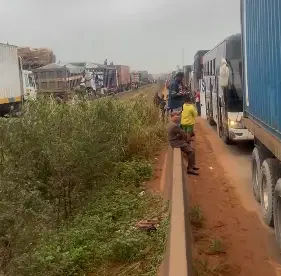
The road is considered strategically important because it connects major economic areas in the South-South and South-East and carries substantial passenger and freight traffic.
The project was conceived as a private-sector-funded rehabilitation, reconstruction, operation and management concession. In January 2024, the Edo State Government announced a N228 billion agreement involving the Infrastructure Corporation of Nigeria (InfraCorp) and AAA Infrastructure Nigeria Limited for the reconstruction of the expressway, with Edo participating as an equity partner.
The concession ultimately provided for a 25-year operating period. Federal government records and project documents identify Africa Plus Partners Nigeria Limited Consortium as the concessionaire behind the special-purpose vehicle, BAECC. The project was designed as a Design, Finance, Build, Operate and Transfer arrangement.
The plan envisaged a substantially expanded highway, including sections of up to 10 lanes, with tolling used to enable the private investor to recover its expenditure and maintain the road over the concession period. Reports on the project have put the construction completion target in 2027/28, depending on the particular project milestone being referenced.
Governor: ‘A total waste of resources’
Edo State Governor Monday Okpebholo, who attended the stakeholders’ engagement, and who has come under intense criticism on social media, expressed deep frustration with the condition of the highway.
Nigerians from different walks of life had descended on Okpebholo after he went to Osun State, during the run-off to the governorship there, to berate Senator Ademola Adeleke over his performance as state governor, when residents and commuters through his state were agonising over the dilapidated infrastructure.
Okpebholo, at the meeting with the minister and other stakeholders, said the state of the Benin – Asaba road was unacceptable after 16 months of construction activity.
“What we are seeing now is not what I should be seeing at this point after 16 months. Nothing has been done. To me, it is a total waste of resources,” the governor said.
Okpebholo urged Umahi to take decisive action to end the crisis and provide relief for motorists and communities along the corridor.
His intervention reflects growing political pressure on the Federal Government to resolve the problem, as residents and transport operators have increasingly complained about delays, vehicle damage and the difficulty of moving goods and passengers along the route.
Senate, House call for scrutiny of concessions
The controversy has also triggered questions in the National Assembly about the capacity of private companies selected to undertake large infrastructure projects.
Senator Allwell Onyesoh, a member of the Senate Committee on Works, criticised the concession arrangement and said the Benin-Asaba experience should serve as a lesson for future public-private partnerships.
“The concessionaires and whoever pushed for this concessionaire did not mean well for Nigeria, and this is a big lesson about concessionaires in Nigeria,” he said, arguing that not every concessionaire has the technical capacity required for projects of such magnitude.
The Chairman of the House of Representatives Committee on Works, Akin Alabi, has also called for a review of the concession agreement and similar arrangements, saying the immediate priority should be to restore the highway and ease the hardship faced by motorists.
FG widens review of road concessions
The Benin-Asaba crisis now appears to have moved beyond a dispute over one project.
Umahi said the Federal Government was reviewing the process through which road concessions were awarded, with emphasis on determining whether concessionaires possess the technical and financial capacity to execute projects before contracts are handed to them.
The immediate task, however, is more basic: restoring a major transport artery to a safe and passable condition.
The Federal Government has promised emergency repairs to critically failed sections, while the Ministry of Works and other government agencies are being directed to coordinate interventions.
The Niger Delta Development Commission has also indicated its willingness to intervene on a failed 15.4-kilometre stretch around the Edo-Delta border, with Umahi directing the NDDC and federal project teams to harmonise their efforts.
For now, the fate of the concession remains unsettled. BAECC is seeking time to consult its investors and partners, while the Federal Government insists that urgent action is required to prevent further deterioration.
What began as a flagship experiment in private-sector financing of Nigeria’s road infrastructure has therefore become a test of the government’s ability to enforce concession agreements, protect public assets and deliver relief to millions of road users who depend on the Benin-Asaba corridor.
● Featured Photo & Inset: Photos of failed portions of the Benin – Asaba road.