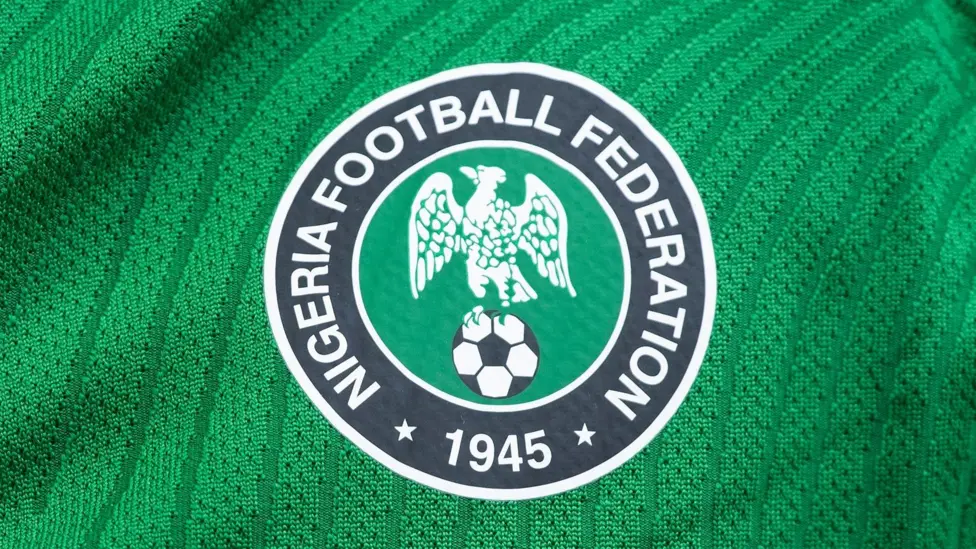
The Nigeria Football Federation (NFF) has been plunged into a major leadership crisis after President Ibrahim Musa Gusau, General Secretary Mohammed Sanusi and members of the federation’s Executive Committee resigned from office, barely a month before the body’s scheduled elective congress.
Gusau announced his resignation at a press conference at the NFF headquarters in Abuja on Thursday, August 27, bringing to an early end a four-year tenure that began with his election in September 2022. The NFF subsequently confirmed that Sanusi and all members of its Executive Committee had also stepped down.
Gusau said his decision followed consultations with his family, friends and stakeholders in Nigerian football, and was taken in what he described as the overriding interest of the sport.
He said his resignation was intended to “give way to a comprehensive and orderly reform process” aimed at addressing longstanding institutional, governance and developmental problems confronting Nigerian football.
The mass resignation follows mounting public and institutional pressure over the worsening fortunes of Nigeria’s national teams, as well as questions about the administration and financial management of the federation.
Falcons’ historic World Cup failure
The immediate trigger for the latest crisis has been the Super Falcons’ unprecedented failure to qualify for the 2027 FIFA Women’s World Cup in Brazil.
Nigeria, the record 10-time African champions, had participated in every edition of the Women’s World Cup since the competition began in 1991. That record ended on August 13 when the Falcons lost 2-1 to South Africa in a decisive qualification play-off in Morocco.
The defeat came after Nigeria had already suffered a setback at the 2026 Women’s Africa Cup of Nations, where the defending champions were eliminated by Cameroon in the quarter-finals.
The loss to Cameroon forced the Falcons into the play-off route for the World Cup. South Africa took advantage, with Thembi Kgatlana and Refiloe Jane scoring to give Banyana Banyana a 2-0 lead before Christy Ucheibe converted a late penalty for Nigeria. South Africa held on to secure its passage to the next stage of the World Cup qualification process.
The result represented one of the most significant setbacks in the history of Nigerian women’s football and intensified calls for accountability within the NFF.
The Super Eagles have also endured a major setback under the Gusau administration, having failed to qualify for the 2026 FIFA World Cup. Nigeria’s men lost their qualifying play-off to the Democratic Republic of Congo on penalties, meaning the country missed another World Cup after also failing to qualify for the 2022 tournament.
The simultaneous absence of Nigeria’s senior men’s and women’s teams from their respective World Cups has added considerable pressure on the football federation.
Fact-finding report raises further questions
The sporting failures were followed by an internal NFF fact-finding exercise established to investigate the poor performances of the national teams.
The committee, chaired by former NFF General Secretary Fanny Amun and comprising former coaches and former national team players including Ladan Bosso, Desire Oparanozie, Mutiu Adepoju and former FIFA referee Alex Mana, was tasked with examining the broader causes of Nigeria’s recent football setbacks.
A leaked report from the committee, reported by PREMIUM TIMES, alleged that some NFF board members had influenced the invitation of players to national teams for financial gain. The report examined administrative, technical, financial and developmental issues within Nigerian football.
The allegations have not, however, been established as criminal findings against particular individuals. They form part of a wider set of concerns surrounding the federation and are not from any eventual findings by competent investigative or law-enforcement authorities.
₦17bn intervention fund under scrutiny
The NFF has also come under renewed scrutiny over a Federal Government intervention intended to settle outstanding financial obligations to Nigeria’s national teams.
The intervention, initially put at ₦12 billion and later increased to ₦17 billion because of foreign-exchange variations, was approved in 2024 to help clear outstanding bonuses, allowances and other obligations owed to national-team players and officials. Former Sports Minister John Enoh said the funds were released in tranches to the ministry before being directed to the NFF.
The handling of the money has subsequently attracted investigations and demands for greater transparency. The NFF has said documents relating to the funds are with anti-corruption agencies investigating the matter. Reports have also linked the scrutiny to the Economic and Financial Crimes Commission and other authorities.
The reports of investigations are not proof that the federation or any particular official misappropriated the entire ₦17 billion, but many fear there may be “sticky internal fingers” involved. Publicly available information does not establish such a finding, and the investigations remain a matter for the relevant authorities.
Presidency orders football reform
The crisis has now drawn direct intervention from President Bola Ahmed Tinubu, who on Thursday ordered a comprehensive reform of Nigerian football.
In a statement issued by the State House, Tinubu said the reform must strengthen governance, administration, stakeholder representation, development pathways, domestic competitions and accountability across the sport.
The President argued that football, despite being Nigeria’s most popular sport and a major beneficiary of public support, continues to suffer from structural weaknesses.
He directed the Chairman of the National Sports Commission to work with the NFF Secretariat and football stakeholders to maintain continuity in essential football administration while facilitating a reform process.
The Presidency also said the process should involve appropriate engagement with FIFA and the Confederation of African Football (CAF), while safeguarding Nigeria’s obligations under the international football framework.
That reference to FIFA and CAF is significant because football’s international governing bodies generally require national associations to operate without inappropriate government interference. Any restructuring of the NFF will therefore have to balance domestic demands for accountability with the autonomy expected under the international football system.
Election now faces uncertainty
The leadership shake-up has also raised questions about the NFF’s next elective congress.
The federation had previously announced that its elective congress would take place on September 27 in Lafia, Nasarawa State, where a new Executive Committee is expected to be elected for the next four-year cycle. The date was moved from September 26 because Nigeria’s opening 2027 Africa Cup of Nations qualifying match against Madagascar had been scheduled for September 25.
The mass resignation, coming just 31 days before the scheduled congress, creates an immediate governance question: who will oversee the federation’s affairs and electoral preparations during the transition?
The NFF has not indicated that the congress has been cancelled. But the departure of the president, general secretary and Executive Committee means the federation and its stakeholders will have to clarify how its statutory functions and electoral process will be administered during the interim period.
End of the Gusau era
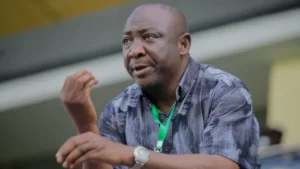
Gusau was elected NFF president in Benin City, Edo State, on September 30, 2022. His resignation came 34 days before the scheduled end of his four-year tenure.
His administration’s tenure was marked by significant moments, including Nigeria’s run to the 2023 Africa Cup of Nations final and the Super Falcons’ participation at the Paris 2024 Olympic Games. But those achievements have increasingly been overshadowed by the failure of both senior national teams to qualify for the next World Cups and by questions about the governance of the federation.
Gusau has maintained that he is leaving Nigerian football in a stronger position than he found it. His decision to step aside, however, now places the NFF at the centre of an unusually broad reform effort involving football administrators, government officials, former players, coaches and other stakeholders.
For Nigeria, the challenge goes beyond replacing one president.
The country’s football administration must now restore confidence in the federation, resolve questions surrounding financial accountability, improve the development and management of national teams, protect the integrity of player selection and ensure that the domestic game produces a sustainable pipeline of talent.
The immediate priority will be establishing a credible transition while determining the fate of the September 27 elective congress.
For a country where football remains a powerful source of national identity, the leadership upheaval at the NFF has transformed a sporting crisis into a broader test of governance, accountability and institutional reform.