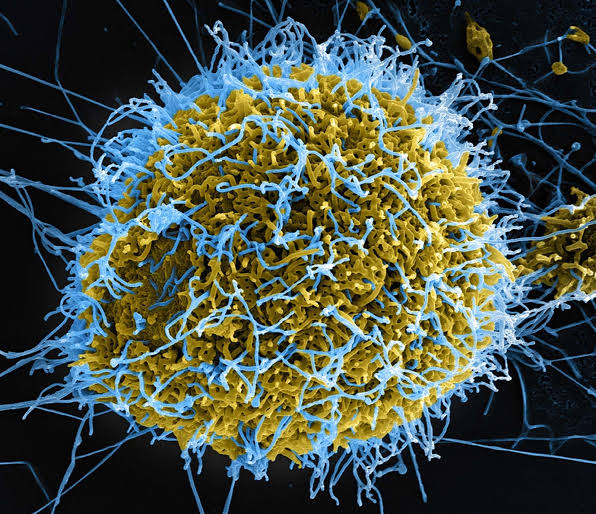
Anxiety over Nigeria’s first confirmed Ebola case in more than a decade intensified on Wednesday after health officials reported that the patient had developed multiple-organ failure, while lawmakers at the National Assembly reacted nervously to the outbreak.
The patient, a woman identified by officials as a diplomat, tested positive for the Bundibugyo strain of Ebola virus disease on October 20, according to the Federal Ministry of Health and Social Welfare and the World Health Organisation (WHO).
The diagnosis makes Nigeria the latest country affected by the outbreak that began in the Democratic Republic of Congo (DRC) in May. The WHO says the infection has now been detected in five countries, including Nigeria.
The patient is receiving treatment in isolation at a private health facility in the Federal Capital Territory (FCT), as public health authorities intensify efforts to prevent further transmission.
Conflicting accounts emerge over patient’s condition
Olajumoke Babatunde, Director of Public Health Laboratory Services at the Nigeria Centre for Disease Control and Prevention (NCDC), disclosed on Wednesday that the patient’s condition had deteriorated into multiple-organ failure.
Babatunde said three rounds of molecular testing confirmed the Bundibugyo strain, with the WHO also confirming the identification.
Another official at the emergency incident management meeting identified the patient as a diplomat but did not disclose her nationality.
However, a subsequent report published on Thursday quoted Coordinating Minister of Health and Social Welfare Muhammad Ali Pate as saying the woman was stable and improving.
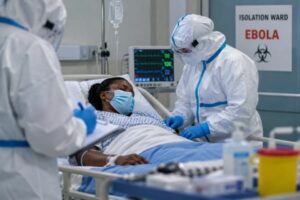
The differing accounts have created uncertainty about her current condition. As of Thursday, the latest public reporting available did not establish whether the multiple-organ failure had resolved or whether the patient’s condition had otherwise changed.
The Bundibugyo strain is particularly concerning because there is no approved vaccine or specific treatment for the disease. Medical care focuses on supportive treatment, management of complications and close monitoring.
How the infection was detected
According to the WHO, the woman arrived in Nigeria on October 3 and developed symptoms on October 7. She sought medical attention at a private hospital in Abuja on October 11 after initially experiencing symptoms that were believed to resemble malaria.
Africa CDC Director-General Jean Kaseya told the BBC that the woman, originally from Uganda and resident in Abuja, had travelled to Kampala for a holiday.
Pate subsequently told the BBC that she had spent approximately two and a half weeks in the Ugandan capital and made a two-hour stopover in Addis Ababa, Ethiopia, on her return journey.
However, some reports have given October 5 as her arrival date. The discrepancy remains unresolved and requires clarification by health authorities.
Officials said the patient’s Ebola diagnosis was confirmed on October 20, after public health authorities were alerted on October 19 because her condition had failed to improve.
The early symptoms of Ebola can resemble malaria and other common illnesses, including fever, headache, muscle pain, vomiting and diarrhoea. The overlap can complicate early diagnosis, particularly in countries where malaria is endemic.
Investigators are still reconstructing the patient’s travel and exposure history to determine where she contracted the virus. Uganda has disputed suggestions that the case necessarily originated within its borders, saying it currently has no active Ebola cases.
Forty-four contacts identified
Authorities have identified 44 people who may have been exposed to the patient, including healthcare workers, patients, caregivers and travel contacts.
The Federal Government said contact tracing had commenced, surveillance had been intensified and infection-prevention measures were being strengthened at the private hospital where she received care.
Pate said the government was also working with aviation authorities to obtain passenger manifests and identify people who might have been exposed during the journey.
The minister previously said the identified contacts would remain under isolation or monitoring for at least 21 days, reflecting Ebola’s incubation period, which ranges from two to 21 days.
As of the latest WHO update, the 44 identified contacts were being monitored. The minister told the BBC that none of the contacts, including the person who travelled with the patient, was known to have developed symptoms at the time of his statement.
Authorities have not confirmed community transmission in Nigeria. The government has described the case as imported, although investigations into the infection’s source and possible exposures remain ongoing.
Senators react as Akpabio recounts handshake snub
The outbreak also triggered anxiety inside the National Assembly on Wednesday, where Senate President Godswill Akpabio disclosed that some colleagues had declined to shake his hand when he arrived in the chamber.
Akpabio made the disclosure during deliberations on measures to address the Ebola threat, illustrating the level of concern among lawmakers.
Senator Adams Oshiomhole proposed that senators absent from the sitting should be quarantined before returning to the chamber, arguing that their recent movements and possible exposures could not immediately be established.
The exchange added a dramatic dimension to the Senate’s response, although any quarantine or isolation decision should be based on public health risk assessments rather than attendance alone.
Reports from the sitting also said Akpabio directed that testing kits be made available at the chamber’s entrance. The precise nature and implementation of that measure require clarification from the Senate or health authorities.
The Senate called for mandatory Ebola screening of international travellers and urged stronger border surveillance and emergency preparedness. Lawmakers also discussed the need to release emergency funds to reinforce containment efforts.
Government activates emergency response
Following confirmation of the case, the NCDC activated its incident management system to coordinate the national response with the Federal Ministry of Health, the FCT authorities and international partners.
The WHO said it was supporting Nigerian authorities with case investigation, contact tracing, infection prevention and control, laboratory capacity and essential supplies, including personal protective equipment for healthcare workers.
The WHO has also urged countries across the region to strengthen disease surveillance, maintain rapid-response teams, prepare laboratories to test suspected cases safely and improve monitoring at international points of entry.
The agency advises against imposing restrictions on travel or trade with affected countries, emphasising coordinated public health measures instead.
On Wednesday, Pate urged Nigerians to remain vigilant without succumbing to panic or misinformation. He said the government was collaborating with Uganda and other partners to contain the infection.
Nigeria is drawing on experience from its 2014 Ebola response, when it successfully contained an outbreak involving 20 confirmed cases and eight deaths.
The experience provides an important foundation, but health officials must still ensure that suspected cases are detected quickly, healthcare workers are protected and contacts are monitored throughout the relevant incubation period.
Regional outbreak raises wider concerns
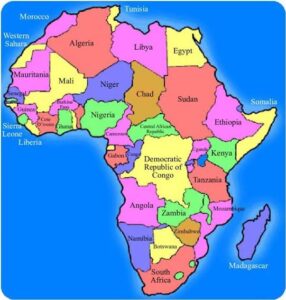
The Nigerian case comes amid a major outbreak of Bundibugyo Ebola virus disease in the Democratic Republic of Congo.
In its situation report covering data through October 19, the WHO recorded 9,637 confirmed cases and 4,646 confirmed deaths in the DRC, representing a crude case-fatality ratio of approximately 48.2 per cent.
Kenya has also reported nine cases linked to an imported infection, while Uganda has maintained that it has no active cases following its earlier outbreak.
The spread across borders has heightened concerns about international travel, delayed diagnosis and the challenges of tracing contacts across multiple countries.
Africa CDC has called an extraordinary virtual meeting of African health ministers for October 28 to coordinate the regional response.
Public urged to remain vigilant
Health authorities are urging Nigerians to avoid direct contact with the blood and other bodily fluids of anyone suspected or confirmed to have Ebola, practise good hand hygiene and seek prompt medical attention if symptoms develop after a possible exposure.
Anyone who believes they may have been exposed should contact public health authorities for guidance rather than self-diagnose or rely on rumours circulating online.
Healthcare facilities have been urged to maintain strict infection-prevention protocols, promptly isolate suspected cases and notify public health authorities.
For now, the central challenge is to contain the confirmed infection, establish the patient’s full exposure history and ensure that all identified contacts complete the required monitoring period without further transmission.
The immediate priority remains evidence-led containment: accurate public information, rapid identification of possible cases and coordinated action by Nigerian and regional health authorities.