
Oyo State Governor Seyi Makinde has reaffirmed his allegation that the Federal Government spent Nigeria LNG Limited (NLNG) dividend proceeds allegedly due to states and local governments, challenging the Presidency to explain how the funds were accounted for and distributed.
Makinde’s renewed position followed the Presidency’s rejection of his claim that each of Nigeria’s 36 states was entitled to more than ₦250 billion from the dividends and that payment had been postponed until after the 2027 general elections.
In a response issued on Monday, October 19, through his Special Adviser on Media, Sulaimon Olanrewaju, the governor maintained that the Presidency had failed to address what he described as the central issue: the outcome of a reconciliation exercise commissioned by the Nigeria Governors’ Forum (NGF), with the Federal Government’s support.
According to Makinde’s aide, the exercise reportedly identified a shortfall of about ₦9 trillion due to states and local governments, with the report allegedly held by both the Federal Government and the NGF.
“We trust the Presidency will not deny its existence,” the statement said, urging the Federal Government to clarify how much NLNG dividend revenue had been received, how the proceeds were distributed and what happened to the amounts allegedly due to subnational governments.
The governor’s latest response has shifted the dispute from competing claims about the size of NLNG dividends to questions about the reconciliation report, the accounting treatment of the proceeds and whether any outstanding amounts were formally approved for distribution.
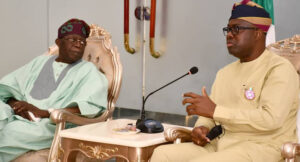
Makinde: Reconciliation exercise identified ₦9trn shortfall
Makinde had raised the issue on Friday, October 16, during the 2027 Budget Stakeholders’ Consultative Engagement at Olola Ogunlana Hall, International Conference Centre, University of Ibadan.
The governor alleged that NLNG dividend proceeds had entered the Federation Account but were spent by the Federal Government instead of being distributed to the states.
“They fooled us. The Nigeria LNG paid dividends to the Federal Government, which went straight into the Federation Account, but they spent it,” Makinde said.
He further alleged that the figures had been reconciled and that each state was expected to receive more than ₦250 billion.
According to the governor, Oyo State had already identified projects that could be financed with the anticipated allocation to stimulate economic growth.
“Each state was supposed to get ₦250 billion. We had already identified projects that would expand Oyo State’s economy. But they have now said the money will not be paid until after the election. Is the election more important than the people of Nigeria?” he asked.
Makinde’s latest position, as communicated by his media aide, is that the Presidency should address the alleged reconciliation findings rather than rely exclusively on the historical scale of NLNG dividend payments to challenge his figures.
However, the reported ₦9 trillion shortfall has not been independently established by the publicly available reconciliation report, which has yet to be produced in the responses reviewed for this report.
Presidency rejects allegation, cites revenue-sharing formula
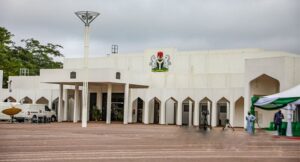
The Presidency, through the Special Adviser to President Bola Tinubu on Information and Strategy, Bayo Onanuga, dismissed Makinde’s allegation in a statement issued on Sunday, October 18.
Onanuga described the claim that the Federal Government was withholding ₦250 billion in NLNG dividends for each state as false, arguing that the amount was inconsistent with both the Federation Account revenue-sharing formula and the company’s historical dividend payments.
According to the Presidency, allocating ₦250 billion to each of the 36 states would amount to ₦9 trillion for the states alone, excluding the Federal Government, the Federal Capital Territory and the 774 local government areas.
It further argued that states receive 26.72 per cent of distributable Federation Account revenue under the Federation Account Allocation Committee (FAAC) formula.
On that basis, the Presidency calculated that a total distributable revenue pool of approximately ₦33.68 trillion would be required for the states’ combined share to reach ₦9 trillion.
Onanuga also stated that NLNG had paid approximately $21.5 billion in dividends to the Federation over 25 years, with less than $3 billion realised since Tinubu assumed office.
He argued that NLNG had never made a single dividend payment of $25 billion to the Federation Account and urged Nigerians to disregard Makinde’s allegation.
The Presidency also criticised the governor’s public statements, linking them to his political ambitions ahead of the 2027 elections. Those political criticisms, however, do not independently resolve the financial questions raised by the governor.
The Presidency’s official statement contains its full explanation of the revenue-sharing calculation and historical dividend figures.
The disputed ₦9 trillion: What the figures establish
At the centre of the controversy is the claim that each state was entitled to more than ₦250 billion and that a reconciliation exercise identified a substantial amount owed to states and local governments.
The basic arithmetic behind the Presidency’s calculation is straightforward: ₦250 billion multiplied by 36 states equals ₦9 trillion.
Similarly, dividing ₦9 trillion by 26.72 per cent produces approximately ₦33.68 trillion.
These calculations explain the Presidency’s argument that the proposed allocation would require an exceptionally large distributable revenue pool.
However, the calculation does not, by itself, establish whether a separate reconciliation exercise identified outstanding payments, whether the Federal Government accepted its findings or whether any agreed liabilities remain unpaid.
Those questions depend on the terms of the reconciliation exercise, the revenue categories examined, the period covered and the accounting records used to calculate the alleged shortfall.
There is also a distinction between the ₦250 billion-per-state figure cited by Makinde and the reported ₦9 trillion shortfall attributed to the reconciliation exercise. The two figures should not automatically be treated as interchangeable without examining the underlying report and its treatment of local government allocations.
Historical dividends and the question of accountability
The Presidency’s reference to approximately $21.5 billion in historical NLNG dividends provides context for assessing the scale of the disputed claim.
However, historical totals alone cannot establish the complete movement of funds in a particular period.
The key issue is whether the dividend receipts relevant to Makinde’s allegation can be traced from NLNG through the appropriate recipients and into the relevant accounts, followed by a documented account of how the proceeds were allocated.
Makinde’s aide also questioned the Presidency’s reference to approximately $3 billion received under the current administration, asking how the money had been distributed and how much had reached states and local governments.
The Presidency’s statement, as publicly presented, did not include a transaction-by-transaction reconciliation of the specific proceeds cited by Makinde or a breakdown of the amounts allegedly due to each tier of government.
Consequently, the historical dividend figures and the revenue-sharing formula are relevant to the debate, but they do not replace a direct examination of the disputed transactions.
Four questions requiring official answers
The latest exchange leaves four major questions that could help resolve the controversy.
First, where is the NGF reconciliation report?
If the report identified a shortfall of approximately ₦9 trillion, publication of its findings would enable the public to examine the methodology, period covered, agencies involved and amounts calculated as outstanding.
Second, did the Federal Government formally accept the findings?
Makinde’s media aide says the reconciliation exercise was conducted with the Federal Government’s support and that the report remains in the custody of both the government and the NGF. The alleged acceptance of the findings requires documentary confirmation.
Third, how were the relevant dividend proceeds accounted for?
NLNG payment records, the relevant NNPC financial statements, remittance documents, Federation Account statements and audited government accounts could help establish the amounts received, the dates of receipt and the subsequent allocation or expenditure of the funds.
Fourth, was distribution formally postponed until after the 2027 elections?
An official directive, correspondence or documented decision by the relevant authorities would be needed to establish whether payment was deliberately deferred and, if so, the reasons for the decision.
Answers to these questions would provide a more conclusive basis for assessing the competing claims than either political statements or calculations based solely on historical totals.
Implications for states and local governments
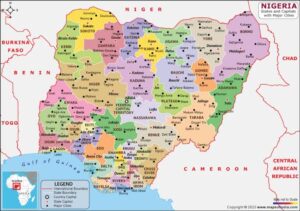
The controversy has implications for fiscal transparency, intergovernmental relations and the ability of subnational governments to plan development projects around anticipated revenue.
For Oyo State, Makinde says the expected allocation had already informed plans for projects intended to expand economic activity. Whether the alleged delay has affected specific projects would depend on the amounts involved, the status of the projects and the state’s actual financing arrangements.
For the Federal Government, the dispute raises the need to explain the accounting and distribution of the relevant revenue if a reconciliation report identifying outstanding liabilities exists.
The disagreement also highlights the importance of distinguishing between dividends received by a company’s shareholder, amounts remitted to the Federation Account, revenue classified as distributable and allocations ultimately payable to individual states and local governments.
Each stage requires supporting documentation before a definitive conclusion can be reached.
Makinde has maintained that the Federal Government should account for NLNG dividend proceeds allegedly due to states and local governments, pointing to a reconciliation exercise that his media aide says identified a shortfall of approximately ₦9 trillion.
The Presidency, on the other hand, maintains that the claim of ₦250 billion for each state is inconsistent with the FAAC revenue-sharing formula and NLNG’s historical dividend payments.
While the arithmetic cited by the Presidency is verifiable, the central dispute cannot be conclusively resolved through those calculations alone. Equally, Makinde’s allegation that the funds were spent or that payment was deliberately postponed remains a claim requiring documentary substantiation.
The next substantive step is for the relevant authorities to make the reconciliation report and supporting financial records available for scrutiny.
Until those documents establish the amounts received, the sums allocated, any outstanding liabilities and the circumstances surrounding the alleged delay, the dispute over the NLNG dividends will remain unresolved.
The central question is no longer simply how much NLNG has paid in dividends over the years, but whether a documented reconciliation established money due to states and local governments—and, if so, how those funds were accounted for.