
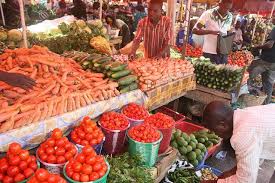
A deepening cost-of-living crisis is tightening its grip on Nigerians, as residents of the Federal Capital Territory (FCT), like others all over the country, grapple with surging food prices, shrinking incomes, and a rising wave of unconventional survival strategies.
Findings from a weekend survey conducted by the News Agency of Nigeria (NAN) across major markets in Dei-Dei, Kubwa, and Dutse reveal a troubling reality: for many households, the basic routine of three meals a day is no longer guaranteed.
Residents who spoke to the Agency described a steady erosion of their purchasing power, forcing families to cut portions, skip meals, and substitute once-staple foods with cheaper alternatives.
“We are no longer eating like before,” said Safiya Muhammad, a mother of four. “I now cook less and choose only what we can manage.”
Prices Spiral Beyond Reach
At Dei-Dei market, vegetable trader Malam Adamu Isah painted a stark picture of inflation at the grassroots.
Tomatoes, once sold for as low as ₦18,000 per basket, now go for up to ₦48,000, while pepper prices have climbed close to ₦100,000 per bag. Similar trends were observed across other markets.
In Kubwa, trader Peace David noted that a small paint bucket of tomatoes now sells for more than double its previous price. Grains sellers in Dutse report comparable spikes, with a 50kg bag of rice rising to about ₦55,000 and beans crossing ₦80,000.
The data aligns with recent figures from the National Bureau of Statistics, which put Nigeria’s food inflation rate at 14.31% year-on-year as of March 2026—an indicator of sustained pressure on household consumption nationwide.
Economists have linked the surge to a mix of factors, including high transportation costs, currency instability, and supply chain disruptions—issues that have persisted since the fallout from policies such as fuel subsidy removal in 2023 under President Bola Ahmed Tinubu.
Traders Count Losses as Buyers Disappear
For traders, the crisis is a double-edged sword.
While prices climb, patronage continues to fall. Many sellers report unsold goods and losses due to spoilage – particularly perishable items like tomatoes and vegetables.
“Sometimes half of my basket gets damaged before I can sell it,” Adamu said. “Transport delays make everything worse.”
Rising fuel prices, traders say, are central to the problem, inflating logistics costs and cutting deeply into already thin profit margins.
A Recycled Economy of Survival
Beyond the markets, another phenomenon is quietly reshaping the country’s social landscape: what residents describe as “corporate begging.”
Unlike traditional street begging, this trend, as has been in years, involves well-dressed individuals approaching office workers, motorists, and shoppers with persuasive – and sometimes aggressive – requests for financial assistance.
In the Central Business District of Abuja, civil servant Musa Sani recounted daily encounters with individuals presenting emotional stories.
“They are organised and persistent,” he said. “It’s becoming difficult to tell who is genuine.”
Reports suggest that these individuals operate in groups, targeting high-traffic areas in the Federal Capital City such as Wuse Market and major intersections. Some residents allege that the trend is affecting business environments and customer experiences.
Between Survival and Exploitation
While some see the resurgent practice as a symptom of economic desperation, others warn of potential abuse.
“There should be a way to distinguish genuine need from exploitation,” said Ummi Ahmed, a resident of Garki, who also raised concerns about security risks.
Younger Nigerians appear particularly vulnerable. Wale Ibrahim, a university student, linked the rise in begging to unemployment and the high cost of living.
“Some people see it as easier than job hunting in this economy,” he said.
Yet, for others, it is simply about survival. A young boy, Hassan, said begging was the only way he could support his family after his father left.
“It’s how we eat,” he said quietly.
A Nation Under Pressure
Nigeria, Africa’s largest economy, has faced mounting economic challenges in recent years, with inflation, unemployment, and currency volatility converging to create one of the toughest living environments in decades.
International observers, including the World Bank, have repeatedly warned that rising inflation and slow income growth are pushing millions of Nigerians closer to poverty.
Back in Abuja and other major towns and coties’ bustling markets, the reality is already clear.
For both traders and consumers, each day has become an exercise in adaptation – stretching budgets, recalculating risks, and, increasingly, redefining dignity in the face of hardship.
As Safiya Muhammad put it: “We are just trying to survive.”
COMPLIMENTS.
Please read trending reports on Everyday.ng
Court Remands Social Media Influencer “Justice Crack” Over Viral Army Video
Court Remands Social Media Influencer “Justice Crack” Over Viral Army Video
Obi, Kwankwaso defect from ADC to NDC
Hardship Bites Harder as Food Prices Soar, “Corporate Begging” Stages Comeback
Hardship Bites Harder as Food Prices Soar, “Corporate Begging” Stages Comeback
Joash Amupitan’s baptism of fire
Obi, Kwankwaso Moves Rattle Opposition Coalition Ahead of 2027
Obi, Kwankwaso Moves Rattle Opposition Coalition Ahead of 2027
For comments, adverts, releases, please reach us on:
Twitter on: @Everyday_ng;
E-mail: info@everyday.ng
Telephone, WhatsApp & Telegram: +234 802 2198060.
Contact Address: Back Suite, Off Umaru Musa Yar’Adua Way, Kukwaba District, Abuja.
God bless the Federal Republic of Nigeria.