
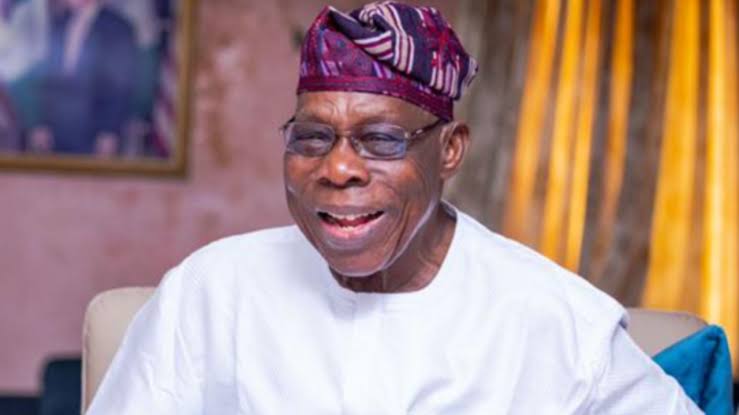
Former Nigerian President, Olusegun Obasanjo, has delivered a scathing critique of the country’s worsening security situation, warning that any government unable to safeguard lives and property forfeits its legitimacy.
Speaking during an interview with News Central Television, the elder statesman emphasized that security remains the primary responsibility of any sovereign state. According to him, failure in this regard erodes public trust and undermines the very basis of governance.
“The government that cannot guarantee security of life and property of its citizens has forfeited the right of existence,” Obasanjo declared.
Obasanjo’s remarks, likely to draw a reaction from the government he once headed, come amid persistent insecurity, including banditry, terrorism, and communal violence. His position aligns with earlier public interventions where he insisted citizens may even seek international assistance if the government fails to protect them.
His latest comments reflect growing national frustration over the state’s perceived inability to curb violent crime and ensure safety nationwide.
The former president stressed that security is not optional but “the most fundamental responsibility” of any government, adding that failure in this regard invalidates the moral and political authority of the state.
ATTACK ON NATIONAL ASSEMBLY OVER PAY
Beyond security, Obasanjo launched a strong critique of Nigeria’s legislative arm, accusing members of the National Assembly of determining their own salaries and benefits.
He argued that such actions violate constitutional provisions, insisting that remuneration for public officials falls under the statutory mandate of the National Salaries, Incomes and Wages Commission (NSIWC).
“The National Assembly members are fixing their own salaries and emoluments, which is not supposed to be their duty,” he said.
The allegation revives longstanding public concerns about transparency and accountability in the political system, particularly regarding lawmakers’ earnings.
Obasanjo also raised alarm over what he described as entrenched corruption in Nigeria’s oil refining sector. He claimed that more than $16 billion has been spent on refinery rehabilitation projects with little to show for it.
His concerns echo previous criticisms of the Nigerian National Petroleum Company Limited (NNPCL) and repeated failed attempts to revive state-owned refineries. Reports indicate that despite billions spent over the years, key facilities such as Port Harcourt Warri and Kaduna refineries have struggled to operate efficiently.
He further revealed that international oil companies had previously declined involvement in managing the refineries due to concerns about corruption and poor maintenance.
Drawing a sharp contrast, Obasanjo pointed to the privately built refinery by the Dangote Group, led by Aliko Dangote.
He noted that the Dangote refinery was constructed with about $20 billion, suggesting that the comparison raises serious questions about efficiency, transparency, and value for money in public sector projects.
The Dangote refinery, widely regarded as Africa’s largest, has been cited as a potential game-changer for Nigeria’s fuel supply, even as concerns persist about systemic challenges in the oil sector.