
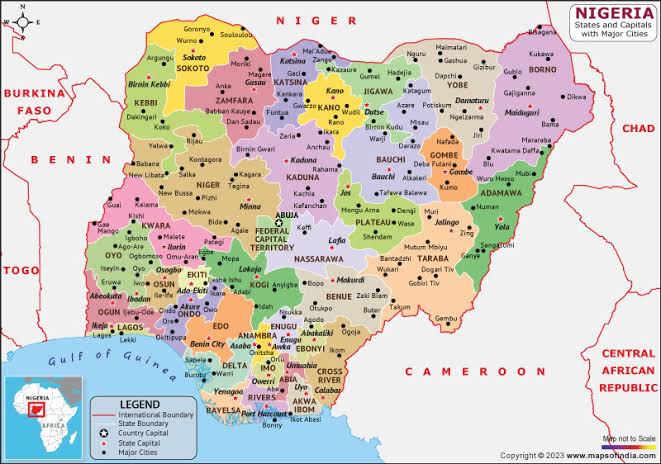
July 2026 left behind a chilling trail of bloodshed, abductions, burned homes and shattered communities across Nigeria, according to a report compiled by the Stephanos Foundation.
From the hills of Plateau to the farming communities of Benue, the forests of Kaduna and Zamfara, and the insurgency-affected Northeast, the report documents a month in which violence repeatedly reached villages, roads, schools, places of worship and even private residences.
The picture that emerges is not of a single theatre of conflict, but of several overlapping security crises – attacks attributed by the foundation to armed herders and bandits in parts of the Middle Belt and Northwest, alongside continuing attacks by Boko Haram and Islamic State West Africa Province (ISWAP) in the Northeast.
The figures and descriptions in the report are the foundation’s incident reports and should be treated as reported allegations pending independent verification.
Plateau: Another Month of Fear
Plateau State recorded some of the most severe incidents in the report.
In Barkin Ladi, three people were reported killed in an attack on Sabon Layi on July 4, while another attack on Dorowa Babuje later in the month reportedly claimed two lives.
Riyom was particularly hard hit. The foundation reported attacks in Kwi, Torok, Wereng-Camp and surrounding communities, with the two July 11 incidents alone accounting for reports of 19 deaths and two injuries.
In Mangu, eight civilians and a soldier were reportedly killed when attackers struck Manja village and a forest area on July 26, with houses also burned.
The violence was not confined to rural settlements. On July 1, an attack was reported around the National Institute for Policy and Strategic Studies (NIPSS) in Jos South, although security personnel reportedly repelled the assault and neutralized one suspect.
Yet amid the devastation came a measure of relief: troops operating along the Riyom highway reportedly rescued seven abducted persons on July 13.
Benue: Villages, Roads and Communities Under Attack
Benue’s July account was equally disturbing.
The foundation reported that 15 people were killed and 10 injured in an attack on Sai community in Katsina-Ala on July 1.
Otukpo emerged as another major flashpoint. The report attributed several attacks to armed herders, including an assault on Otukpo-Nobi in which eight people were reportedly killed, five went missing and 11 were injured.
Later, an attack on Efeyi community on July 28 was reported to have killed 14 people, with several others injured.
Roads also became danger zones. The Anyiase-Ikyogen road, the Ogobia-Otukpo route and other corridors were reportedly used for attacks and ambushes, turning ordinary journeys into potentially fatal encounters.
Kaduna: Abductions as a Weapon
In Kaduna, the report highlights a pattern in which kidnapping appeared as prominent as outright killing.
Six people abducted from Kutaho were reportedly killed on July 1 despite ransom having been paid, according to the foundation.
Kajuru recorded a succession of kidnapping incidents. Communities including Umaso, Unguwa-Ku, Hanya Maro, Ungwan Busa and Banono Angwaku were reportedly attacked, with numerous residents abducted.
Then came one of the month’s most lethal incidents: the foundation reported that 30 people were killed in an attack on Naridon in Kauru Local Government Area on July 26. Three people were reportedly injured, while houses and provision stores were burned.
The numbers tell only part of the story. Behind every abduction is a family waiting for a phone call; behind every destroyed shop is a livelihood suddenly erased.
The Northwest’s Kidnapping Economy
The report describes a particularly relentless cycle across Zamfara and Sokoto.
In Zamfara, attacks were reported in Gusau, Zurmi, Talata Mafara, Gummi, Kaura Namoda and Bungudu. More than 26 people were reportedly killed across several communities in Talata Mafara during attacks spanning the night of July 21 into July 22.
In Sokoto, Sabon Birni Local Government Area endured repeated attacks. The foundation reported killings in Mazau, Tsamaye, Lajinge, Yar Bulutu and Unguwan Lalle, while dozens of residents were reportedly abducted in separate incidents.
One of the most vivid reports came from Garin Idi, where more than 50 people were reportedly kidnapped over July 20 and 21.
The attacks were accompanied by livestock theft, looting and destruction of property – suggesting that the violence is not merely about taking lives, but also about stripping communities of the means to survive.
Niger, Kogi and the Expanding Geography of Insecurity
In Niger State, the foundation reported one of the month’s highest single-incident death tolls: 48 people allegedly killed in Tegina, Rafi Local Government Area, on July 1.
Kogi’s incidents showed another disturbing dimension. A funeral convoy on the Ochadamu-Ejule road was reportedly attacked, with a corpse and nine people abducted.
A priest, Rev. Fr. Samuel Opeyemi Oyetoro, was reportedly killed in an attack on Church Road in Ajaokuta on July 29.
In Ogun, eight people were reportedly abducted from a student residence in Ipara, Remo North, in an attack involving armed gunmen.
The geography is significant. Violence is no longer confined to communities traditionally regarded as the country’s principal conflict zones. Highways, educational institutions, religious spaces and urban residences are increasingly appearing in security incident reports.
The Northeast: A Different but Persistent War
In Borno and Yobe, the threat remains closely tied to jihadist insurgency.
The Stephanos Foundation reported ISWAP attacks in Guzamala and Biu, while Boko Haram was reported to have attacked communities in Chibok and invaded Geidam.
The most serious military incident in the report occurred along the Maiduguri-Dikwa road, where an improvised explosive device reportedly killed eight soldiers and injured five others on July 30.
But the military also recorded successes.
Troops reportedly repelled attacks on forward operating bases in Mairari and Kauwa, arrested suspected ISWAP collaborators and logistics suppliers, and rescued a woman who had allegedly been abducted during the 2021 farming season.
That rescue, years after the original abduction, is a reminder that in conflict zones, some stories of captivity stretch far beyond a single news cycle.
Security Forces Fight Back
The foundation’s report is not exclusively a catalogue of failures.
Across several states, security forces and community-based formations mounted operations against kidnappers and insurgents.
In Nasarawa, an intelligence-led operation reportedly resulted in the arrest of 42 suspected kidnappers.
In Oyo, security personnel rescued 44 students and teachers abducted from three schools in Orire.
In Kwara, security agencies, forest guards, hunters and vigilantes reportedly rescued nine kidnap victims and neutralized three suspected bandits.
Zamfara also recorded several rescue operations, including the recovery of five kidnap victims in Anka and two abductees – a soldier and a civilian – in Bukkuyum.
In Katsina, troops and local security groups reportedly killed suspected attackers during separate operations, while in Borno, troops continued counter-insurgency operations against ISWAP networks.
These operations demonstrate that the security apparatus is capable of disrupting armed groups. The greater challenge is converting tactical victories into lasting security for communities.
A Nation Living Between Attack and Rescue
Taken together, the July incidents described by the Stephanos Foundation reveal a troubling rhythm: attack, killing, abduction, displacement – then rescue, pursuit or reprisal.
For many communities, the threat does not arrive as a conventional battle. It comes at night, on a farm, along a highway, in a village market or outside a school.
The consequences extend beyond the immediate casualty figures. Farmers become afraid to reach their fields. Traders close shops early. Families pay ransoms they can barely afford. Children are pulled from schools. Roads become corridors of anxiety.
And every burned house leaves behind more than ashes: it leaves a family asking whether there is still a home to return to.
The Bigger Warning
The July report ultimately presents a question more profound than the number of people killed in a single month:
How long can communities continue to absorb violence before insecurity becomes a permanent way of life?
The answer will depend not only on military operations, arrests and rescue missions, but also on intelligence gathering, protection of vulnerable communities, effective policing, accountability for perpetrators, disruption of kidnapping networks and sustained efforts to address the conditions that allow armed groups to operate.
For now, the Stephanos Foundation’s July record stands as another warning.
Across Nigeria, the map of violence continues to expand and mutate. Some communities are fighting insurgents. Others are confronting banditry and kidnapping. Still others are caught in recurring communal and farmer-herder violence.
The names in the report are therefore more than entries on a security spreadsheet.
They are people.
And behind every number is a family counting the cost of a country still searching for a durable path to peace.