By Adakole Ijogi
The recent comments by Islamic cleric, Sheikh Sani Yahaya Jingir, at a gathering in Kano where he called on Muslims to support a Muslim-Muslim presidential ticket in 2027, described Christians as “infidels,” and urged Muslims to use their numerical strength to pursue political interests represent a dangerous escalation in the politicisation of religion in Nigeria’s body polity. These remarks, made in the presence of the governors of Kano and Jigawa states, who reportedly did not immediately reject or condemn them, have rightly sparked widespread condemnation. The National Human Rights Commission has called for the arrest and prosecution of Sheikh Jingir for hate speech and incitement.
As a citizen of the Middle Belt, I write to register the emphatic rejection of these comments by the peoples of the Middle Belt region, and to challenge the dangerous narrative that seeks to reduce Nigerian citizenship and political participation to religious affiliation.
The Middle Belt is NOT Arewa
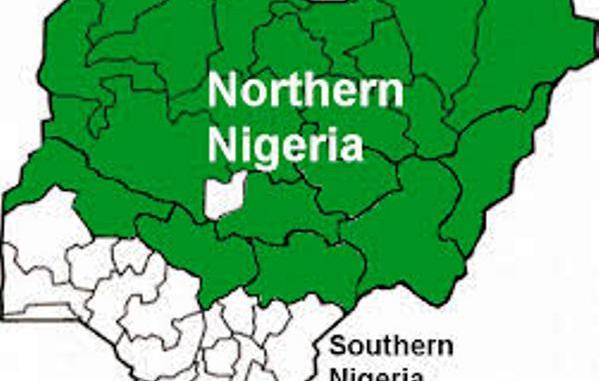
Let it be stated clearly and unequivocally: the Middle Belt people are NOT Arewa. We are only geographically located in Northern Nigeria, but we are distinct in history, culture, and political identity from the Arewa North. The Middle Belt refers to indigenous ethnic nationalities of Northern Nigeria that existed outside the authority of the Sokoto Caliphate and the Kanem-Borno Empire prior to British colonisation. Pre-colonial polities such as the Kwararafa Confederacy, Jukun states, Igala Kingdom, Borgu Kingdom, Nupe Kingdom, Tiv, Idoma, Gbagyi, Berom, Angas, and Eggon societies possessed distinct political systems and resisted slave raids and forced Islamisation.
The Middle Belt has consistently rejected the imposed “Arewa identity,” noting that the forced subordination of Middle Belt groups to emirate authorities by British colonial administrators laid the foundation for the agitation for recognition and equity. The Middle Belt comprises the following states: Adamawa, Benue, Nasarawa, Kogi, Plateau, Niger, Kwara, Taraba, Southern Gombe, Southern Bauchi, Southern Kebbi, Southern Borno, Southern Yobe and the Federal Capital Territory. We are distinct from the Arewa North, and we take serious exception to any attempt to speak for us or lump us into a religious or political bloc that does not represent our values.
Arewa and the Implementation of Sharia Law
For the record, the states that have implemented full Sharia law are predominantly Arewa states. As of 2025, the following 12 states have instituted Sharia law: Zamfara, Kano, Sokoto, Katsina, Bauchi, Jigawa, Borno, Kebbi, Yobe, Kaduna, Niger, and Gombe. Of these, Kaduna and Niger apply it only partially. The remaining states nine with full Sharia and three with partial Sharia are largely Arewa in identity. The Middle Belt states, by contrast, have maintained their pluralistic traditions and have rejected the imposition of any single religious legal system.
The Real Crises Facing Northern Nigeria: Verified Data
While Sheikh Jingir preoccupies himself with religious arithmetic for political gain, the people of Northern Nigeria including the Middle Belt are drowning in a sea of poverty, insecurity, and educational deprivation. Let us examine the facts:
Out-of-School Children: Nigeria has 20 million out-of-school children with 80 percent of them from Northern Nigeria. The Northern States Governors’ Forum admits that 80% of the 18.3 million figure comes from the region. Over 10.2 million primary-age and 8.1 million junior-secondary-age children are out of school, with the North bearing the heaviest burden.
Poverty: According to the 2025 Global Multidimensional Poverty Index Country Briefing, the North-West and North-East regions record the highest levels of deprivation across the country. Kebbi State tops the list with a severe poverty rate of 52.7 percent, followed by Jigawa at 52.0 percent, Sokoto at 51.4 percent, and Bauchi at 50.8 percent. 65 percent of the poor (86 million people) live in the North, while only 35 percent (nearly 47 million) live in the South.
Insecurity: In 2025 alone, violent conflicts claimed 4,654 lives and left 3,141 abducted across Nigeria. Banditry accounted for 599 incidents and 2,724 deaths. Zamfara State recorded the highest number of abductions at 1,203, followed by Kaduna with 629, Katsina with 566, and Sokoto with 358. The North accounts for 79 percent of insecurity incidents in Nigeria.
These are the crises that should occupy the attention of every leader and every citizen. Not the divisive rhetoric of religious supremacy.
The Nigerian Constitution Prohibits Religious Discrimination and Incitement, Sheikh Jingir’s comments are not merely offensive they are unconstitutional. The 1999 Constitution of the Federal Republic of Nigeria (as amended) provides clear provisions against religious discrimination and incitement:
▪︎Section 10 prohibits the adoption of any state religion.
▪︎Section 15(2) states that “national integration shall be actively encouraged, whilst discrimination on the grounds of place of origin, sex, religion, status, ethnic or linguistic association or ties shall be prohibited”.
▪︎ Section 38 guarantees every person the right to freedom of thought, conscience, and religion, including the freedom to change one’s religion or belief and to manifest and propagate it in worship, teaching, practice, and observance.
▪︎Section 42 prohibits discrimination on the grounds of community, ethnic group, place of origin, sex, religion, or political opinion.
Any statement that describes fellow Nigerians as “infidels” and seeks to mobilise voters along religious lines is a direct assault on these constitutional provisions. The National Human Rights Commission was right to describe these remarks as “hate speech and incitement to religious hatred and potential violence”.
INEC Has Not Opened the Gates for Political Campaigns
It is also important to note that the Independent National Electoral Commission (INEC) has not yet released a timetable for the 2027 General Election. Political campaigns are only permitted to commence 150 days before polling day.
Presidential and National Assembly campaigns are scheduled to commence on Saturday, August 19, 2026 150 days ahead of election day on January 16, 2027. Any attempt to campaign or mobilise voters before this date is premature and a violation of the Electoral Act 2026.
Sheikh Jingir’s comments, made in August 2026, are not only divisive but also constitute premature political campaigning that undermines the electoral process and the rule of law.
The Middle Belt Has No Place for Religious Extremism
The Middle Belt region has historically been a beacon of religious pluralism and peaceful coexistence. As we have always maintained, that the region remains religiously plural, with Muslims, Christians, and adherents of traditional religions represented within the MBF leadership. The Middle Belt has no place for religious extremism, hate speech, or the politicisation of faith.
We reject the narrative that Nigeria is a Muslim country or that political power should be determined by religious arithmetic. Nigeria is a multi-religious, multi-ethnic nation, and its strength lies in its diversity. We call on all Nigerians regardless of faith to reject the politics of division and to focus on the real issues that affect our people: poverty, insecurity, education, and development.
Sheikh Jingir’s comments are an insult to the intelligence of every Nigerian and a threat to the unity of our nation. The Middle Belt stands firm in rejecting these divisive remarks. We call on the Federal Government, the governors present at the gathering, and all political leaders to publicly condemn these comments and to reaffirm their commitment to the constitutional principles of equality, non-discrimination, and national integration.
Nigeria belongs to all of us Christians, Muslims, and adherents of traditional religions alike. No one has the right to describe any Nigerian as an “infidel” or to reduce our shared citizenship to religious affiliation. The Middle Belt will not be silent. We will not be co-opted. And we will not accept being labelled as Arewa or being spoken for by those who do not represent us.
Ijogi, a political economist and development consultant in Abuja, sent this via WhatsApp.