
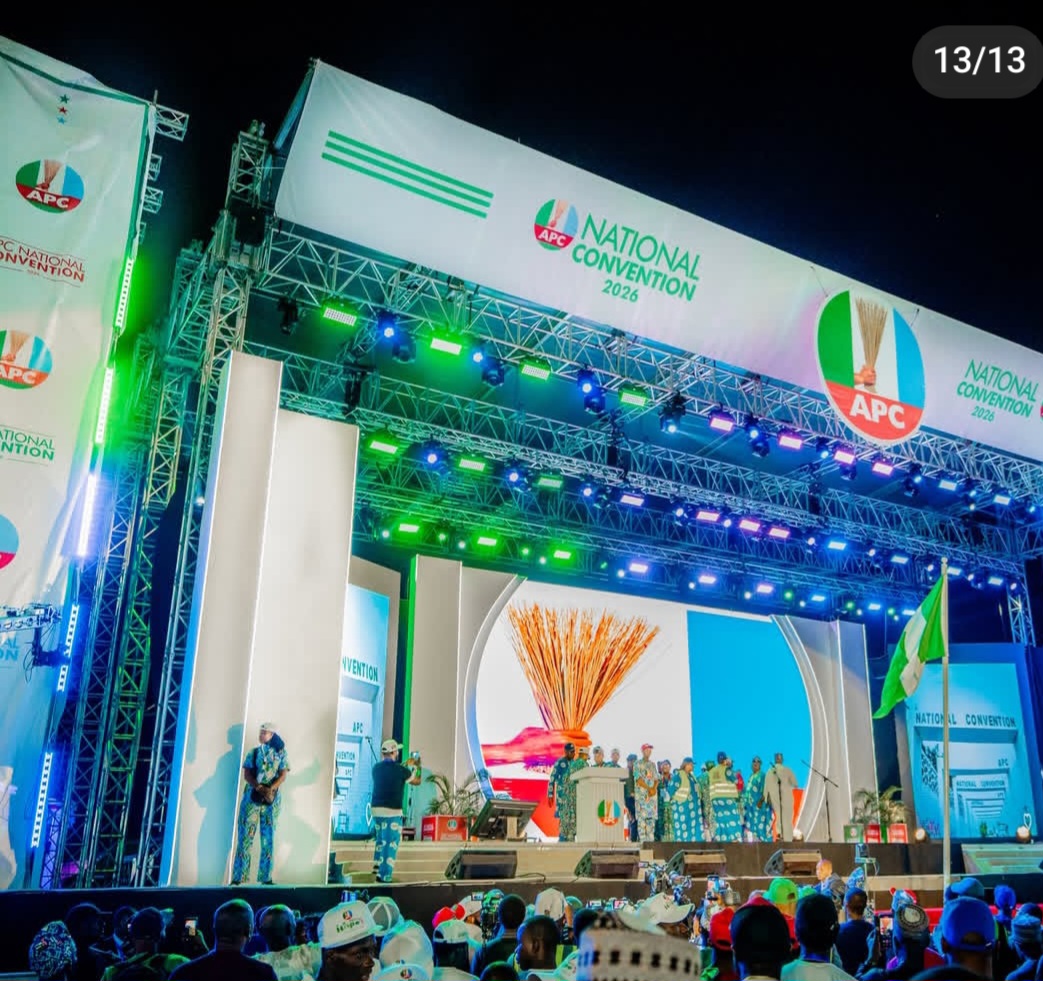
A fresh wave of political uncertainty has engulfed the ruling All Progressives Congress (APC) after the party’s National Working Committee (NWC) replaced several candidates who emerged from its National Assembly primary elections, a move already triggering protests, threats of litigation and renewed accusations of impunity ahead of the 2027 general elections.
The controversy followed the submission of the party’s final list of National Assembly candidates to the Independent National Electoral Commission (INEC), with the APC confirming that changes were made based on the recommendations of its Primary Election Appeal Committee.
Among the biggest casualties of the exercise is former Benue State governor Gabriel Suswam, alongside former Ondo lawmaker Gbenga Elegbeleye and four other senatorial candidates whose victories at the party primaries were overturned. In addition to the senatorial changes, no fewer than 19 House of Representatives candidates who had earlier emerged victorious during the APC primaries were also replaced.
The affected constituencies span Abia, Benue, Ebonyi, Kaduna, Kogi, Kwara, Niger, Ondo and Taraba states, raising fresh concerns over the management of the party’s internal democratic process.
The latest development has intensified an already simmering crisis within the APC, with party insiders admitting that the fallout from the primaries is far from over. Before the submission of candidates’ names to INEC, the APC National Publicity Secretary, Felix Morka, disclosed that the party had received more than 700 petitions from aggrieved aspirants challenging the conduct and outcome of its primaries.
Political observers believe the large volume of petitions reflected deep dissatisfaction among party members over allegations of irregularities, manipulation of delegate lists, parallel primaries and disputes over the authenticity of results in several states.
Rather than bringing closure, however, the review carried out by the Primary Election Appeal Committee appears to have opened another chapter of internal conflict, with several aspirants who believed their victories had been affirmed now finding themselves excluded from the final list submitted to INEC, a situation expected to trigger fresh legal battles.
In a letter signed by APC National Chairman Prof. Nentawe Yilwatda and National Secretary Ajibola Basiru, the party informed INEC that the adjustments followed the consideration of reports submitted by its Primary Election Appeal Committee. The letter explained that after reviewing appeals arising from the recently concluded primaries, the National Working Committee adopted the committee’s recommendations as the party’s final position.
The APC consequently forwarded what it described as the approved list of candidates for the affected senatorial districts and House of Representatives constituencies in compliance with the Electoral Act and INEC guidelines.
While party officials insist the process followed established internal procedures, critics argue that replacing candidates after primary elections undermines confidence in the party’s internal democratic mechanisms.
Many predict that a lot of the displaced aspirants may head to court, relying on provisions of the Electoral Act that empower political parties to conduct primaries in accordance with their constitutions while also providing judicial remedies where aspirants allege violations of the law or party rules.
Election litigation is a recurring feature of electoral process, with disputes over party nominations often lasting until after general elections. Legal experts note that although political parties possess the authority to resolve disputes arising from their primaries, courts have consistently intervened where there is evidence that due process was not followed or where validly nominated candidates were unlawfully substituted. If litigation follows the APC’s latest decisions, the party could once again face prolonged legal distractions similar to those experienced in previous election cycles.
Despite the controversy, the APC has successfully uploaded the particulars of several high-profile candidates expected to lead its National Assembly campaign. Among those cleared are Senate President Godswill Akpabio, Deputy Senate President Jibrin Barau, Senate Leader Opeyemi Bamidele, Senate Chief Whip Mohammed Monguno and former Edo State governor Adams Oshiomhole.
Four serving governors—AbdulRahman AbdulRazaq (Kwara), Hope Uzodimma (Imo), Ahmadu Fintiri (Adamawa) and Inuwa Yahaya (Gombe)—also secured Senate tickets. Former Kaduna governor Mukhtar Yero, Senator Shehu Sani and Senator Sunday Katung also made the list in Kaduna State, while former Kogi State governor Yahaya Bello emerged as the APC candidate for Kogi Central Senatorial District.
For the House of Representatives, Speaker Abbas Tajudeen, Deputy Speaker Benjamin Kalu, Mudashiru Obasa and James Faleke were among the prominent figures cleared by the party.
The APC’s internal review comes as political parties race to beat INEC’s July 10 deadline for the submission of candidates’ particulars through the Candidate Nomination Portal. Party officials insist their immediate priority is ensuring that nominated candidates complete the necessary documentation rather than publicly releasing the final list.
According to Morka, all approved candidates have already received their nomination forms for completion and upload to the INEC portal. He maintained that there was “no tension” regarding who the party’s candidates are, even though many aspirants continue to contest the outcomes internally.
The latest round of substitutions threatens to test the APC’s unity at a crucial stage of preparations for the 2027 elections. Observers warn that unresolved grievances could weaken the party’s cohesion in key battleground states, particularly where influential political figures feel unfairly excluded from the race. There are also fears that aggrieved aspirants may defect to rival parties or work against the APC’s official candidates during the campaigns, a pattern that has previously affected electoral outcomes in several states.
With more than 700 petitions already acknowledged by the party and the possibility of multiple court cases looming, the APC leadership faces the delicate task of managing internal dissent while presenting a united front ahead of what promises to be one of Nigeria’s most fiercely contested general elections.
For now, the submission of the final candidate list may have met INEC’s procedural requirements, but politically, it has opened a new front in the ruling party’s struggle to balance internal democracy, party discipline and electoral strategy.