
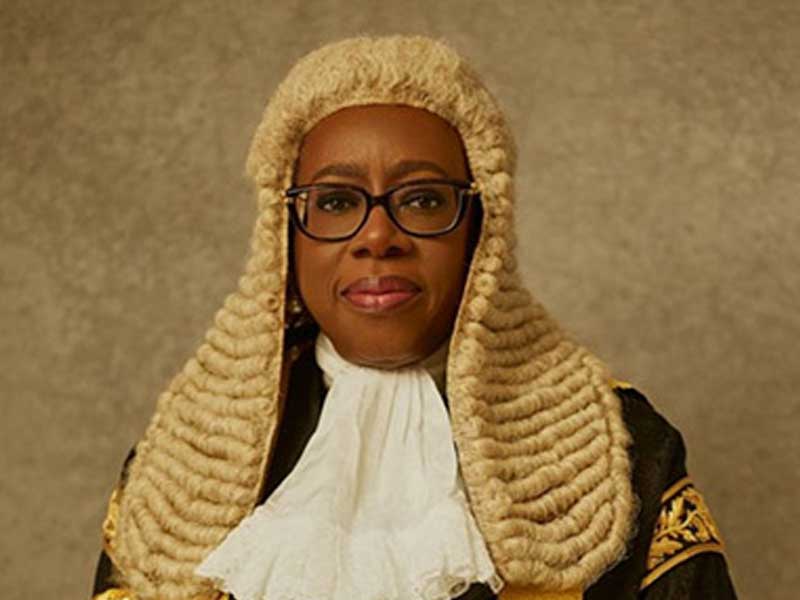
The country’s turbulent political landscape witnessed another twist on Tuesday as the Court of Appeal in Abuja slammed the brakes on the controversial deregistration of several political parties, delivering a stinging rebuke to the Federal High Court and throwing fresh light on the growing controversy surrounding the conduct of electoral and judicial institutions.
Nigerians are watching to see if the rebuke will lead to a petition from angry politicians to the National Judicial Council (NJC) asking for a head.
In a decision already generating intense political and legal debate, the appellate court suspended the enforcement of a judgment delivered by Justice Peter Lifu which had ordered the deregistration of affected political parties, including platforms associated with several prominent politicians.
The ruling effectively restores the parties’ legal status pending the determination of the substantive appeal and offers immediate relief to politicians, supporters and stakeholders whose political futures had been plunged into uncertainty by the lower court’s decision.
But beyond the legal reprieve, the Court of Appeal’s verdict opened another chapter in an unfolding institutional confrontation, raising uncomfortable questions about judicial discipline, obedience to superior court orders and the role of the Independent National Electoral Commission (INEC) in implementing controversial judgments.
Appeal Court’s Scathing Verdict
In unusually strong language, the appellate court accused Justice Lifu of proceeding with a matter that was already before the Court of Appeal and doing so despite an existing order restraining further action.
The panel described the trial judge’s conduct as a direct challenge to judicial hierarchy and constitutional order.
According to the court, the decision to proceed and deliver judgment while appellate proceedings were pending amounted to a clear disregard for the authority of a superior court.
The justices did not mince words.
They characterized the action as “the highest form of judicial impertinence” and cited previous Supreme Court authorities which condemned similar conduct as judicial rascality.
The court emphasized that no judge, regardless of rank or conviction, possesses the authority to disregard orders issued by a superior court.
“Courts are enjoined to protect their integrity. This court has supervisory authority over the trial court,” the appellate panel held.
The judges further warned that the survival of constitutional democracy depends on strict adherence to the hierarchy of courts and respect for judicial processes.
Consequently, the court granted an application for stay of execution and ordered that enforcement of the controversial judgment be suspended immediately.
With that order, the deregistration directive ceased to have legal effect pending the outcome of the appeal.
Political Parties Return From The Brink
For the affected parties and their members, the ruling represents a political rescue.
The earlier judgment had threatened to wipe several parties off Nigeria’s electoral map, potentially affecting thousands of party officials, candidates and supporters nationwide.
Political actors who had begun weighing difficult options, including defections and emergency alliances, suddenly found themselves back in the game.
The decision also reopens calculations ahead of future elections, particularly among politicians seeking alternative platforms outside the dominant parties.
Several political observers noted that the deregistration order, if implemented, would have significantly altered Nigeria’s political architecture by reducing the number of available electoral platforms.
Now, those parties remain legally recognized while the legal battle continues.
INEC Under Renewed Spotlight
The ruling is also expected to reignite debate over INEC’s handling of court orders involving political parties.
The electoral commission had previously come under criticism from some stakeholders over allegations that it showed reluctance in implementing aspects of earlier judicial decisions linked to party registration and recognition disputes.
Although INEC has consistently maintained that it acts strictly within the law and complies with valid court orders, critics have questioned what they describe as selective urgency in the commission’s response to judicial pronouncements.
The Court of Appeal’s intervention now places the commission in a delicate position.
Legal experts argue that the stay of execution leaves no room for enforcement of the deregistration order and effectively restores the status quo until the appeal is determined.
Any contrary action, they warn, could deepen concerns about institutional compliance with judicial directives.
Growing Concerns Over Judicial Discipline
Beyond the political implications, the case has triggered concerns within legal circles about judicial accountability and discipline.
Senior lawyers say the unusually harsh criticism contained in the appellate ruling reflects the seriousness with which higher courts view defiance of judicial hierarchy.
Some legal analysts describe the development as one of the most direct institutional rebukes of a lower court in recent years.
According to them, the controversy underscores the importance of maintaining order within the judicial system, particularly in politically sensitive matters capable of affecting electoral stability.
They warn that conflicting court decisions and perceived disregard for appellate authority risk undermining public confidence in the judiciary.
Democracy At A Crossroads
The latest development comes at a time when public trust in democratic institutions is already facing significant tests.
From disputes over party registration and deregistration to battles over candidate nominations and election outcomes, Nigerian courts have increasingly become central actors in determining political fortunes.
Many argue that while judicial intervention remains an essential safeguard for democracy, the effectiveness of that role depends largely on consistency, discipline and respect for established legal procedures.
For now, the Court of Appeal has spoken decisively.
The affected political parties remain alive.
The deregistration order stands suspended.
And both the judiciary and INEC find themselves under renewed public scrutiny as Nigerians watch closely to see how the next chapter of the legal and political contest unfolds.
What began as a dispute over the fate of a handful of political parties has now evolved into a conversation about constitutional authority, judicial responsibility and the integrity of institutions entrusted with safeguarding Nigeria’s democracy.