
He Claimed He Deserved a Second Class Upper Degree, but His University Insisted on a Second Class Lower. So, Who Was Right?
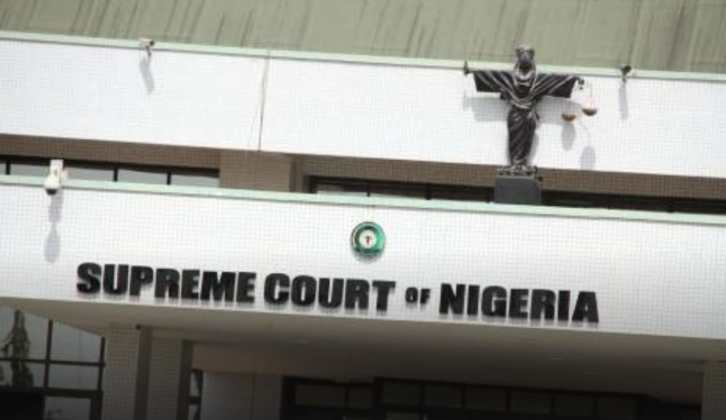
A Blow-by-Blow Account of Victor v. Federal University of Technology, Akure (2026) 8 NWLR (Pt. 2044) 33
By Isah Bala Garba
Every lawsuit tells a story. Some tell stories of contracts breached, properties disputed, or crimes prosecuted. Others tell stories of resilience. But few tell a story as compelling as that of Mr. Adebayo A. Victor—a determined graduate who spent nearly two decades fighting for what he believed was rightfully his.
This was not merely a legal battle over examination scores. It was a contest between an individual and an institution; between persistence and bureaucracy; between a student’s conviction and a university’s insistence that its decision was final.
In the end, the question was simple:
Who was right?
The answer would take years, multiple court appearances, and a journey through every level of Nigeria’s judicial hierarchy before it finally emerged.
The Beginning of the Dispute
In 2007, Mr. Victor graduated from the Federal University of Technology, Akure (FUTA), with a degree in Mechanical Engineering.
When his final results were released, he was awarded a Second Class Lower Division degree.
Most graduates in similar circumstances would have accepted their fate and moved on. Victor did not.
He was convinced that errors had occurred in the recording of some of his examination scores. According to him, if those scores were properly reviewed and accurately reflected, he would qualify for a Second Class Upper Division degree.
Determined to establish the truth, he requested the remarking of several courses, including MEE 202, MEE 301, MEE 302, MEE 305, MEE 307, MEE 308, MEE 309, MEE 311, MEE 312, and MEE 352.
His request was straightforward: let the scripts be re-examined.
The university declined.
Four Years of Persistence
From 2007 to 2011, Victor pursued every available avenue within the university system.
He wrote letters.
He made representations.
He sought administrative remedies.
Yet his requests continued to meet resistance.
The university remained unmoved.
For many students, that would have marked the end of the road.
For Victor, it was merely the beginning.
The Unlikely Litigant
In August 2011, Victor took an extraordinary step.
He approached the Federal High Court, Lagos Division.
His demands were bold. He asked the court to compel the university to have his examination scripts remarked by independent assessors, issue a corrected transcript and certificate where necessary, and compensate him for the losses he claimed to have suffered.
What made this particularly remarkable was that Victor was not a lawyer.
Indeed, throughout the years that followed, he personally prosecuted the matter himself.
He would eventually represent himself all the way to the Supreme Court of Nigeria.
First Defeat
The case initially ended in disappointment.
On 16 January 2013, the Federal High Court dismissed the action, holding that it was statute-barred.
The university celebrated victory.
Victor refused to surrender.
He appealed.
The First Victory
The Court of Appeal saw things differently.
On 29 November 2013, the appellate court held that Victor’s claim was not statute-barred.
The judgment of the Federal High Court was set aside.
A retrial was ordered.
Victor had won the first major round.
Back to the Trial Court
The parties returned to the Federal High Court.
Fresh pleadings were filed.
Evidence was presented.
Witnesses testified.
The matter proceeded through a full trial.
Then, on 28 September 2017, judgment was delivered.
This time, the court substantially agreed with Victor.
The court ordered the university to have his examination scripts remarked by external examiners.
It also directed the institution to issue a final result and transcript reflecting his actual performance.
Additionally, the court awarded him ₦500,000 as general damages.
Victor had achieved a significant breakthrough.
But the war was far from over.
Nobody Was Fully Satisfied
The university was dissatisfied with the judgment and appealed.
Victor, despite his victory, also believed the judgment fell short of adequately compensating him.
By his account, he had endured years of frustration and uncertainty.
More significantly, he claimed that the controversy surrounding his degree classification had cost him the opportunity to benefit from the Nigeria Agip Exploration 2010/2011 International Postgraduate Scholarship—a fully funded Master’s programme in the United Kingdom.
Consequently, he filed a cross-appeal.
Thus, both parties proceeded to the Court of Appeal.
The Court of Appeal Speaks
At the appellate court, one of the key issues concerned documents previously rejected by the trial court.
The Court of Appeal held that several of those documents were private documents and did not require certification before admission.
The court also criticised the university’s conduct regarding certain documents it had failed to produce despite receiving notice to do so.
The court observed that a party could not withhold documents and later complain that the opposing side failed to prove facts contained in those same documents.
As later echoed by Ogunwumiju, JSC:
“Justice is not a fencing game where one party seeks to outsmart the other.”
Ultimately, the Court of Appeal dismissed the university’s appeal.
Victor’s cross-appeal succeeded only partially.
He was awarded additional costs of ₦50,000 at trial and ₦200,000 on appeal.
Yet neither side was satisfied.
And so, both parties headed for the Supreme Court.
The Remarking That Changed Everything
Before the Supreme Court could fully determine the university’s appeal, a significant development occurred.
The university finally complied with the court orders directing the remarking of Victor’s examination scripts.
The outcome was astonishing.
The remarking exercise confirmed what Victor had maintained from the very beginning.
His degree classification was upgraded from Second Class Lower Division to Second Class Upper Division.
He had been right all along.
The university subsequently issued a corrected transcript and certificate reflecting his true academic standing.
At one stage of the proceedings, these documents were physically handed over to Victor in open court.
The institution also informed the court that it had paid the damages and costs previously awarded.
Recognising these developments, the university withdrew its appeal, which was dismissed on 21 June 2022.
The Final Question Before the Supreme Court
Only one issue remained.
Was the compensation awarded to Victor sufficient?
Victor argued that it was not.
He urged the Supreme Court to consider the years of emotional distress, frustration, lost opportunities, repeated travels, financial hardship, and uncertainty he had endured.
The appeal came before a distinguished panel comprising:
John Inyang Okoro, JSC (Presiding)
Helen Moronkeji Ogunwumiju, JSC
Obande Festus Ogbuinya, JSC
Stephen Jonah Adah, JSC
Abubakar Sadiq Umar, JSC
Justice Ogunwumiju delivered the lead judgment.
Universities Have Autonomy—But Not Unlimited Power
The Supreme Court reaffirmed a well-established principle.
Universities possess exclusive authority to determine academic standards and award degrees.
Courts generally refrain from interfering in academic judgments.
However, the Court made it equally clear that academic autonomy is not a licence for arbitrariness.
A university owes its students a duty of care.
That duty extends beyond teaching and examinations.
It includes fair procedures, transparent administration, proper complaint resolution mechanisms, competent supervision, and responsible decision-making.
The Court found that Victor had persistently complained about his results for years.
Despite those complaints, the university failed to adequately investigate or review his concerns until compelled by judicial orders.
Such conduct, the Court held, amounted to a breach of the duty of care owed to him.
The Damages Question
The Supreme Court then turned to damages.
While some of Victor’s claims for specific financial losses were not sufficiently proved, the Court found overwhelming evidence that he had suffered substantial emotional distress, inconvenience, frustration, hardship, and loss of opportunities.
By 2017, when the trial court awarded ₦500,000, Victor had already endured approximately ten years of struggle.
The Supreme Court considered that award manifestly inadequate.
Compensation, the Court observed, must be genuinely compensatory and not merely symbolic.
Then came the moment that transformed the case.
The Supreme Court set aside the ₦500,000 award and replaced it with ₦18,000,000 as general damages.
In addition, the Court awarded ₦2,000,000 as litigation costs.
The total monetary award stood at ₦20,000,000.
Complete Vindication
Victor emerged from the litigation with two extraordinary victories.
First, he obtained the Second Class Upper Division degree classification he had pursued since 2007.
Second, he secured ₦20 million in compensation and costs for the hardship occasioned by the university’s breach of duty.
For a man who was not a legal practitioner, this achievement was nothing short of remarkable.
He lost at the first stage.
He appealed.
He secured a retrial.
He won.
He defended that victory before the Court of Appeal.
He defended it again before the Supreme Court.
And ultimately, he was vindicated.
The Enduring Lesson
The significance of Victor v. FUTA extends beyond one student’s academic records.
The decision stands as a powerful reminder that while universities enjoy substantial academic autonomy, that autonomy must be exercised responsibly, fairly, and with due regard for the interests of students whose futures often depend on administrative decisions.
Courts may be reluctant to interfere in academic matters.
But where a university neglects its duty of care, ignores legitimate complaints, or subjects a student to avoidable hardship, judicial intervention remains available.
Above all, this case is a testament to perseverance.
It demonstrates that determination, patience, and faith in lawful processes can sometimes overcome even the most formidable institutional resistance.
And perhaps that is the greatest lesson of all.
● Bala Garba, is a Level 400 Student, Common and Islamic Law; Senior Advocate of Bayero University, Kano (SABUK). Author of numerous legal articles and case analyses written in clear and accessible language.