
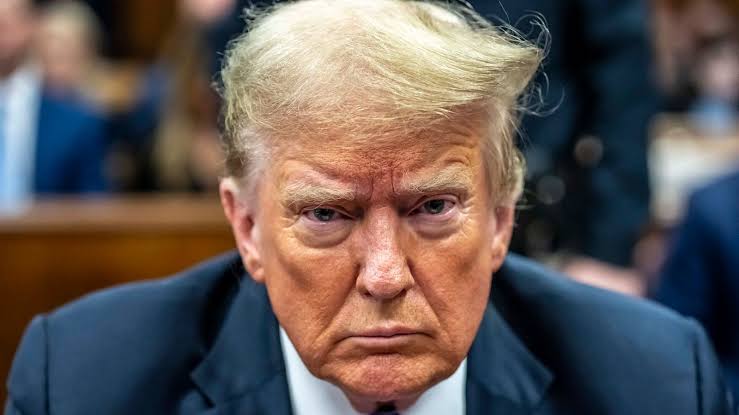
United States President Donald Trump directed the Pentagon to prioritize the protection of Christians targeted by ISIS-linked terrorists in Nigeria, U.S. Secretary of War Pete Hegseth disclosed during a White House cabinet meeting on Wednesday.
Hegseth said the directive, issued about a year ago, led to expanded intelligence-sharing and coordinated military operations between the United States and Nigeria that recently culminated in the killing of Abu-Bilal al-Minuki, described by U.S. officials as ISIS’ second-in-command in Nigeria and the wider Lake Chad region.
Speaking during the cabinet session chaired by President Trump, Hegseth stated that the American president acted after receiving reports of escalating attacks against Christian communities in parts of northern Nigeria.
“To give you a sense of how committed this president is, maybe a year ago, he heard the call of Nigerian Christians who are being targeted and killed by ISIS in Nigeria,” Hegseth said.
“He said, ‘Pete, I want the War Department to focus on ensuring that we do whatever we can to protect those Christians.’”
According to Hegseth, the operation required months of behind-the-scenes coordination and deployment of military assets before the mission was fully executed.
“Partnerships like that can take some time behind the scenes, but he never wavered on it. We got the assets there over the last month. There has not been much coverage of this,” he added.
The U.S. official further disclosed that intelligence gathered during the mission contributed to the deaths of “hundreds” of ISIS fighters allegedly linked to attacks on Christian communities and plots against U.S. interests.
“We killed ISIS’ number two in Nigeria, who is most responsible for killing Christians and trying to target the U.S. homeland,” Hegseth declared.
The Pentagon later confirmed that al-Minuki was killed during a joint U.S.-Nigerian counterterrorism operation in the Lake Chad Basin on May 15. U.S. Africa Command reportedly provided intelligence, surveillance and operational support during the strike.
The development marks one of the most significant publicly acknowledged U.S. counterterrorism operations in Nigeria in recent years. Reports indicate that the operation followed months of heightened cooperation between Washington and Abuja amid growing concerns over attacks by Islamic State West Africa Province (ISWAP) fighters and other extremist groups operating across northeastern Nigeria and the Sahel region.
The comments have also reignited international debate over religious violence and insecurity in Nigeria. While U.S. officials linked the operation to the protection of persecuted Christians, Nigerian authorities have repeatedly maintained that terrorism in the country affects both Christians and Muslims alike.
Watchers observe that extremist violence in Nigeria has displaced millions of people over the past decade, particularly in Borno, Yobe and Adamawa states, where insurgent groups including Boko Haram and ISWAP remain active despite sustained military offensives.
President Trump’s administration has in recent months adopted a more aggressive posture toward Islamist militant groups operating in Africa. The U.S. military strikes had targeted ISIS camps in Nigeria during the 2025 Christmas period following renewed threats against civilian populations.
Hegseth’s remarks are likely to generate mixed reactions internationally, especially amid ongoing scrutiny of the Trump administration’s increasingly faith-centered national security rhetoric.
Neither the Nigerian Presidency nor the Defence Headquarters in Abuja had issued an official response to Hegseth’s latest comments.