
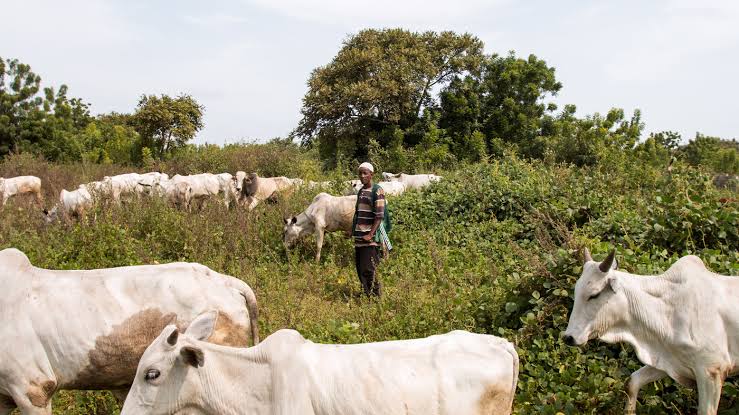
Nigeria is facing an escalating wave of terror as an estimated 30,000 armed Fulani militants spread violence from the North through the Middle Belt and increasingly into the South, according to a chilling new report by the United States Commission on International Religious Freedom (USCIRF).
The explosive May 2026 report paints a grim portrait of a nation under siege, where entire communities are being uprooted, churches and mosques attacked, and worshippers abducted or slaughtered in coordinated raids that have left thousands dead and more than 1.3 million displaced.
USCIRF described Fulani militants as perpetrators of “some of the most visible and deadly attacks” linked to religious freedom violations in Nigeria, warning that the crisis has spiraled into a nationwide emergency fueled by a toxic cocktail of violent extremism, land disputes, poverty, banditry, and religious tension.
According to the report, the militants — operating in cells ranging from 10 to 1,000 fighters — wield automatic weapons, machetes, and motorcycles to launch lightning assaults on isolated communities, often under the cover of darkness.
“They often descend on vulnerable communities during the night, eliciting terror as a way to force victims to quickly leave and to achieve greater control of desired land,” the report stated.
The violence has spared neither Christians nor Muslims.
While Christian communities in Plateau, Benue, Kaduna, and parts of the South have borne the brunt of the bloodshed, Muslim herders and worshippers have also come under attack from armed groups and rival militants.
Among the most horrifying incidents highlighted in the report was the June 2025 massacre in Benue State, where at least 200 people — including internally displaced persons sheltering in a Catholic mission — were killed in an attack blamed on Fulani militants.
That same month, another massacre in Yelwata, Benue State, reportedly left more than 200 Christians dead, most of them women and children asleep in their homes, while over 3,000 residents fled for safety.
The report said militants have increasingly targeted religious holidays to maximize psychological impact, striking during Christmas, Easter, and Palm Sunday celebrations.
On Easter Sunday this year, gunmen reportedly stormed churches in Kaduna State, killing five worshippers and abducting 31 others. A week earlier, attackers massacred at least 28 people in a heavily Christian area of Plateau State.
USCIRF also documented widespread kidnappings for ransom, sexual violence, and attacks on clergy.
In February 2026 alone, suspected militants abducted an imam and seven worshippers from a mosque in Plateau State, demanding a ransom of N16 million. The same month, armed assailants attacked Holy Trinity Parish in Kaduna, killing three people and abducting 11 others, including parish priest Father Nathaniel Asuwaye.
The report alleged that some hostages are being held in remote forest camps such as the notorious Rijana Forest in Kaduna State, where victims reportedly endure brutal sexual assaults and torture.
USCIRF sharply criticized Nigerian authorities, accusing security agencies of being “consistently slow” in responding to attacks and warning that allegations of bias, incompetence, and even collusion with perpetrators continue to undermine public trust.
“Criticism of responses to Fulani militant violence from federal and state authorities has often described their responses as unsatisfactory at best and complicit at worst,” the report declared.
The Tinubu administration has, however, intensified countermeasures in recent months.
Following Nigeria’s designation by former U.S. President Donald Trump in October 2025 as a “Country of Particular Concern” over religious freedom abuses, President Bola Ahmed Tinubu moved to officially classify violent kidnapping gangs and Fulani militant groups as terrorists.
Security forces reportedly rescued 309 hostages in coordinated operations across Kogi and Kwara states in January 2026, arresting 129 suspected militants and killing 55 others.
The report also highlighted growing international pressure on the controversial Miyetti Allah Cattle Breeders Association of Nigeria (MACBAN), which has long faced accusations of failing to rein in violent elements within Fulani communities.
In February 2026, members of the U.S. Congress introduced the Nigeria Religious Freedom and Accountability Act, proposing sanctions against MACBAN over alleged complicity in severe religious freedom violations.
Despite fresh peace initiatives and attempts to establish ranching programmes aimed at reducing clashes between herders and farmers, USCIRF warned that Nigeria remains trapped in what it described as an “intense, daily, and seemingly perpetual crisis of insecurity.”
The commission concluded that unless urgent and far-reaching reforms are implemented, millions of Nigerians may continue to live under the shadow of fear, displacement, and bloodshed.