
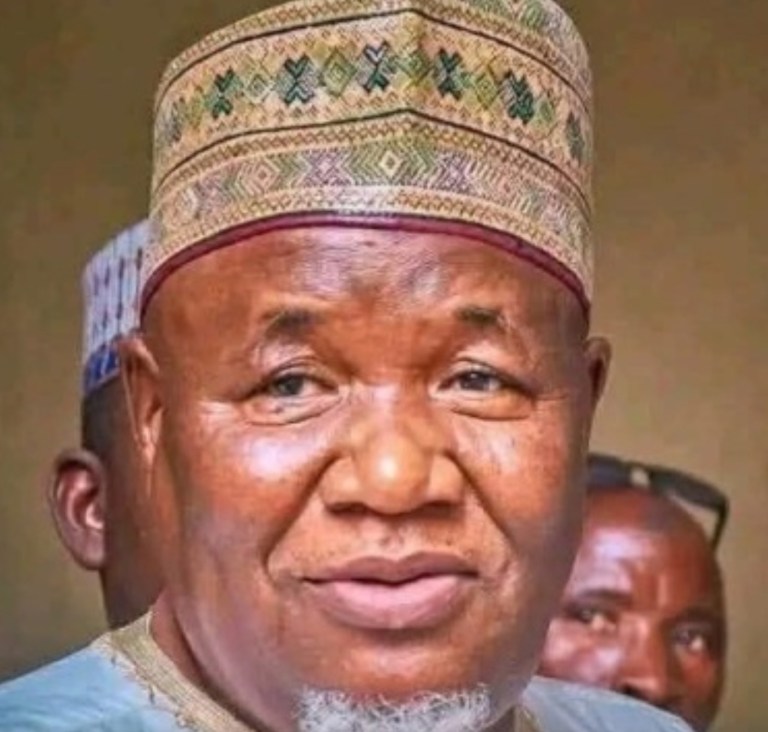
The death of former Jigawa lawmaker Abba Anas Adamu after weeks in captivity has reopened one of Nigeria’s deepest national wounds: the grim reality that ransom payments no longer guarantee survival.
Reports say Adamu and his associate, Ali Tukur Gantsa, were kidnapped along the notorious Abuja–Kaduna highway while travelling from Kano to Abuja for a political meeting. The abductors allegedly began negotiations at ₦200 million, reduced the demand several times, and finally accepted ₦50 million. But by the time the money changed hands, Adamu was already dead. Family members said the former lawmaker – who reportedly suffered from asthma and hypertension – deteriorated in captivity after days without medication.
What makes the story especially haunting is not only the ransom, but the final journey. The kidnappers reportedly directed relatives to the outskirts of Jere, along the Abuja-Kaduna Expressway, where the body was abandoned like cargo after negotiations ended. Gantsa survived and accompanied the corpse back toward Kano for burial arrangements.
But this tragedy is not isolated. Across northern and central Nigeria, kidnapping has evolved from opportunistic crime into an entrenched economy – one where fear, desperation, and negotiation have become routine parts of ordinary life.
For families, the process often follows a painfully familiar script. A phone rings in the middle of the night. A trembling voice is forced onto the line to prove the victim is alive. An impossible ransom demand arrives first – ₦100 million, ₦200 million, even ₦1 billion in some mass abductions. Then comes bargaining, frantic fundraising, land sales, borrowed money, community donations, and negotiations conducted in whispers.
Sometimes the victims come home.
In 2021, former Jigawa assembly member Haladu Bako Uza regained freedom after kidnappers reportedly collected ₦1.5 million. He had been abducted along the Kano–Hadejia road.
In 2025, kidnapped NYSC member Rofiat Lawal was released after friends, relatives, and sympathizers pooled together ₦1.1 million. Her abductors had initially demanded ₦20 million. According to people involved in the negotiations, contributors donated what they could until enough money was raised to secure her freedom.
Yet increasingly, families discover that payment is no longer the end of the nightmare.
In Zamfara State, at least 35 kidnapped villagers were reportedly killed even after ransoms had been paid for their release. Survivors described young people “slaughtered like rams.”
In Ekiti, one recent case shocked many Nigerians because abductors allegedly demanded money not for a living hostage, but for the release of a corpse after a woman reportedly died in captivity.
The emotional toll on families rarely makes headlines. Relatives often spend days waiting beside charged phones, terrified of missing calls from kidnappers. Some families avoid notifying authorities out of fear negotiations could collapse. Others quietly liquidate businesses, farms, or lifelong savings to raise money. By the time victims return – if they return – many households are financially ruined.
The Abuja–Kaduna highway where Adamu was abducted has long symbolized this insecurity. Once one of the country’s busiest transport corridors, it became infamous for kidnappings targeting commuters, politicians, clergy, students, and traders. Travellers now routinely debate whether to fly, join armed convoys, or avoid the route entirely after dark.
The crisis has reshaped daily life across parts of Nigeria. According to international reporting and security analysts, thousands of people have been abducted in recent years, with schoolchildren among the most vulnerable targets. Since the 2014 Chibok abductions, more than 1,500 students have reportedly been kidnapped in school raids across the country.
Successive governments have publicly opposed ransom payments, arguing they fuel the cycle of abduction. President Bola Tinubu has repeatedly stated that the government should not pay kidnappers.
But for many families, such declarations collapse under the immediacy of a loved one’s suffering.
In countless villages and urban neighbourhoods, the calculation becomes brutally personal: refuse to pay and risk death, or pay and hope the kidnappers keep their word.
The story of Abba Anas Adamu sits at the cruel intersection of those choices. A former lawmaker with a medical condition, travelling for politics, reduced to a hostage whose life became part of a negotiation. His family reportedly paid millions hoping to bring him home alive. Instead, they received directions to a body abandoned on a roadside.
And in that detail lies the deepest horror of the country’s kidnapping crisis – not only that people are taken, but that even after families surrender everything they have, there is sometimes no rescue left to buy.
● Other Reports on Everyday.ng
FG Reaffirms Commitment to $1tn Economy as Each State Gets Over N700b Monthly
FG Reaffirms Commitment to $1tn Economy as Each State Gets Over N700b Monthly
Cleric admits receiving money to pray for alleged coup plot against Tinubu
Cleric admits receiving money to pray for alleged coup plot against Tinubu
Kogi West Elders Assembly Commends Tinubu Over Ministerial Appointment, Raises Alarm Over APC Crisis
Kogi West Elders Assembly Commends Tinubu Over Ministerial Appointment, Raises Alarm Over APC Crisis
JAMB puts varsity cut off mark at 150, FG excludes candidates from UTME
JAMB puts varsity cut off mark at 150, FG excludes candidates from UTME
Major-General Famadewa appointed Adviser on Homeland Security
Major-General Famadewa appointed Adviser on Homeland Security
Nigeria’s Security Crisis Deepens After U.S. Christmas Airstrikes, New Report Reveals
Nigeria’s Security Crisis Deepens After U.S. Christmas Airstrikes, New Report Reveals
Fubara left hanging as allies disqualified from Assembly primaries
Fubara left hanging as allies disqualified from Assembly primaries
APC’s 2027 Screening Drama: How Fubara’s Walkout Exposed the Cracks in Ruling Party
APC’s 2027 Screening Drama: How Fubara’s Alleged Walkout Exposed the Cracks in Ruling Party
Plateau: Attacks claim more lives, residents lament living in fear
Plateau: Attacks claim more lives, residents lament living in fear
Expectations Rise Ahead of Prof. Chima Onoka’s 241st UNN Inaugural Lecture
Expectations Rise Ahead of Prof. Chima Onoka’s 241st UNN Inaugural Lecture
Grief as two separate accidents claim 27 lives