
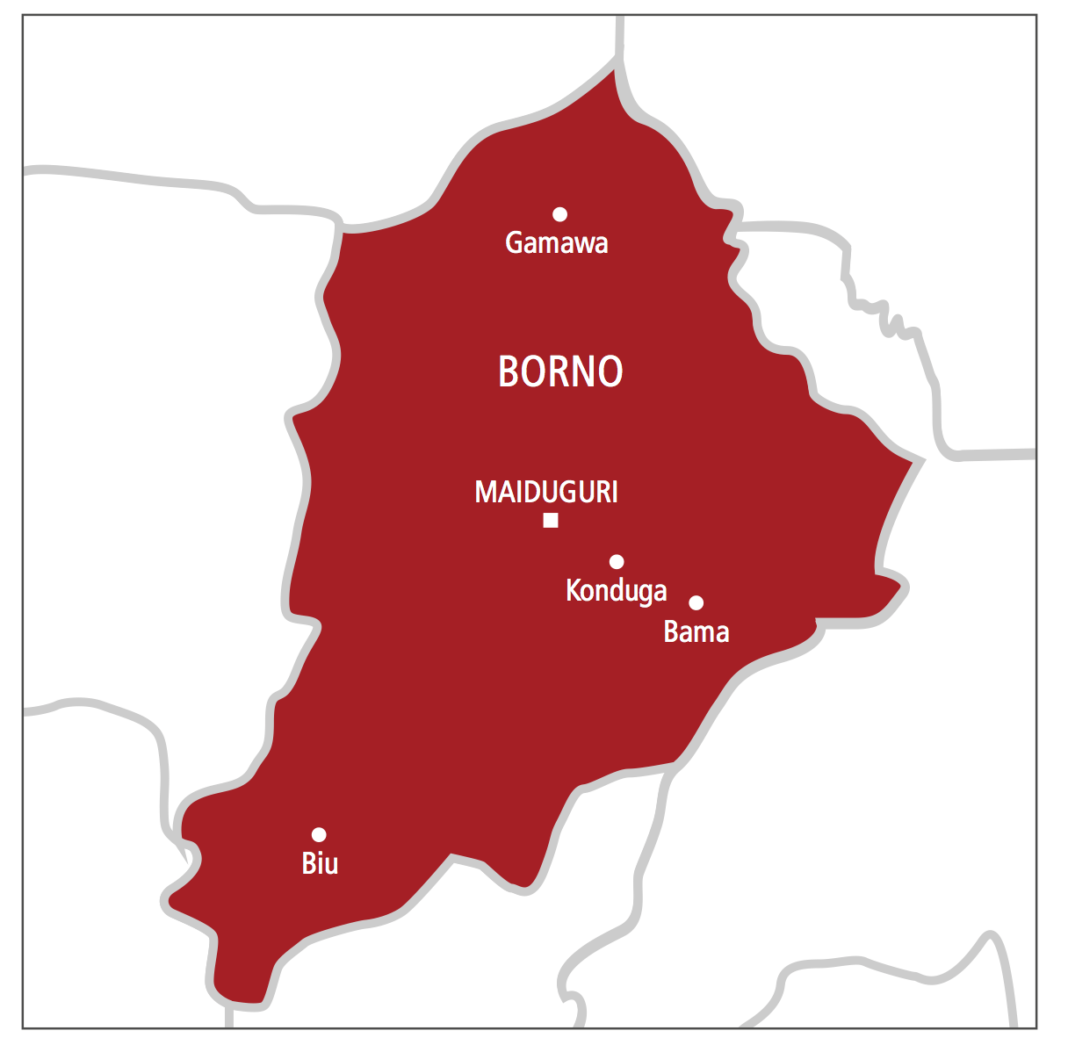
For Maiduguri, the Borno State capital, it was another painful chapter – but not the end of the story as panic, grief and disbelief swept through on Monday night after a wave of coordinated explosions tore through busy civilian locations, killing at least 23 people and injuring more than 100 in one of the deadliest attacks the city has witnessed in recent years.
The blasts, which occurred around 7:00 p.m., struck crowded and symbolic locations – the bustling Monday Market, the vicinity of the University of Maiduguri Teaching Hospital, and the Post Office Flyover — turning what began as a routine evening into scenes of chaos and carnage.
Authorities said the attacks were carried out by suspected suicide bombers using improvised explosive devices (IEDs), detonated almost simultaneously in a pattern that suggested careful planning and a clear intent to maximise casualties.
Eyewitnesses described a city plunged into confusion; victims screaming for help, abandoning goods mid-sale, and families desperately searching for loved ones in the aftermath. Hospitals were quickly overwhelmed as emergency responders raced against time, with some residents reportedly donating blood to assist the injured.
Police spokesman ASP Nahum Kenneth Daso confirmed the casualty figures, while noting that investigations were ongoing. No group has officially claimed responsibility, but security analysts point to familiar patterns associated with insurgent groups such as Boko Haram and its rival faction, the Islamic State West Africa Province, both of which have long operated in the region.
The City on Edge Again
For many residents, the attacks shattered a fragile sense of normalcy that had gradually returned after years of violence.
Once regarded as the epicentre of Nigeria’s insurgency, Maiduguri had in recent years enjoyed relative calm, with improved security presence and a revival of commercial activity. Monday’s attacks, however, have reignited fears of a resurgence in urban terror tactics.
“This feels like the old days,” a trader near Monday Market said, still visibly shaken. “We thought those times were behind us.”
Security experts say the choice of targets – a market, a hospital area, and a major traffic area – underscores a deliberate strategy to spread fear, disrupt economic life, and stretch emergency response systems.
In the immediate aftermath, a combined deployment of police tactical units, military personnel, and other joint security operatives moved swiftly to secure affected areas.
Explosive Ordnance Disposal (EOD) teams conducted thorough sweeps to detect any secondary devices, while roads leading into key facilities were cordoned off.
The Commissioner of Police, CP Naziru Abdulmajid, led a high-level assessment of the scenes, meeting victims and assuring residents of reinforced security measures across the city.
Emergency agencies, including the National Emergency Management Agency (NEMA) and the Borno State Emergency Management Agency (SEMA), coordinated evacuations, transporting the wounded to hospitals already struggling with the surge in casualties.
The attack is the latest reminder that, despite military gains, the insurgency that has plagued northeast Nigeria for over a decade remains far from over.
Borno State has been at the heart of this conflict, which has killed thousands and displaced millions. Even in recent months, isolated parts – including a deadly mosque bombing late last year – signaled that militant groups retain the capacity to strike soft targets.
Governor Babagana Umara Zulum condemned the latest violence as “barbaric,” urging residents to remain vigilant while reaffirming the government’s commitment to restoring peace.
By Tuesday morning, security patrols had intensified across Maiduguri, with a visible presence of armed personnel at major junctions, markets and public institutions.
Yet beneath the enhanced security lies a population grappling with renewed anxiety.
Residents have been urged to stay calm, avoid crowded places when possible, and report suspicious movements – a familiar refrain in a city that knows too well the cost of complacency.
Still, amid the fear, there are signs of resilience: neighbours helping neighbours, volunteers assisting at hospitals, and traders cautiously reopening shops.