
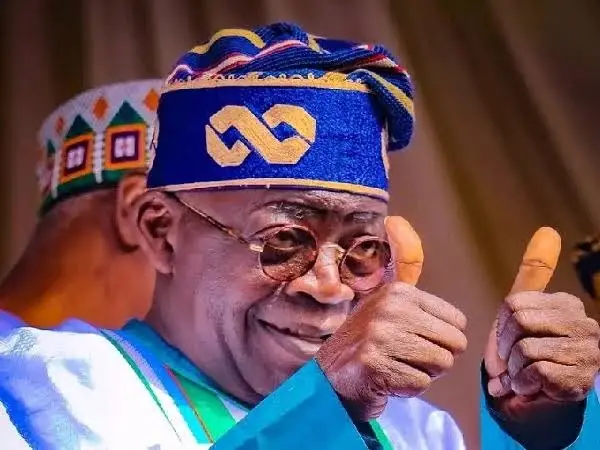
A biblical story has unexpectedly become the centre of a political and religious controversy, following President Bola Ahmed Tinubu’s declaration that the country would never return to Egypt, a statement that has drawn a sharp response from Islamic cleric Sheikh Saleh Muhammad Jimeta.
What began as an attempt by the President to defend his economic reforms has evolved into a heated exchange involving religion, political symbolism, the First Lady, and the growing debate over whether Nigerians are any closer to the economic freedom they were promised.
At the heart of the controversy is Moses, the revered prophet known in Islam as Musa, whose leadership of the Israelites out of Egyptian bondage is one of the most significant narratives shared by Islam, Christianity and Judaism.
But while Tinubu invoked the story as a metaphor for Nigeria’s economic direction, Jimeta has offered a strikingly different interpretation, insisting that Moses could still return to Egypt for further liberation.
The exchange has raised a fundamental question: Has Nigeria truly crossed its Red Sea, or is the country still waiting for its promised land?
Tinubu’s declaration: No going back to Egypt
Speaking on October 19, 2026, at an event organised by the City Boy Movement in Abuja, Tinubu recalled the story of Moses leading the Israelites out of Egypt.
Defending his administration’s removal of the petrol subsidy, the President reportedly said that when Moses and Musa left Egypt, they encountered challenges, but the Red Sea eventually parted to make way for them.
His message was unmistakable.
Just as Moses could not be expected to return to Egypt after leading his people out of bondage, Nigeria, in his view, should not return to the economic arrangement it had abandoned.
The President’s reference to Egypt was essentially a metaphor for the previous economic system, particularly the petrol subsidy regime, which his administration discontinued shortly after assuming office in May 2023.
For Tinubu, the removal of subsidy represents a difficult but necessary departure from an unsustainable economic arrangement. The hardships accompanying the transition, he suggested, should not become reasons to reverse the policy.
His declaration that Nigeria would never return to Egypt was therefore both an economic argument and a political statement of determination.
However, the metaphor has not gone unchallenged.
Sheikh Jimeta’s counter-declaration: Moses shall return
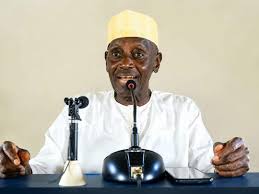
In a response that has since generated considerable attention, Islamic cleric Sheikh Saleh Muhammad Jimeta challenged the President’s interpretation of the Exodus narrative.
During a Jumu’ah sermon, Jimeta reportedly declared that Moses would eventually return to Egypt for further liberation.
His words directly contradicted Tinubu’s political imagery.
Where the President had presented the departure from Egypt as a journey that must never be reversed, the cleric suggested that liberation might not be complete and that another intervention could become necessary.
Jimeta also questioned the President’s use of Moses in the context of defending his administration’s economic policies.
For the cleric, Moses is not merely a convenient political symbol but a prophet of Allah whose story carries profound religious significance.
His response went beyond theological disagreement, however. He reportedly invoked Allah’s curse against Tinubu and his supporters and made extremely serious accusations about the President’s religious identity.
The allegations remain the cleric’s own assertions.
Nevertheless, his intervention has transformed what might have remained an argument over economic policy into a religious and political controversy.
Why Remi Tinubu was dragged into the controversy

Perhaps one of the more intriguing aspects of Jimeta’s intervention was his reference to First Lady Oluremi Tinubu.
The cleric reportedly suggested that the President’s statement about Moses and Egypt echoed something his wife had said previously.
He was quoted as saying: “The same thing his wife Remi said before. After all, she was the one who taught him.”
The remark introduced another dimension into the controversy, bringing the First Lady into a debate that had initially centred on the President’s economic reforms.
It also raised questions about the context of the earlier statement allegedly made by Remi Tinubu.
While Jimeta’s allegation has been reported, the precise wording and circumstances of the First Lady’s purported earlier ccommentare fuzzy.
It would therefore be inappropriate to conclude that she taught the President the expression without establishing the original context.
Nevertheless, the reference has fuelled public discussion about the relationship between religious language, political messaging and the influence of the First Lady in the current administration.
The Exodus story and the Nigerian reality
Beyond the exchanges between Tinubu and Jimeta lies a more consequential question about the meaning of liberation in the Nigerian context.
In the biblical and Quranic narratives, Egypt represents the place from which the Israelites sought freedom. Pharaoh symbolises oppressive authority, while Moses emerges as the divinely appointed leader who guides his people towards liberation.
The Red Sea represents a seemingly impossible obstacle that is overcome through divine intervention.
The Promised Land represents the destination of freedom and fulfilment.
When these elements are applied to Nigeria’s economic circumstances, however, they invite difficult questions.
If Egypt represents the old economic system, who represents Pharaoh?
If Moses represents the leadership taking Nigerians away from an unsustainable subsidy regime, what constitutes the promised land?
And, perhaps most importantly, if millions of Nigerians are still struggling with the cost of food, transportation, housing and other necessities, can the journey reasonably be described as a successful liberation?
These questions strike at the heart of the debate surrounding Tinubu’s economic reforms.
The administration has consistently defended subsidy removal as a necessary step towards reducing government expenditure and creating fiscal room for development.
Critics, however, argue that the immediate consequences have placed an enormous burden on households and businesses.
For many Nigerians, the issue is not necessarily whether the country should return to the previous subsidy arrangement, but whether the government has provided sufficient relief and delivered the promised economic benefits.
A religious argument or a political protest?
Jimeta’s response can be understood on two levels.
On the religious level, he appears to be challenging what he considers an inappropriate use of a prophetic narrative in political communication.
On the political level, his insistence that Moses could return to Egypt can be interpreted as a criticism of the administration’s claim that the country must never reverse its current economic direction.
It suggests that a journey presented as liberation should not be considered complete merely because a departure has occurred.
There is, however, an important difference between questioning a political analogy and issuing religious condemnations against the person using it.
Disagreement over economic policy or religious interpretation does not, by itself, establish anyone’s religious identity or justify pronouncements about their standing before God.
The controversy therefore also raises questions about the responsibility of religious leaders and political officeholders when invoking sacred narratives in an increasingly polarised society.
Has Nigeria reached its promised land?
Ultimately, the most important characters in this unfolding story are not Tinubu, Jimeta or even Moses.
They are ordinary Nigerians.
For the trader struggling to replenish stock, the worker spending a substantial portion of monthly earnings on transportation, the family struggling to afford food, and the small business owner battling rising operating costs, the argument about Egypt and the Red Sea may sound distant.
What matters is whether life is becoming more affordable, whether incomes are improving, whether jobs are being created and whether the sacrifices demanded by government are producing tangible results.
Tinubu’s position is that Nigeria must keep moving forward rather than return to the previous economic arrangement.
Jimeta’s counterargument, expressed through the image of Moses returning to Egypt, raises the possibility that liberation may require further intervention.
Between these competing interpretations lies the central challenge of governance: economic reforms must ultimately be measured by their consequences for the people.
A country cannot permanently justify hardship by describing it as a journey through the wilderness. At some point, citizens must see evidence that the promised destination is within reach.
And perhaps that is the most important question emerging from the Moses controversy: If Nigeria has left Egypt, how much longer must Nigerians wait before they arrive at the Promised Land?