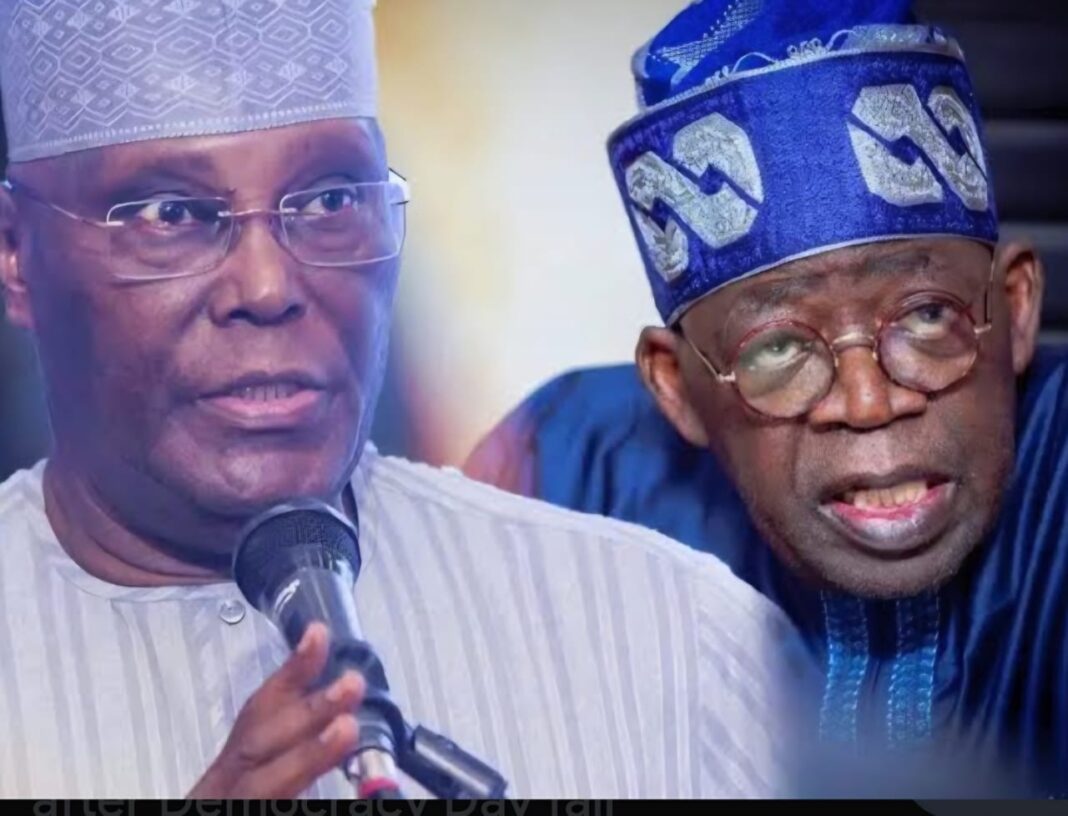
Paul Ibe, a spokesman for former Vice-President Atiku Abubakar, has challenged President Bola Tinubu to explain his immigration status and employment history in the United States following his recent revelation that he worked as a taxi driver to finance his university education.
Ibe said Tinubu’s account had raised fresh questions about his years in Chicago, particularly whether he had the necessary immigration authorisation to undertake off-campus employment while pursuing his education.
The opposition spokesman made the remarks incomments Facebook on Thuursday, November 5, following Tinubu’s disclosure that he drove a taxi and undertook other jobs to support himself financially during his stay in the United States.
In a post on his official X account on Wednesday, November 4, Tinubu recalled that he had to postpone starting school for several months after arriving in the United States to save enough money for his education.
“When I first arrived in the United States as a young man, I drove a taxi to earn money for my education. I even had to postpone starting school for several months to save enough,” the President said.
He added that after eventually moving to Chicago, he worked different jobs to support himself and pay his way through university.
Tinubu said the experience had influenced his administration’s commitment to expanding access to education, particularly through the Nigerian Education Loan Fund (NELFUND).
However, Ibe argued that the President’s account had opened another chapter in the controversies surrounding his American years, insisting that questions about the nature of his employment and immigration status deserved answers.
“In his latest account, Tinubu claims he drove a taxi and worked several jobs to finance his education, including during his years at Chicago State University. He needs to clarify if he was an ordinary taxi driver or a courier,” Ibe said.
He specifically questioned whether Tinubu entered the United States on an F-1 student visa and, if so, whether he obtained the necessary authorisation to undertake the jobs he described.
“Under US immigration rules, F-1 students generally require specific authorisation to undertake off-campus employment.
“So, what visa did Tinubu hold? Was he legally authorised to undertake the jobs he now claims to have performed? When exactly did he work as a taxi driver, and under what immigration status?” Ibe asked.
What US immigration regulations say
The questions raised by Ibe touch on an important aspect of American immigration law.
Under the United States’ immigration regulations applicable to foreign students, employment outside an approved academic arrangement was restricted.
A regulation published in the US Federal Register on November 22, 1978, and effective January 1, 1979, specifically prohibited F-1 students from undertaking off-campus employment, either independently or for an employer, unless prescribed conditions were satisfied.
These included demonstrating economic necessity, maintaining good academic standing, obtaining certification from an authorised school official and securing approval from immigration authorities.
The regulation also generally limited authorised employment during academic sessions to 20 hours weekly.
The historical regulations are relevant because Chicago State University records confirm that Tinubu attended the institution from August 1977 to June 1979, graduating with a bachelor’s degree in business administration.
However, the existence of these restrictions does not establish that Tinubu violated them. His actual immigration classification during the relevant period, the dates of his employment and whether he obtained any applicable authorisation have not been established by the available public records.
It is also unclear whether his taxi-driving activities occurred before he began his university studies or while he was enrolled.
These distinctions are important in determining which immigration rules applied to his circumstances.
Chicago controversy resurfaces
Ibe also connected the latest development to the longstanding controversy surrounding Tinubu’s financial dealings in the United States.
In 1993, the US government obtained a civil forfeiture order involving $460,000 held in a First Heritage Bank account in Tinubu’s name.
The forfeiture formed part of an investigation involving bank accounts associated with Tinubu and allegations of drug-related financial transactions.
The case has remained a subject of political controversy, particularly during the 2023 presidential election.
However, the distinction between forfeiture and criminal conviction is important. AFP Fact Check, examining the original American court documents in 2022, reported that the documents were authentic but did not establish that Tinubu had been indicted or convicted of a criminal offence.
Consequently, the forfeiture should not be presented as proof of a criminal conviction or as an established finding that Tinubu personally trafficked heroin.
Nevertheless, Ibe argued that the history surrounding the President’s American years made it necessary for Nigerians to seek greater clarity about his latest account.
“For a President whose Chicago years have generated years of controversy, including his alleged links to heroin trafficking for which he forfeited a whopping $460,000, every new account deserves careful examination,” he said.
Ibe maintained that the President should provide verifiable explanations about his immigration status, employment history and the circumstances under which he financed his American education.
He also questioned whether Tinubu’s latest account was consistent with previous explanations about his financial circumstances and educational journey.
The opposition spokesman said Nigerians deserved more than competing political narratives about the President’s past.
“Tinubu should clarify his immigration status, employment history and the circumstances under which he financed his American education.
“Nigerians deserve verifiable answers, not another instalment of an endlessly changing Chicago story that has all the trappings of ‘Oluwole’ written all over it,” he said.
Tinubu’s latest disclosure has therefore shifted attention beyond his educational qualifications to the circumstances surrounding his years in the United States.
While Chicago State University has publicly confirmed his attendance and graduation in 1979, the university’s confirmation does not establish his immigration status or employment history.
The central questions now are when Tinubu worked as a taxi driver, what immigration status he held at the time and whether any authorisation was required or obtained for the employment.
As the country gradually moves towards the 2027 general election, the President’s account is likely to attract further political scrutiny, with Nigerians entitled to distinguish between documented facts, unanswered questions and partisan allegations.