
By Baba Bunmi Isimi, FNIA, PhD
As a child in the early 1960s, I did not learn about power from textbooks. I learned it by following my father.
About 1962, my father was the District Officer in Zaria. On many days, he would take us children with him to the Electricity Corporation of Nigeria (ECN) yard. There, we watched coal being brought in by train from Enugu, wagon after wagon, delivered directly into the yard, because the railway line ran right behind the ECN yard.
That coal powered the coal fired generating turbines in Zaria, which were close by the railway station. The same thing happened in Kaduna. We used to go to the ECN yard close to what was then Mogadishu Barracks, which also had coal fired generating turbines.
That was Nigeria’s original system: decentralised, local, and practical.
Each major town had its own plant. The coal came by rail from Enugu. The plant served the town. If Zaria had a problem, Kaduna was not affected. If Kaduna stopped, Zaria continued. It was simple, and it fitted the level of skill, engineering and management we had at the time.
My father was very much against what came next.
THE TURNING POINT: KAINJI DAM
The Electricity Corporation of Nigeria (ECN) had been established in 1950 by the colonial government to coordinate power supply. After independence in 1960, Nigeria became obsessed with big projects.
Then came Kainji Dam.
Construction of Kainji Dam started in 1964 and it was commissioned in December 1968, under General Yakubu Gowon. It was presented as the solution to all Nigeria’s power problems, a giant hydroelectric dam on the River Niger that would light up the whole country.
On the day Kainji was commissioned, all the coal fired plants were effectively decommissioned. They were not kept as backup. They were not maintained. They were allowed to fall into disuse and dilapidation.
My father said at the time that this was a great mistake. He felt it was much better to keep these plants as backup, and in fact to build more of such decentralised plants across the country, rather than rely on one centralised supply from Kainji.
He was right.
We did not listen. Nigeria went the way of centralised generation.
All the major coal fired plants across the country, including the giant Ijora Power Station in Lagos, which was commissioned in 1956 and was then the largest in West Africa, fell into disuse or misuse due to lack of maintenance.
In their place, we invested in a centralised National Grid, what I have come to call, not National Grid, but National Greed.
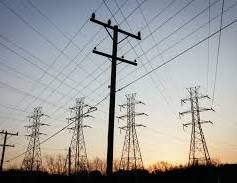
Expensive step up and step down transformers. Long distance high tension transmission lines running hundreds of kilometres from Kainji to Lagos, to Kano, to Port Harcourt. A system that required huge capital, highly skilled engineers, sophisticated management, and constant maintenance.
We had none of those at the scale required. We had no personnel competence, no management capacity, and no maintenance culture to manage such a complex centralised system.
The decentralised plants would have been a better option for the level of our skill and management development at that time.
We botched everything. And here we are today, in 2026, going back to the localised mini systems of power generation where we were in the early 1960s.
NCDC Rules Out Ebola in Two Suspected Adamawa Cases as Nigeria Monitors FCT Index Case
Trump Agrees to Visa for Mother of Slain Ghanaian Teen as Ghana Demands Justice in New York
Two Europe-bound ‘businessmen’ excrete 200 wraps of cocaine at Abuja airport
THE CHINA LESSON AND THE LOST OPPORTUNITY
I saw this coming long ago.
During the 4th Republic, between 1999 and 2007, I travelled to China on the possibility of engaging partners for mini power supply for Abuja and other capital cities in Nigeria.
The Chinese company gave me a bulky blueprint, the same blueprint they had successfully carried out in Pakistan, for decentralised mini power plants for cities. They were ready to do the same in Nigeria.
But they gave me one condition: Go and first push for the reformation of our obsolete power laws.
They wanted Nigeria to properly streamline NEPA, and properly define Generation, Transmission and Distribution. They wanted clarity on who pays for power off loaded onto the national grid.
Most importantly, they wanted government to do bulk purchase of power generated, a Power Purchase Agreement where government buys the power and gets paid by consumers, so that the investor does not go through the trauma of chasing consumers for payment.
That legislation took many years in the making. It eventually came as the Electric Power Sector Reform Act of 2005, which unbundled NEPA into PHCN and later into 11 Distribution Companies and 6 Generation Companies in 2013, and finally the Electricity Act of 2023, which allowed states to generate and distribute.
But by then, it was too late. The Chinese lost interest because of our unserious, lackadaisical attitude and nature.
We lost that partnership because we could not reform ourselves in time.
THE REAL BANE: THE PUBLIC SERVICE
The bane of Nigeria’s problem is not lack of resources. It is our bloated, freeloading, incompetent public service.
Until we reform the public service to be effective, manageable and right sized, Nigeria may not be able to make much progress.
The public service is the arm that decides and manages 90 percent of national resources and our overall well being, yet it is the most inefficient system, staffed by the most incompetent, corrupt and indifferent set of people we have as a nation.
It is this system that allowed coal plants to rot. It is this system that built a grid it could not manage. It is this system that frustrated the Chinese investors.
No power reform will work until public service reform works.
THE DILEMMA TODAY
Today, Nigeria generates on paper about 13,000 MW installed capacity, but distributes only 4,000 to 5,000 MW to over 220 million people. The grid collapses 10 to 15 times a year. Industries run on diesel at 1,400 Naira per litre. Households run on generators. We are the largest generator importing country in the world.
We have centralised failure.
THE SOLUTION: A MIX, LOCAL FOR HOMES, GRID FOR INDUSTRY
I propose we return to my father’s wisdom, but with modern technology:
1. LOCALISED POWER FOR DOMESTIC CONSUMPTION
Let homes, estates, hospitals, schools and small businesses be powered locally, not from the national grid:
– Solar Mini Grids: For estates in Abuja, Lagos, Port Harcourt, 5MW to 20MW solar plus battery for a whole district.
– Small Hydro: For towns near rivers, Jos, Mambilla area, Taraba.
– Clean Coal: Revive Enugu coal with modern clean coal technology, not the dirty 1960s technology, but efficient plants for Enugu, Zaria, Kaduna.
– Gas Mini Plants: For Niger Delta cities, using flared gas for 10MW local plants.
– Biomass and Waste to Energy: For markets and cities.
The law now allows this. The Electricity Act 2023 permits states, communities and private investors to generate up to 1MW without licence, and more with state licence.
2. NATIONAL GRID FOR INDUSTRIES ONLY
Reserve the central National Grid for what it was meant for:
– Heavy industries, steel, cement, petrochemicals, manufacturing clusters
– Industrial zones, Ajaokuta, Lagos Industrial Estate, Kano, Nnewi, Onitsha
– Large institutions, Refineries, Airports
Industries need high voltage, stable 24 hour bulk power. They can pay cost reflective tariffs and sign bulk purchase agreements. Households cannot.
If we take 60 percent of domestic load off the grid and put it on local mini grids, the grid will stop collapsing. Industries will get stable power. Households will get reliable local power.
3. BULK PURCHASE MODEL
Government should buy power in bulk from mini grid developers, as the Chinese demanded 20 years ago, and sell to consumers through Discos and state governments. The developer is paid by government, not by chasing 10,000 individual customers.
4. PUBLIC SERVICE REFORM AS CONDITION
No new power plant should be approved without right sizing the ministry and agency managing it. Small, competent, technical teams, not bloated ministries.
CONCLUSION
In 1963, my father took me to watch coal trains in Zaria. He knew that local power was more reliable than big promises.
In 2026, we have come full circle. We are now talking about mini grids, embedded generation and state power, the same decentralised idea we abandoned in 1968.
We should not repeat the mistake of 1968. We should not build another giant dam and abandon what works.
Let homes be powered locally. Let industries be powered nationally. Let competence, not size, decide our future.
● Dr. Isimi, a prominent architect, is based in Abuja.