
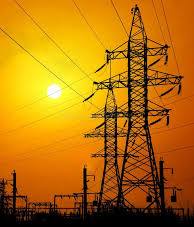
There is perhaps no more revealing symbol of Nigeria’s economic predicament than the generator sitting behind a manufacturing plant, hotel, hospital or neighbourhood shop. It consumes enormous resources without creating additional economic value. Yet, in many Nigerian businesses, it has become an unofficial member of the board, determining operating costs, profitability and, ultimately, survival.
At the Lagos Country Club Business Forum 3.0, Engr. Ifeoma Ukabiala aptly described the generator as perhaps Nigeria’s most powerful chairman. It takes its share of profits before shareholders, workers, suppliers and even the tax authorities.
The observation captures the central contradiction highlighted by two speakers at the October 30 forum: Professor Bart O. Nnaji, Founder and Chairman of Geometric Power Group, and Ukabiala, an upstream oil and gas professional and Vice President of the Women in Energy Network.
While Nnaji focused on the structural failures of Nigeria’s electricity industry, Ukabiala challenged businesses to take greater responsibility for managing their energy costs. Their shared message was unmistakable: electricity is no longer merely an infrastructure problem. It is a question of industrial competitiveness, business survival and national economic development.
The real cost of keeping the lights on
Ukabiala challenged business leaders to calculate their actual cost of electricity across grid supply, diesel generators and solar installations.
This is important. A Band A customer paying approximately ₦225 per kilowatt-hour may face generation costs of around ₦600 per kilowatt-hour when relying on diesel, excluding maintenance and other operating expenses.

Consequently, an apparently manageable electricity bill can conceal a much larger energy burden.
Businesses must also absorb the costs of fuel transportation, generator servicing, equipment replacement, interrupted production, idle workers and delayed deliveries.
The Manufacturers Association of Nigeria reportedly estimated that manufacturers spent approximately ₦1.35 trillion on alternative electricity in 2025, compared with ₦1.1 trillion in 2024.
This represents capital diverted from machinery, expansion, employment and innovation into the unproductive business of generating electricity.
Ultimately, consumers pay as well through higher prices, reduced employment opportunities and declining purchasing power.
The paradox of Nigeria’s gas wealth
Nigeria’s electricity crisis is particularly frustrating because the country possesses substantial energy resources.
The Nigerian Upstream Petroleum Regulatory Commission reported total gas reserves of 215.19 trillion cubic feet as of January 1, 2026. Yet gas-fired power plants continue to experience supply constraints.
Ukabiala illustrated the contradiction with the image of a woman sitting on enormous gas reserves while cooking with firewood because the valve supplying the resource is padlocked.
The problem is not simply the availability of gas underground. It involves inadequate transportation infrastructure, commercial disagreements, accumulated debts and uncertainty over payments.
Gas must be produced, processed, transported and delivered to power plants before it can become electricity. A breakdown at any stage undermines the entire chain.
Nigeria therefore needs more than increased gas production. It needs commercially sustainable arrangements that encourage suppliers to deliver gas and enable power generators to pay for it.
The unfinished business of privatisation
Nnaji’s keynote address examined the structural weaknesses of the 2013 electricity privatisation.
He argued that excessive expectations of quick returns and insufficient appreciation of the capital-intensive nature of electricity infrastructure undermined the reform.
Power plants, transmission networks and distribution infrastructure require patient investment, technical expertise and long-term planning. Some investments may take seven to ten years to break even.
Nigeria has approximately 13,000MW of installed generation capacity but typically delivers only 4,000MW to 5,000MW to the national grid.
This demonstrates that installed capacity alone does not guarantee electricity. Gas availability, transmission infrastructure, system stability and distribution capacity must function together.
Privatisation, Nnaji’s argument suggests, cannot succeed simply by transferring public assets to private owners. Its ultimate measure must be reliable, affordable electricity delivered to consumers.
The financial crisis and the tariff dilemma
Both speakers highlighted the financial weaknesses running through the electricity value chain.
Distribution companies must collect payments and remit the appropriate amounts to generators, which must, in turn, pay gas suppliers. When payments fail, the entire system suffers.
The Association of Power Generation Companies reported outstanding government-related debts of approximately ₦6.5 trillion in February 2026. The Federal Government has subsequently begun implementing a substantial debt-settlement programme.
While this intervention is welcome, settling historical liabilities will not prevent their recurrence unless the underlying commercial weaknesses are addressed.
Nnaji also questioned the sustainability of electricity tariffs that do not reflect the actual cost of supply.
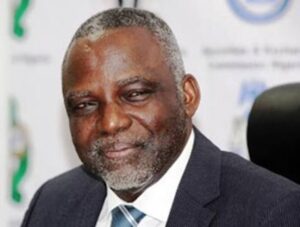
However, consumers cannot reasonably be expected to pay higher tariffs without receiving more reliable electricity. Equally, operators cannot sustain infrastructure when they cannot recover legitimate costs.
The challenge is to establish a market where electricity providers are financially viable and consumers receive measurable value for money.
Aba and Lagos: opportunities for a different approach
Nnaji presented the Aba Integrated Power Project as evidence that alternative electricity arrangements can work in Nigeria.
The project provides dedicated electricity to customers within a defined network, reducing dependence on the national grid. He highlighted investments in smart metering and improvements in industrial activity within the network.
Although its reported outcomes require independent verification, Aba demonstrates the potential of embedded power solutions, particularly for industrial clusters with predictable demand.
Ukabiala identified the Electricity Act 2023 and Lagos State’s emerging electricity market as another opportunity.
Through its Electricity Law of 2024 and the Lagos State Electricity Regulatory Commission, Lagos is creating room for private operators to develop generation and distribution arrangements suited to local needs.
Industrial estates and commercial districts could benefit from dedicated electricity systems in which licensed operators supply metered power under transparent commercial agreements.
The real test, however, will be actual electricity delivered, affordability and customer satisfaction, not simply the number of licences issued or megawatts announced.
Businesses must also change their approach
Ukabiala’s most practical recommendation was that businesses should stop treating electricity as an uncontrollable overhead.
She proposed five priorities: Measure, Reduce, Diversify, Contract and Govern.
Businesses should calculate their actual energy costs, eliminate waste through efficiency improvements, diversify supply through solar and other alternatives, explore shared infrastructure and treat energy management as a board-level responsibility.
Her central argument is that companies need not wait for government to resolve the national crisis before improving their energy performance.
This is particularly relevant to small and medium-sized enterprises, which may benefit from shared solar installations, better generator maintenance and collective electricity arrangements.
Energy management can therefore become a competitive advantage rather than a permanent exercise in firefighting.
From survival to industrial competitiveness
The two presentations ultimately point to a shared responsibility.
Government must establish credible policies, reliable infrastructure and sustainable commercial arrangements. Gas suppliers must deliver dependable domestic supplies. Generation and distribution companies must improve performance and financial discipline. Regulators must enforce transparency and accountability.
Businesses, meanwhile, must manage consumption, reduce waste and meet their payment obligations.
The transition will not be easy. But Nigeria has substantial gas reserves, significant solar potential, experienced engineers and an entrepreneurial private sector capable of developing practical solutions.
The challenge is to convert these advantages into dependable electricity.
The generator may have become chairman of the Nigerian business enterprise, but that should never have been its job.
A country cannot sustainably industrialise if manufacturers spend an extraordinary proportion of their resources generating their own electricity. Nor can it compete internationally when unreliable power inflates production costs and discourages investment.
Ultimately, the question raised at the Lagos Country Club Business Forum was not simply how many megawatts Nigeria can generate or how much government can spend settling electricity-sector debts.
It was whether the country is prepared to organise its institutions, investments and commercial relationships around the understanding that electricity is the foundation of modern economic activity.
Nigeria must decide whether it wants to remain a nation of businesses generating electricity merely to survive or become one whose businesses use reliable electricity to produce, innovate, expand and compete.
That is the real choice confronting the country.