

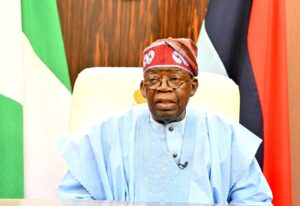
The latest clash between FCT Minister Nyesom Wike and All Progressives Congress (APC) governors is not simply a disagreement over whether politicians should support President Bola Tinubu in 2027. The competing statements and the history of the Rivers crisis point to a struggle over political structures, control of candidates, influence within the Tinubu camp, and positioning ahead of the 2027 and potentially 2031 political cycles.
The immediate trigger is the APC Governors’ Forum’s rejection of Wike’s cross-party “Rainbow Coalition.” Wike now says the hostility toward him predates the coalition and began when Tinubu appointed him FCT minister in 2023.
What Wike actually alleged
In his September 15 interview with ARISE NEWS, Wike said the disagreement with some APC governors “started with the ministerial position.” His argument is that some governors were unhappy that a former PDP governor was given one of the most politically significant portfolios in the APC-led federal government.
He then connected that alleged opposition to the later Wike–Siminalayi Fubara crisis in Rivers State.
Wike’s version is that some APC governors misled Fubara during the dispute and attempted to influence the political direction of Rivers State. He also alleged that money was used in the political manoeuvring around the crisis, but, importantly, he did not provide evidence in the interview establishing that allegation.
Wike’s accusation is a political claim, not an independently established fact.
The minister also argued that the APC governors’ current opposition to his Rainbow Coalition is driven by their desire to control political outcomes in their respective states.
The APC governors’ position
The Progressive Governors’ Forum, chaired by Imo State Governor Hope Uzodimma, took a substantially different position.
Following a September 14 meeting in Abuja, the forum said its members would not participate in or endorse an alliance that could weaken the APC, adversely affect APC candidates or undermine Tinubu’s re-election campaign. Uzodimma said the governors’ campaign commitment was to APC candidates at all levels.
This creates the central contradiction:
Wike’s position: Supporting Tinubu for president does not require him or other politicians to support APC candidates for governor, Senate, House of Representatives or state assembly.
APC governors’ position: A cross-party structure that supports Tinubu while potentially campaigning against APC candidates in other races could weaken the party and create divided political loyalties.
So the dispute is partly about the difference between supporting a presidential candidate and supporting the presidential candidate’s political party across the ballot.
What exactly is Wike’s Rainbow Coalition?
The “Rainbow Coalition” began principally as a Rivers State political arrangement but has increasingly been presented by Wike as a broader, cross-party mobilisation for Tinubu’s 2027 re-election.
In Rivers, the arrangement has brought together politicians associated with different parties, including the PDP, APC, Labour Party and Action Alliance. Wike has repeatedly said that the coalition’s central presidential objective is to support Tinubu, while individual parties can retain their own candidates for other elections.
That distinction is precisely what has alarmed the APC governors.
The coalition is not merely a discussion forum. It has been involved in organising candidates and political structures in Rivers. In May, Wike said the coalition would collectively determine the person it would support for governor, rather than allowing one political party to make the decision unilaterally.
By August, the APC’s Kingsley Chinda had emerged as the key governorship candidate around the coalition, while a reconciliation committee headed by former senator Magnus Abe was working to bring former Wike and Fubara supporters together.
Why Rivers State is so important
To understand Wike’s latest accusation, it is necessary to go back to the breakdown between Wike and Fubara.
Wike helped Fubara emerge as Rivers governor in 2023. Their relationship subsequently deteriorated over the control of the state’s political structure. The disagreement spread into the Rivers State House of Assembly, where lawmakers aligned with Wike confronted Fubara.
The conflict eventually became a national political crisis.
President Tinubu intervened several times. In March 2025, he declared a state of emergency in Rivers State, suspending Fubara, his deputy and the state legislature and appointing Vice Admiral Ibok-Ete Ibas as sole administrator.
A subsequent reconciliation process brought Wike, Fubara and the Rivers political actors back together. In June 2025, Wike and Fubara publicly said they had agreed to work together.
The crisis, however, continued to cast a long shadow over the state’s 2027 politics.
The crucial development: Fubara is no longer seeking a second term
Wike’s current statement that APC governors “couldn’t give the governor a second term” needs to be understood against the fact that Fubara has now withdrawn from the 2027 governorship race.
In May 2026, Fubara withdrew from the APC governorship primary. Wike said the withdrawal did not surprise him because, according to Wike, an earlier reconciliation arrangement had included Fubara not seeking a second term.
There were competing accounts over whether such a condition was actually agreed. An online newspaper reported in 2025 that sources familiar with the Tinubu-brokered settlement said Fubara’s reinstatement was tied to not seeking another term; other Rivers figures disputed that interpretation.
Later, however, Fubara himself was publicly saying he would not seek re-election, saying the decision was in the interest of peace and development in Rivers State.
That substantially changes the political landscape.
Fubara subsequently publicly supported Wike’s Rainbow Coalition, endorsed Tinubu for another term and backed Kingsley Chinda for governor.
Wike and Fubara then met again in Port Harcourt at the end of August, with Chinda and Magnus Abe also involved in the reconciliation effort.
In other words, the man at the centre of the original Wike–Fubara confrontation has now moved politically closer to Wike’s coalition.
So what does Wike mean by “they couldn’t give Fubara a second term”?
Wike’s interpretation
Wike presents the story as follows:
▪︎Some APC governors opposed his appointment as FCT minister.
▪︎They subsequently became involved in the Rivers political dispute.
▪︎They influenced Fubara against the political structure that had produced him.
▪︎The resulting confrontation weakened Fubara politically.
▪︎Fubara eventually abandoned his second-term ambition.
▪︎The same political interests are now opposing Wike’s Rainbow Coalition.
Wike therefore sees the present confrontation as part of a continuous political struggle, rather than a new dispute created by the 2027 election.
It appears the APC governors have their own candidates and political structures to protect.
Other sources said the dispute was connected to competition over political influence, control of legislative positions and longer-term ambitions extending toward 2031.
The tensions involving Wike, Uzodimma and other political actors in several states, appears connected to disputes over candidates and competing political networks.
The 2023 election provides an important part of Wike’s argument
Wike’s defence of the Rainbow Coalition is built partly around the idea that Nigerian voters can vote differently in different contests on the same day.
He cited the 2023 results in Imo, Ebonyi, Abia and Enugu to argue that voters could support one party’s presidential candidate while choosing another party’s National Assembly candidates.
That is a factual feature of Nigeria’s electoral system: presidential, senatorial, House of Representatives and state-level elections are separate contests, and voters can make different choices on different ballots.
Wike therefore rejects the APC governors’ suggestion that supporting Tinubu while backing non-APC candidates necessarily produces voter confusion.
He also pointed to politicians such as Anambra Governor Chukwuma Soludo and Osun Governor Ademola Adeleke, both of whom have publicly expressed support for Tinubu while remaining associated with their respective parties.
Why the APC governors see the situation differently
From the governors’ standpoint, the issue is not necessarily whether Tinubu can receive support from people outside the APC.
The more difficult question is who controls the political machinery underneath the presidency.
An APC governor has an interest in:
▪︎retaining control of his state’s party structure;
▪︎determining or influencing APC candidates;
▪︎protecting incumbent senators and House members;
▪︎securing his preferred governorship successor;
▪︎preventing rival political networks from becoming stronger inside the state;
▪︎ensuring that support for Tinubu does not simultaneously strengthen an opposition party against APC candidates.
Wike’s model potentially separates those things.Under his formulation, a politician could say: “I support Tinubu for president, but I support another party’s candidate for governor or senator.”
That is politically possible, but it can be uncomfortable for an incumbent APC governor whose own candidates are competing against those candidates.
This is why the APC Governors’ Forum has explained its objection around party cohesion and candidate loyalty, rather than simply rejecting support for Tinubu.
Wike’s relationship with Tinubu is another key element
Wike is still a PDP politician, but he is serving as FCT minister in Tinubu’s APC-led government and has openly backed Tinubu’s 2027 re-election.
In the latest interview, Wike was particularly emphatic that Tinubu knows about his political activities.
He said his support for Tinubu does not mean he has joined the APC or abandoned the PDP, and that he has not entered into a political unity arrangement with the APC as a party.
That is significant because it creates an unusual political arrangement: PDP affiliation + APC federal appointment + support for an APC president + a cross-party electoral coalition + opposition to some APC candidates.
Wike regards those positions as compatible. The APC Governors’ Forum clearly regards the combination as potentially problematic.
The dispute is spreading beyond Rivers
The Rainbow Coalition was initially most visible in Rivers, but Wike has increasingly described it as a national project.
In August, he said a larger national Rainbow Coalition was emerging around Tinubu and specifically pointed to political realignment involving Osun Governor Ademola Adeleke.
He has also identified Bayelsa as another state where PDP structures could support Tinubu.
That expansion explains why the APC governors’ reaction has become more pronounced.
A coalition confined to Rivers would primarily be a state-level matter. A coalition that can mobilise PDP, Labour and other politicians across several states potentially becomes a parallel electoral network operating alongside the APC’s formal campaign structure.
That is the underlying institutional question now facing the Tinubu camp.
What makes the current confrontation unusual
The irony is that both sides publicly claim to be supporting Tinubu.
Wike says: Support Tinubu first; parties can compete against one another in other elections.
The APC governors’ position is effectively:
Support Tinubu through the APC’s candidates and official party machinery rather than through a parallel coalition.
Consequently, this is not principally a dispute between people supporting Tinubu and people opposing him.
It is a dispute over how Tinubu’s support should be organised and who should control the political machinery delivering it.
The 2031 factor
There is also a longer-term dimension, although claims about individual politicians’ future ambitions should be treated cautiously unless they are publicly confirmed.
PUNCH reported anonymous APC sources who characterised the struggle among some of Tinubu’s political allies as partly connected to positioning for influence after 2027, including possible 2031 ambitions and control of the next National Assembly.
The importance of this distinction is that today’s alliances can serve two purposes simultaneously: winning the 2027 election; and establishing political networks for the post-2027 period.
That helps explain why seemingly technical disagreements over candidates and party structures have become so politically sensitive.